

GKI conducted a survey of a representative sample of 1,000 people in Hungary in July to examine the prevalence of artificial intelligence (AI). Who uses AI and what purpose do they use it? How widespread is it in Hungarian workplaces? Find the answer to these questions.
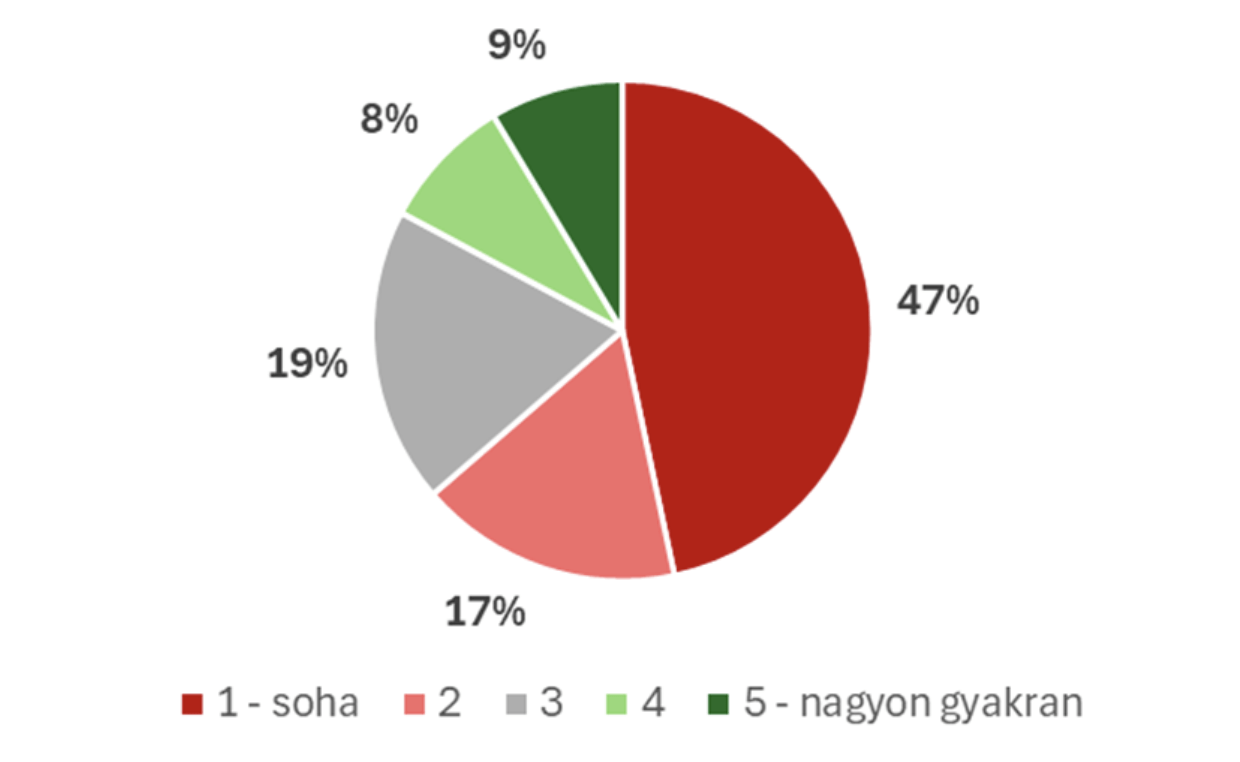
Almost half of respondents do not use AI for their work or research. Furthermore, 17% is very rare. Meanwhile, 8% use it frequently, and 9% use it very often. Numbers are somewhat favorable for home use. 64% use AI for personal purposes (a third of that – that is, 20% overall – so often).
How often do you use AI-based software in your work/research?
From a demographic perspective, the greatest differences are observed across age groups. The younger you are, the more likely you are to use artificial intelligence.
Of the students surveyed, 90% used AI in their research. 42% are used very frequently, and an additional 16% are used frequently. Of the active employees, 56% use some form of AI application for their work. 17% are used frequently or very frequently. The spread of AI could accelerate in the future as younger generations enter the labor market.
Attitudes to AI use in the workplace – Balance scores for age and occupation (Low values indicate infrequent use)
Source: GKI survey
Source: GKI. Note: Responses were weighted on a scale of -100 to +100. -100 indicates no AI usage at all, 0 indicates medium usage and +100 indicates very frequent AI usage.
By occupation, Self-employed expert They are most likely to use artificial intelligence in their work. It is followed by managers and managers in private sector office positions. AI usage is less common among entrepreneurs Even less so among public sector office workers.
In capital, the percentage of AI users is higher than other payment types, partly because of a large share in the service sector. Encourage, There is no observable difference in AI use between men and women.
70% of respondents recognize some degree of threat from AI to work over the next five years, but only 5% think that is important. Young people who are generally more enthusiastic users of AI. They are likely to be afraid of their work. Similarly, students are more interested in future employment than those who already work. A sense of threat is most prominent among private sector office employees, but self-employed professionals are less likely to fear AI will take on the job.


