
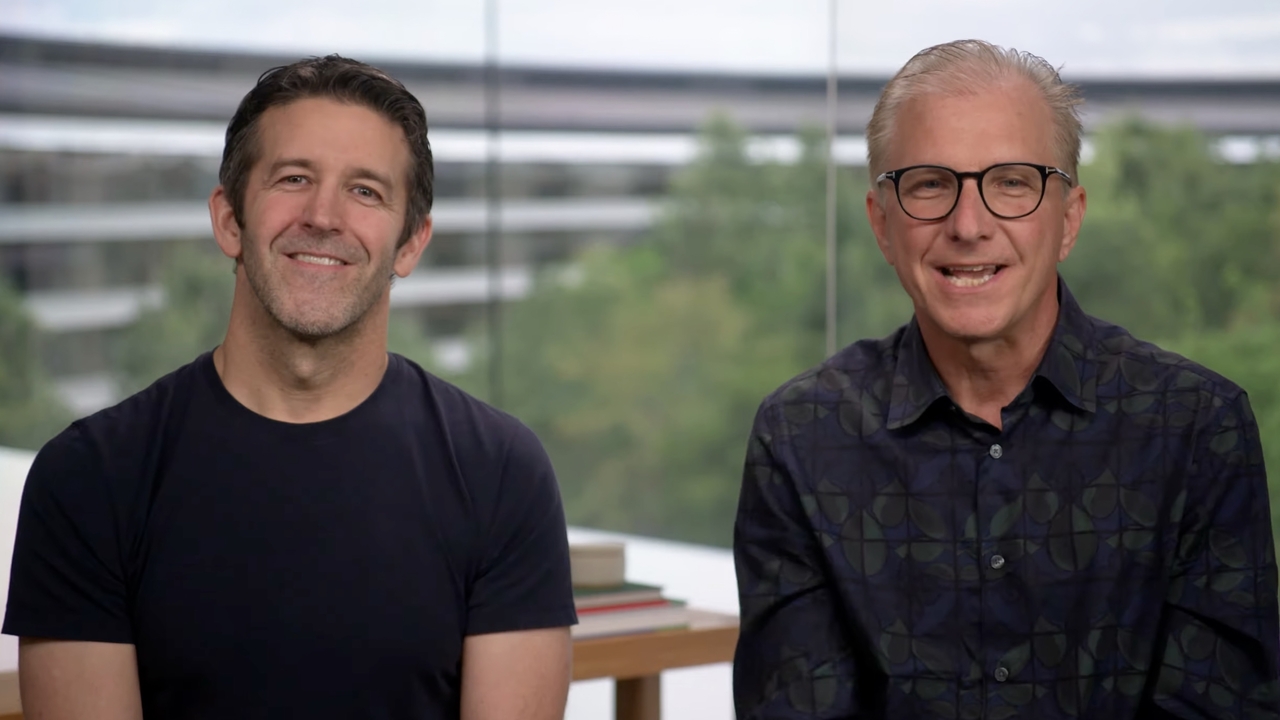
Apple executives Greg Joswiak and John Ternus recently sat down with Tom’s Guide to discuss the company’s hardware strategy, including the development of the MacBook Neo, separating the Mac and iPad product lines, and the future of artificial intelligence and wearables. This interview comes on the heels of Apple’s recent 50th anniversary celebration, as the company looks back on 50 years of consumer technology.
![Apple executive talks about MacBook Neo, AI, and smart glasses in interview [Video]](lightview_open('/images/news/100581/475877/475877-1280.avif'); "Apple executive talks about MacBook Neo, AI, and smart glasses in interview [Video]")
The recently launched MacBook Neo was heavily featured in this conversation. This $599 laptop is powered by the A18 Pro chip paired with 8GB of RAM, significantly lowering the starting price of a Mac. Jozwiak, Apple’s senior vice president of worldwide marketing, said the device has been completely reimagined and features a new trackpad and a completely redesigned chassis. Ternus, senior vice president of hardware engineering, drew a sharp contrast between Neo and competing low-cost Windows machines. He noted that rival products often rely on flexible plastic casings to cut costs, while Apple is focused on offering high value at a low price. When discussing naming conventions, Joswiak explained that calling the device a standard MacBook would eliminate a clear identity. The name Neo was chosen to convey a sense of newness and reinvention in high-value laptops.
Despite the recent hardware overlap, Apple maintains that the Mac and iPad are still separate platforms. With the iPad getting even more desktop-class features with iPadOS 26, and a touchscreen MacBook Pro reportedly in the works, speculation is mounting about a possible merger of the two product lines. Ternus disputed this, saying there had never been an internal effort to combine the two products. He explained that the engineering team remains focused on making each product better, rather than worrying about how one device affects another.
Executives also addressed Apple’s position in wearables and spatial computing. Joswiak pointed to the Vision Pro as a device that reaches into the future to demonstrate how digital and physical environments can be combined. He declined to provide a specific timeline for when spatial computing will evolve into new form factors, but said combining the two worlds is inevitable. Separately, Apple is widely reported to be developing lightweight smart glasses alongside other AI-focused wearable concepts related to its broader visual intelligence push.
Artificial intelligence was also a focus of discussion. Apple is reportedly preparing to open up Siri to third-party AI assistants in iOS 27 while continuing to build out its own features. Ternus emphasized that Apple is not prioritizing shipping raw technology, but is looking for ways to leverage it to create tangible features for users. He cited the latest AirPods’ live translation feature as an example of this approach. Joswiak agreed, saying the goal is to bring humanity to technology so users don’t have to become chatbot experts to benefit from it.
Both executives acknowledged that Apple’s history includes some notable product failures. Joswiak mentioned the original 2008 MacBook Air, which suffered from thermal issues, a slow hard drive, and a high starting price. The company learned from these mistakes and redesigned the machine in 2010 with flash storage and a lower price point, creating what is now said to be the world’s most popular laptop. Ternus noted that the launch of Apple Maps in 2012 was eventful. He noted that years of continued development ultimately transformed the heavily criticized application into a highly capable platform.
Looking ahead to Apple’s next 50 years, the two executives offered different perspectives on the company’s trajectory. Jozwiak chose the word “human” to describe the future, reaffirming that putting humans at the center of technology remains Apple’s main goal. Ternus chose the word exciting to refer to the features and products the company is working on across its hardware engineering division.


