The University of Toronto hosted an Anthropic AI Hackathon over the weekend, where participants came together to build AI-powered tools using Claude and other machine learning workflows.
Anthropic is known for developing the Claude family of AI models used for inference, analysis, and agent tasks.
Wase Niazi, an ABA therapist and data analyst, described a prototype developed with three collaborators on LinkedIn. Their project, ABA Forecast, tested whether contextual variables commonly found in applied behavior analysis sessions could be used to estimate behavioral risk. The team trained a random forest classifier using synthetic data and publicly available datasets.
Niazi wrote that the model incorporates variables such as “sleep quality, time of day, time of day variations, bathroom patterns, social situations, and environmental conditions via the weather API.” We then used Claude to translate our predictions into structured strategy suggestions tailored to our ABA routines.
He added that the prototype was “developed within 48 hours and is not a finished product,” but it points toward exploring how behavioral science and machine learning can be combined to create positive tools for autism support.
Individual developers also tested end-to-end AI workflows
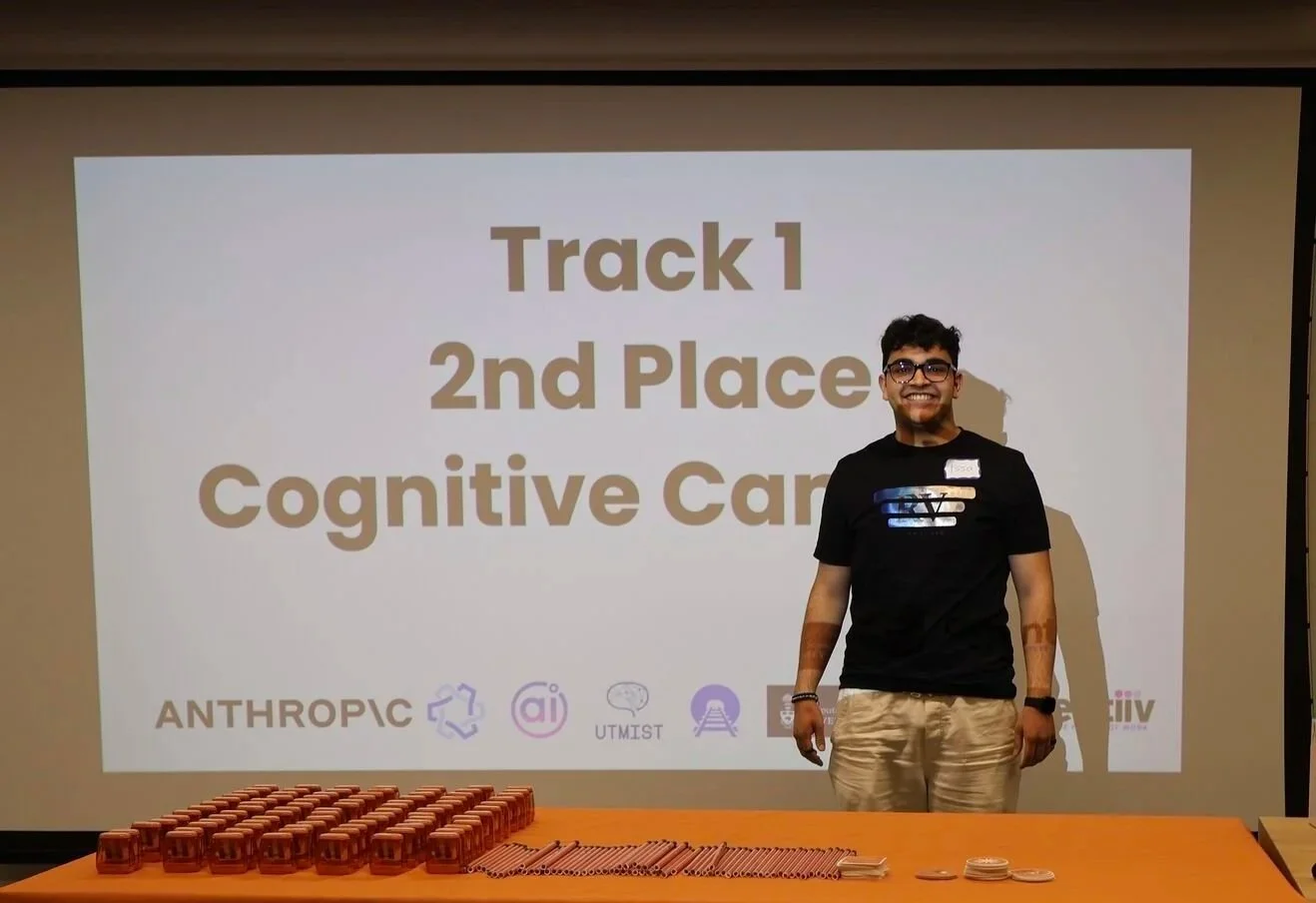
The hackathon saw team-based projects as well as individual submissions. Issa Al Rawwash, a full-stack developer and data analyst, shared on LinkedIn that she won second place after building an entire system by herself.
Reflecting on the experience, Al Rawwash writes, “Every decision was mine. Every line of code was mine. Every pivot happened in real time.” He described the pace and pressure of competing alone as the “ultimate test” and said presenting the completed build to the judges was one of the most rewarding moments of his trajectory in the technology industry.
The hackathon focused on the range of AI applications participants brought to the event, from behavioral support prototypes to personally designed systems built in less than 48 hours.
Niazi concluded his post by inviting others working in ABA, autism services, medical technology, and educational technology to connect. “If anyone working in ABA, autism services, medical technology, or educational technology is exploring similar questions, I would be happy to connect and discuss possibilities!”