
Walk through a modern airport, shopping mall, corporate office, or residential neighborhood, and chances are you’re being monitored by a sophisticated video surveillance system. While security cameras have existed for decades, today’s surveillance technology is dramatically different from the simple closed-circuit television systems of the past. Modern solutions are powered by artificial intelligence, cloud computing, advanced analytics, and real-time monitoring capabilities that can identify threats, improve operational efficiency, and provide valuable business insights.
Across the United States, video surveillance has become an essential component of public safety, business security, and smart infrastructure development. Organizations are increasingly investing in advanced surveillance technologies to protect assets, improve workplace safety, monitor operations, and respond more effectively to emerging risks. As technology continues to evolve, surveillance systems are becoming smarter, faster, and more capable than ever before.
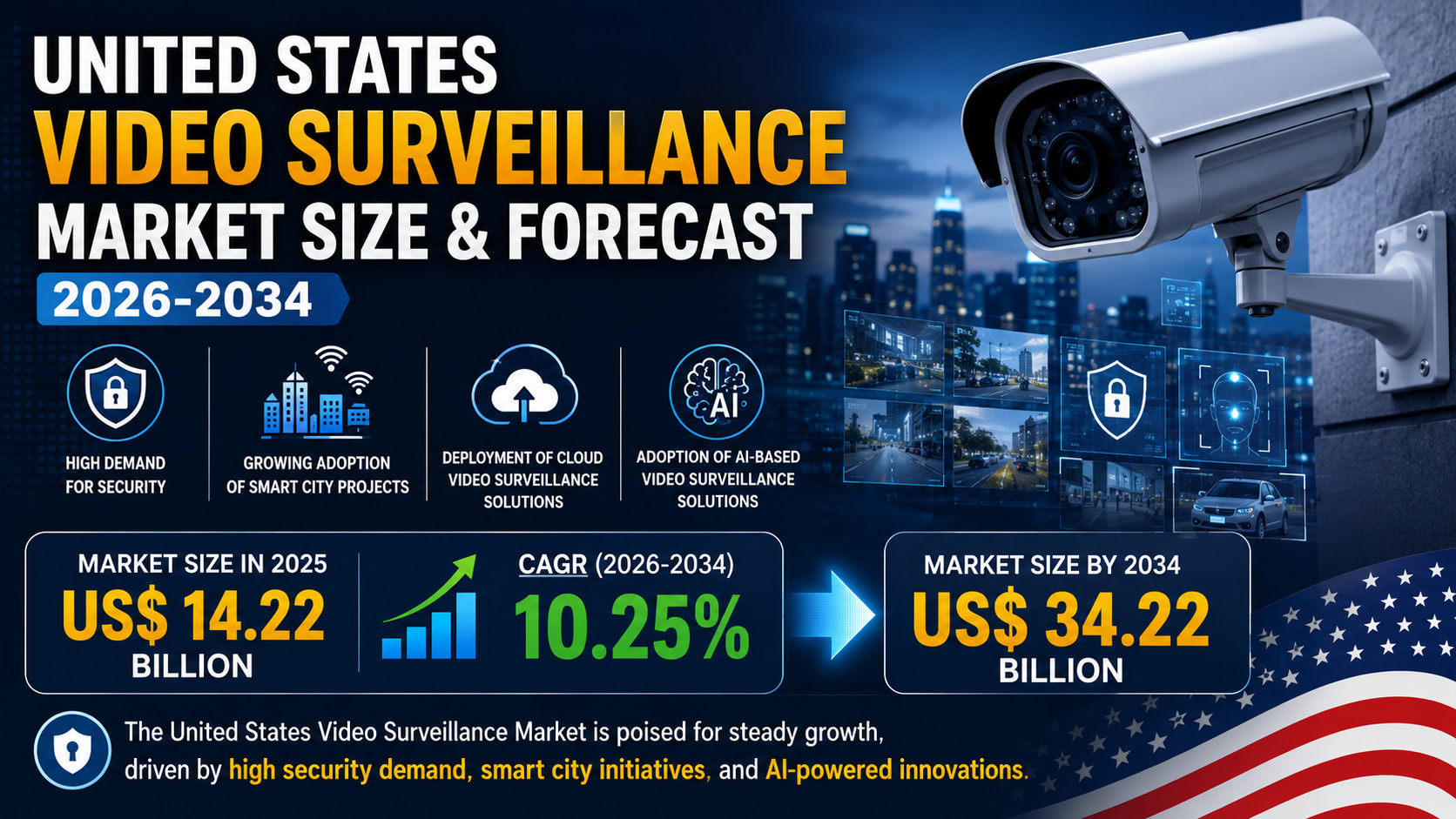
According to Renub Research, the United States Video Surveillance Market is expected to grow from US$14.22 billion in 2025 to US$34.22 billion by 2034, representing a compound annual growth rate (CAGR) of 10.25 percent during the forecast period. This impressive growth reflects the increasing demand for intelligent security solutions across commercial, residential, industrial, and public sectors.
The future of surveillance is no longer simply about watching events unfold. It is about using technology to understand, predict, and respond to situations in real time.
Download Free Sample Report
Why Video Surveillance Has Become More Important Than Ever
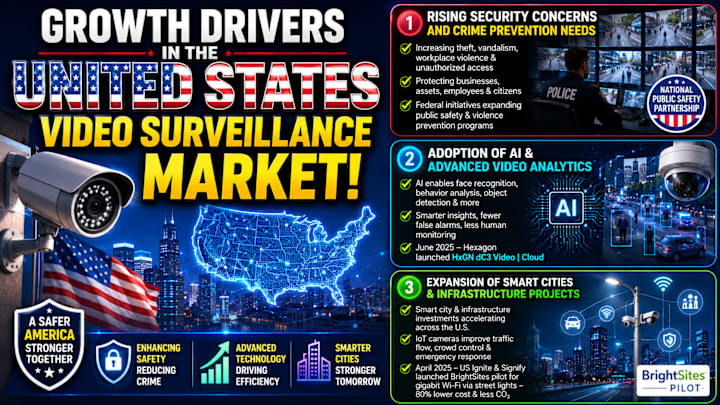
Security concerns remain one of the strongest forces driving investment in surveillance technology throughout the United States. Businesses, government agencies, and homeowners face a wide range of challenges, including theft, vandalism, workplace incidents, unauthorized access, and public safety risks. Video surveillance systems provide a powerful tool for addressing these concerns by offering continuous visibility and evidence collection.
Retail businesses use surveillance systems to reduce shoplifting and employee theft while improving store safety. Manufacturing facilities monitor production areas to ensure worker safety and operational compliance. Transportation authorities rely on surveillance technology to monitor passenger activity and identify potential threats. Residential users increasingly install cameras to protect homes, monitor deliveries, and gain peace of mind.
As urban populations continue growing and security threats become more complex, surveillance systems are becoming an essential component of modern risk management strategies. Organizations recognize that investing in advanced monitoring capabilities can reduce losses, improve safety outcomes, and strengthen overall operational resilience.
Artificial Intelligence Is Transforming the Industry
Perhaps the most significant development in modern surveillance technology is the integration of artificial intelligence. Traditional surveillance systems required human operators to continuously watch video feeds and identify suspicious activities. This approach was often inefficient, expensive, and prone to human error.
Artificial intelligence has fundamentally changed how surveillance systems operate. Modern AI-powered platforms can automatically detect unusual behavior, recognize faces, identify vehicles, monitor crowd movements, track objects, and generate alerts when potential threats are identified. These capabilities dramatically improve response times and reduce the need for constant human supervision.
Businesses are increasingly adopting AI-driven surveillance systems because they offer more than just security benefits. Retailers can analyze customer traffic patterns, manufacturers can monitor workplace safety practices, and facility managers can optimize building operations through intelligent video analytics.
The ability to transform video footage into actionable insights is one of the key reasons why artificial intelligence is becoming a central component of surveillance solutions across multiple industries.
The Rise of Cloud-Based Surveillance
Cloud computing is another major factor driving market growth. In the past, surveillance systems relied heavily on local storage devices and on-premise infrastructure. Managing these systems often required significant investments in hardware, maintenance, and IT support.
Cloud-based surveillance platforms have changed this model by allowing organizations to store, access, and manage video footage remotely. Businesses can now monitor multiple locations from a centralized dashboard while benefiting from scalable storage solutions and automatic software updates.
Cloud technology offers numerous advantages, including lower hardware costs, simplified maintenance, improved scalability, enhanced cybersecurity protection, remote accessibility, and easier integration with other digital systems. Organizations with multiple locations particularly benefit from cloud solutions because they can manage surveillance operations more efficiently while reducing administrative complexity.
The combination of cloud computing and artificial intelligence is creating a new generation of intelligent surveillance systems capable of delivering real-time information from virtually anywhere in the world.
Smart Cities Are Creating New Opportunities
The rapid expansion of smart city initiatives across the United States is creating significant opportunities for surveillance technology providers. Cities are increasingly investing in connected infrastructure designed to improve public safety, transportation efficiency, environmental monitoring, and emergency response capabilities.
Video surveillance systems play a critical role in these projects by providing real-time visibility into urban environments. Intelligent cameras help monitor traffic conditions, detect accidents, manage crowds during public events, and support law enforcement agencies in maintaining public safety.
Many smart city projects integrate surveillance cameras with Internet of Things (IoT) devices, creating interconnected networks capable of sharing information across multiple systems. This integration enables faster decision-making and more effective responses to emergencies.
As governments continue investing in infrastructure modernization, demand for advanced surveillance technologies is expected to increase substantially. Surveillance systems are no longer viewed solely as security tools; they are becoming essential components of intelligent urban ecosystems.
Residential Security Is Experiencing Rapid Growth
While commercial and government applications account for a large portion of market demand, residential surveillance has become one of the fastest-growing segments in the industry.
Homeowners are increasingly investing in surveillance systems to protect their properties, monitor family members, and deter criminal activity. Advances in wireless technology, cloud storage, and mobile applications have made surveillance systems more affordable and user-friendly than ever before.
Modern home security cameras allow users to view live footage, receive instant alerts, communicate through built-in speakers, and access recorded video directly from their smartphones. These features provide homeowners with greater control and visibility regardless of their physical location.
The increase in package theft incidents has also contributed to growing adoption. Many consumers now view surveillance cameras as a practical solution for monitoring deliveries and protecting property.
As smart home technology continues expanding, surveillance systems are expected to become standard features in residential environments across the country.
Commercial Organizations Continue Investing
Businesses remain among the largest users of surveillance technology in the United States. From retail stores and office buildings to hospitals and manufacturing facilities, organizations rely on surveillance systems to support both security and operational goals.
Retailers use cameras to reduce inventory losses and understand customer behavior. Healthcare providers monitor sensitive areas to protect patients and staff. Manufacturing companies improve workplace safety through continuous monitoring of operational environments.
Many businesses are now using surveillance systems for purposes beyond security. Video analytics can help organizations measure customer engagement, optimize facility layouts, improve workforce management, and identify operational inefficiencies.
The growing value of business intelligence generated through surveillance systems is encouraging organizations to expand their investments in advanced technologies.
Privacy Concerns Remain a Challenge
Despite strong market growth, the surveillance industry faces important challenges related to privacy and data protection.
The increasing use of facial recognition technology and large-scale monitoring systems has raised concerns among privacy advocates and policymakers. Questions surrounding how surveillance data is collected, stored, and used continue to generate debate across the United States.
Organizations must carefully balance security objectives with privacy rights. Regulatory requirements are evolving rapidly, requiring businesses and public agencies to implement transparent policies regarding data collection and usage.
Failure to comply with privacy regulations can result in legal consequences, financial penalties, and reputational damage. As surveillance technology becomes more sophisticated, maintaining public trust will remain a critical priority for industry participants.
The companies that successfully address privacy concerns while delivering effective security solutions will likely enjoy a competitive advantage in the years ahead.
Cost Considerations Continue to Influence Adoption
Another challenge facing the industry is the cost associated with advanced surveillance systems. High-resolution cameras, artificial intelligence software, cloud infrastructure, storage solutions, and system integration services can require significant investment.
Large enterprises and government agencies often have the resources necessary to deploy sophisticated surveillance platforms. Smaller organizations, however, may struggle to justify the initial expense.
Fortunately, technology providers are introducing more flexible pricing models, including subscription-based services and cloud-hosted solutions that reduce upfront costs. These innovations are making advanced surveillance capabilities accessible to a wider range of customers.
As competition intensifies and technology becomes more affordable, adoption rates among small and medium-sized businesses are expected to increase.
Regional Markets Leading Innovation
Several states are playing important roles in driving surveillance technology innovation across the United States.
California remains one of the largest and most technologically advanced surveillance markets. The state’s thriving technology sector, smart city projects, and business infrastructure create strong demand for AI-powered surveillance solutions. Organizations increasingly use video analytics not only for security but also for improving operational efficiency and customer experiences.
New York’s dense population and extensive public infrastructure make surveillance technology particularly valuable. Transportation systems, commercial districts, airports, and public spaces all rely heavily on monitoring solutions to support security and crowd management efforts.
Washington State is also emerging as a significant market due to its strong technology ecosystem and growing adoption of cloud-based surveillance platforms. Businesses throughout the region are leveraging advanced monitoring solutions to enhance security, improve efficiency, and support digital transformation initiatives.
These regional markets often serve as early adopters of emerging technologies, influencing broader industry trends nationwide.
Looking Toward the Future
The future of video surveillance is expected to be shaped by continued advances in artificial intelligence, machine learning, cloud computing, and edge analytics. Future systems will likely become even more autonomous, capable of identifying risks, predicting incidents, and initiating responses with minimal human intervention.
Integration with smart buildings, connected infrastructure, autonomous vehicles, and next-generation communication networks will further expand the role of surveillance technology in everyday life.
Organizations increasingly recognize that surveillance systems can deliver value beyond security by providing operational insights, improving efficiency, and supporting strategic decision-making.
As technology continues to evolve, surveillance solutions will become more intelligent, connected, and versatile.
Final Thoughts
The United States Video Surveillance Market is entering an exciting period of growth and innovation. Driven by rising security concerns, expanding smart city initiatives, advances in artificial intelligence, and the widespread adoption of cloud technology, surveillance systems are becoming more important than ever before.
With the market projected to grow from US$14.22 billion in 2025 to US$34.22 billion by 2034, the industry is poised to play a major role in shaping the future of public safety, business operations, and urban development. While challenges related to privacy and implementation costs remain, ongoing technological progress continues to create new opportunities for organizations across every sector.
In the coming years, surveillance systems will do far more than record events. They will help businesses operate smarter, cities function more efficiently, and communities remain safer. The cameras watching today are becoming the intelligent systems guiding tomorrow.


