31
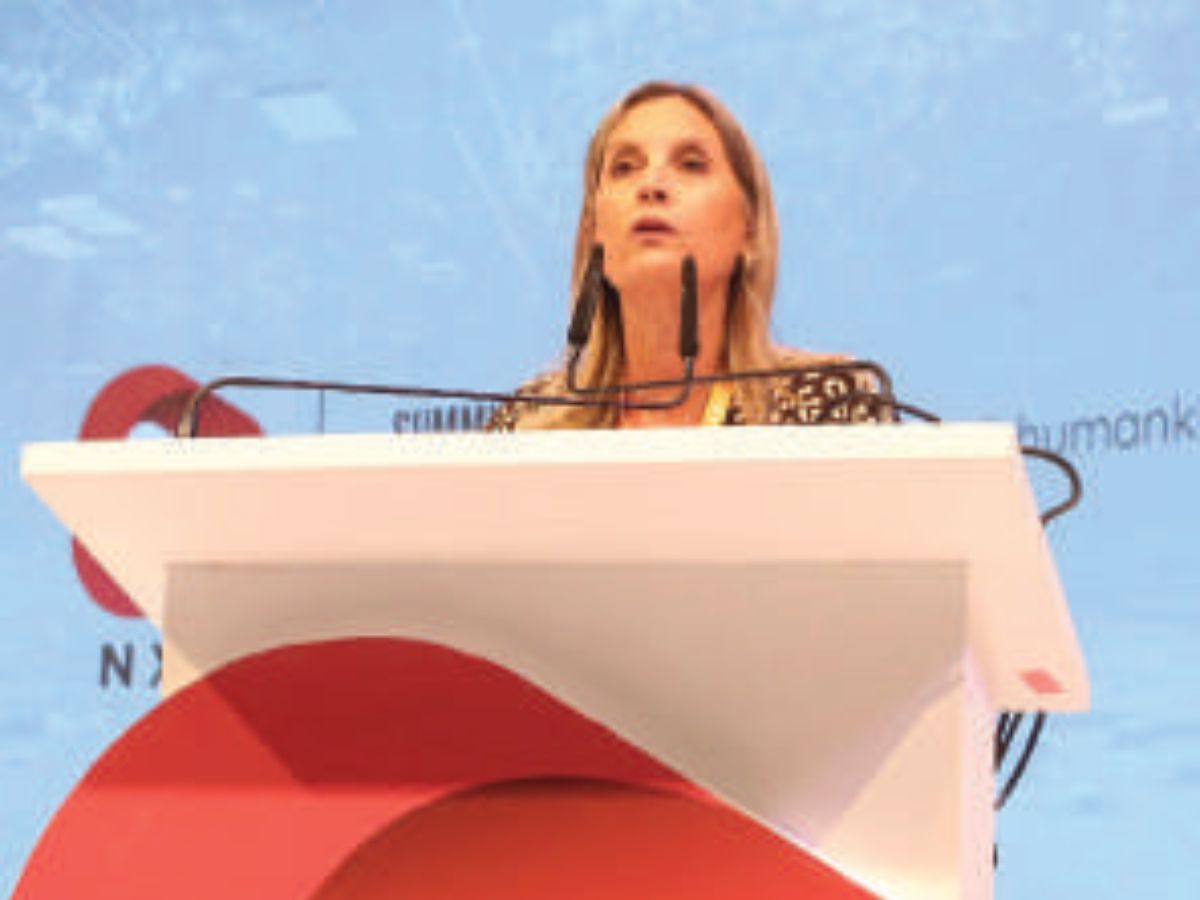
In her keynote speech at NXT Conclave 2026, French Member of Parliament Laetitia St. Paul said that artificial intelligence is rapidly changing the nature of cognitive warfare and posing new challenges for democratic societies.
Speaking on artificial intelligence and cognitive warfare, the French lawmaker said that while the use of information manipulation, propaganda and psychological operations has existed since ancient times, AI has fundamentally changed the scale and impact of such tactics.
She said techniques such as creating fake accounts, funding influencers, spreading disinformation and coordinating campaigns across digital and physical spaces have been facilitated by AI tools. But she stressed that AI should be seen as part of a broader technology shift, not just another tool.
St. Paul described this development as an “industrial revolution,” saying that artificial intelligence has become widely available, making it possible to create persuasive content at low cost and in large quantities.
She cited an incident on May 22, 2023, when an AI-generated image depicting an explosion near the Pentagon went viral on the social media platform Twitter. The image briefly caused the S&P 500, the major US stock index, to fall.
St. Paul said the episode demonstrated how images created digitally with no real-world basis can influence global financial markets within minutes. He said the incident highlighted the vulnerability of the modern information ecosystem, where machine-generated content can blur the line between reality and simulation.
A French lawmaker said AI can now automatically create stories at scale that can influence collective action even before the facts are confirmed. Through algorithmic personalization and visual simulation, the battle for information is increasingly becoming a cognitive war driven by automated systems rather than human actors, she said.
St. Paul argued that this change in technology coincides with what she described as a “post-truth era” in which emotional responses often take precedence over factual accuracy. In such environments, she said, public support for a message is often shaped by the message’s ability to evoke emotions such as fear or outrage.
She noted that digital platforms rely on recommendation algorithms that amplify these emotional cues to gain attention and influence public opinion. As a result, disinformation has evolved into what she describes as a tool for “emotional engineering.”
She warned that this trend poses a challenge to the “cognitive sovereignty” of democracies, especially when societies rely on digital infrastructure that they do not fully control. According to St. Paul, the public sphere is increasingly shaped by algorithmic systems that influence attention, amplify emotions, and redefine shared perceptions of truth.
Calling for stronger regulatory responses, he said governments need to develop frameworks to protect democratic debate, protect electoral processes and strengthen the cognitive resilience of open societies.
Ms. St. Paul also presented three recommendations to the Foreign Affairs Committee from the fact-finding mission on artificial intelligence and foreign interference that she led in 2025.