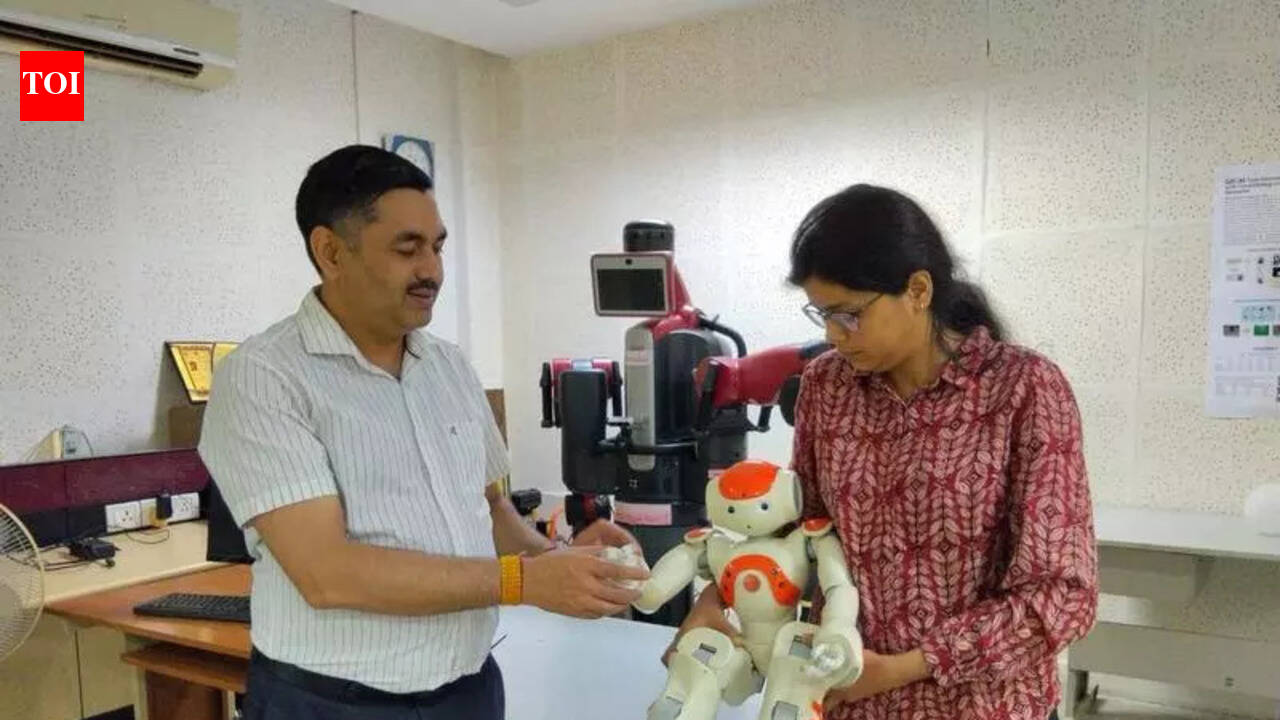
PRAYAGRAJ: In a significant step in the treatment of autism in children, researchers at the Indian Institute of Information Technology, Allahabad (IIT-A) have developed an artificial intelligence (AI)-based smart tool to analyze emotions, behavior and learning abilities and come up with a personalized treatment plan.Children with autism often have a hard time expressing their emotions, making it difficult for parents and professionals to understand their emotional state. Their smiles, anxiety, and discomfort can go unnoticed or misunderstood. Newly developed AI-driven technologies aim to bridge this communication gap by interpreting behavioral cues and responses in a structured way.The tool was developed by Prof. Vrajendra Singh of the IIIT-A Department of Information Technology and his research associate Ms. Anishma. According to the researchers, a patent application has already been filed for the technology.The AI system performs detailed analysis of children’s activities and behavior patterns to assess their mental and emotional state. It is integrated with a specially designed interactive robot that communicates with children, observes their behavior and reacts accordingly.The system uses cameras and sensors to continuously monitor a child’s activities, including facial expressions, reactions, and interaction with surrounding objects. These behavioral signals are stored in a dedicated database and analyzed individually to create a behavioral profile for each child.“This system can identify whether a child is happy, scared or uncomfortable and respond in a way that makes the child feel understood,” Professor Singh said.For example, if a child claps, the robot will imitate the same action. Such reflected responses help the child feel that systems are interacting within his or her emotional space. Over time, this will help your child become more comfortable and engage in interactive activities designed to support their development.This technology also assesses a child’s cognitive and learning abilities. Continuously track behavioral responses and cognitive engagement to assess developmental progress.The system can also respond to sensory cues such as music. If the child shows signs of stress or fear, calm, soothing music is played. Based on the child’s responses, the AI learns which types of audio stimuli are most effective at reducing anxiety. It also monitors perceived stress levels during interactions.Researchers say the AI tool is currently being deployed in treatment centers and special education institutions. Real-world data collected from these centers will help further refine the technology and make treatment and training programs for children with autism more effective in the future, Professor Singh said.