
Researchers at the University of Hong Kong (HKU) School of Engineering have developed two innovative deep learning algorithms, ClairS-TO and Clair3-RNA, that significantly advance genetic mutation detection in cancer diagnosis and RNA-based genomic research.
A pioneering research team led by Professor Ruivan Luo from the School of Engineering’s School of Computing and Data Science has announced ClairS-TO and Clair3-RNA, two breakthrough deep learning algorithms that will revolutionize genetic analysis in both clinical and research settings. These tools, which leverage long-read sequencing technology, significantly improve the accuracy of detecting genetic variants in complex samples, opening new horizons in precision medicine and genomic discovery. Both research papers are published in Nature Communications.
Long-read sequencing technology captures contiguous DNA and RNA and provides detailed insight into genetic information. However, interpreting this data, especially identifying mutations under difficult conditions, remains a hurdle. Two new algorithms aim to overcome these obstacles and make genome analysis faster, more accurate, and more accessible.
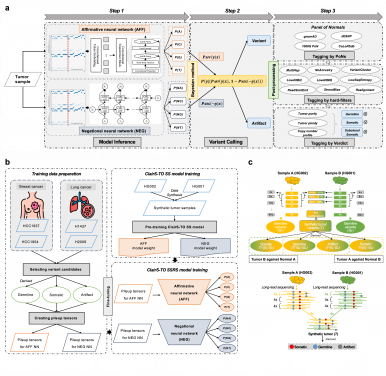
ClairS-TO addresses a key challenge in cancer diagnosis: analyzing tumor DNA without the need for matched healthy tissue samples. Standard methods require both tumor and normal samples for comparison, which are not always available. ClairS-TO eliminates this requirement using a sophisticated dual-network approach, one that confirms genuine mutations and one that rejects errors. This breakthrough enables cost-effective and reliable tumor analysis even when sample material is limited, expanding access to accurate cancer diagnosis.
Meanwhile, Clair3-RNA is the world’s first deep learning-based compact variant caller dedicated to long-read RNA sequencing. RNA editing and technical sequencing errors can easily confound the identification of true genetic variation. Clair3-RNA employs advanced deep learning techniques to accurately distinguish real mutations from biological noise and edits, allowing researchers and clinicians to simultaneously analyze gene expression and mutations with extremely high accuracy.
These algorithms are the latest additions to the famous Clair series, a suite of artificial intelligence (AI)-driven genomic tools developed by Professor Luo’s team. This series, including the industry standard Clair3, is a cornerstone of the field of computational biology. These open-source algorithms are known for their speed, accuracy, and robustness, and have over 400,000 downloads. They have been widely adopted by leading research institutions and sequencing companies around the world, setting the benchmark for third-generation sequencing data processing.
Professor Ruibang Luo commented, “ClairS-TO and Clair3-RNA, together with other algorithms in the Clair series, have established a solid foundation for genetic mutation discovery through deep learning, accelerating the adoption of precision medicine and clinical genomics.”
These advances represent a major leap forward toward more accessible, accurate, and comprehensive genetic analysis. These have the potential to improve cancer diagnosis, enable personalized medicine, and accelerate genomic research, delivering tangible benefits to patients and scientists around the world.
Link to paper:
“ClairS-TO: A deep learning method for calling small somatic variants from long-read tumors only”
https://www.nature.com/articles/s41467-025-64547-z
“Clair3-RNA: A deep learning-based small variant caller for long-read RNA-seq data.”
https://www.nature.com/articles/s41467-025-67237-y.
About Professor Ruibang Luo
Professor Ruibang Luo is an Associate Professor in the School of Computing and Data Science, University of Hong Kong. He completed postdoctoral training in bioinformatics (2010-2015) with Professor Tak-Wah Lam at the University of Hong Kong and postdoctoral training (2016-2017) with Professor Steven Salzberg and Professor Michael Schatz at the Center for Computational Biology at Johns Hopkins University.
Luo is a researcher working on bioinformatics algorithms and clinical informatics. He has published more than 80 papers, 10 of which have been cited more than 1,000 times. He has been selected as one of the world’s top 1% scholars by Clarivate Analytics since 2019, one of the world’s top 150 young Chinese scholars in AI by Baidu Research, one of the top 10 under 35 in Asia Pacific by MIT Technology Review in 2019, and one of Asia’s 30 under 30 in healthcare and science by Forbes in 2017.


