Providence, Rhode Island [Brown University] – Brown University researchers have developed a new artificial intelligence method to predict the rate at which materials used in controlled drug release systems will release therapeutic agents.
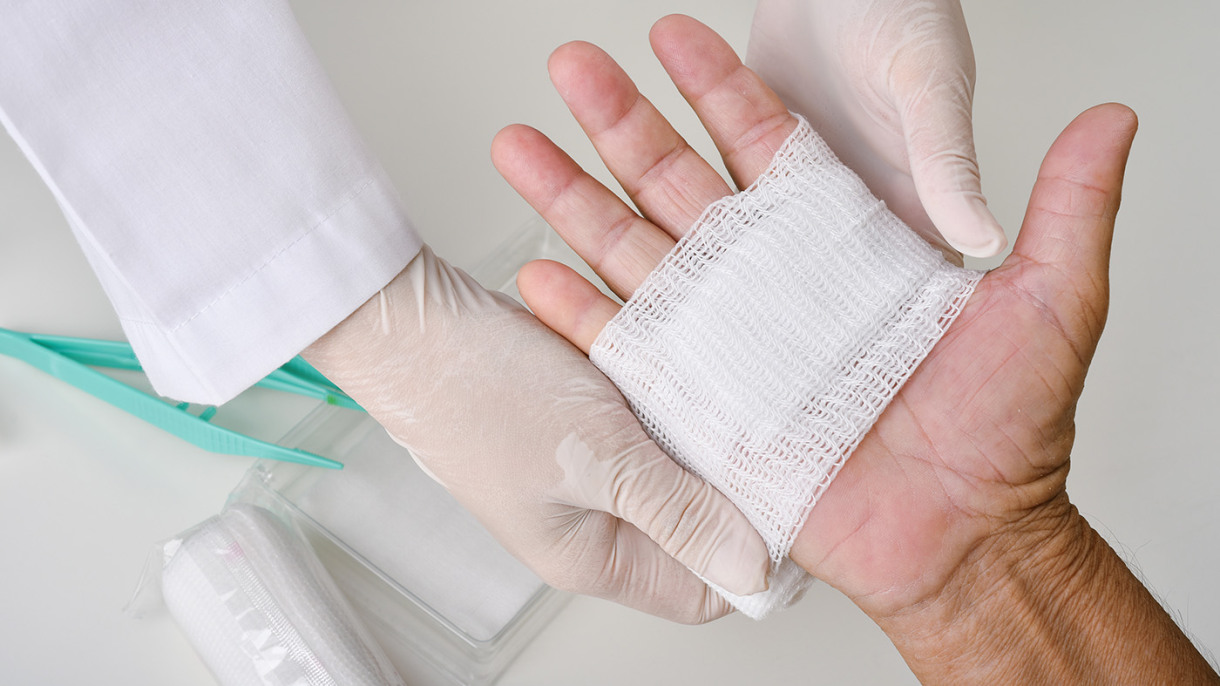
New methods have the potential to reduce development time for new therapeutic patches, bandages, and implants.
“Current methodologies for developing controlled-release materials are experimentally based,” said Vikas Srivastava, associate professor of engineering at Brown University. “You design a material, test it in experiments, fine-tune the design, and experiment again, which takes a lot of time. What we’ve developed is a way to use physics-based neural networks to make accurate predictions with very little data. This saves a lot of time in developing new drug delivery systems.”
In a study published in the Journal of Drug Delivery Science and Technology, Srivastava and colleagues tested an approach that uses physically informed neural networks (PINNs) to predict properties of candidate materials. Standard neural networks used in AI models require extensive training and large amounts of data to produce accurate predictions. But PINN, originally developed by Brown mathematician and professor George Karniadakis, starts with fundamental physical laws built into the system. This reduces training time and allows the model to return accurate predictions with little or no training data.
For this research, Srivastava collaborated with Daanish Qureshi, a 2025 graduate of Brown University, and Khemraj Shukla, associate professor of applied mathematics (research). The research team developed PINN with the ability to combine short-term experimental observations with Fick’s law of diffusion, which describes how molecules move from regions of high concentration to regions of low concentration, to predict long-term behavior in controlled release of drugs.
The researchers used existing experimental data on various controlled release substances to test how much data PINN needs to make predictions that are consistent with actual experimental results. They found that PINN only needed the first 6% of the experimental data to return accurate predictions for simple planar materials. For more complex materials with folds and wrinkles, PINN required 33% of the experimental data.
“Essentially, we are reducing the time required for experiments by 94% for simple materials and 67% for more complex materials,” Srivastava said. “In drug development, time is money, and we hope this approach will help us get products to patients faster and more cost-effectively.”
To further improve the model’s output, the researchers added a version of the diffusion model PINN that included Bayesian statistics. Even controlled laboratory experiments involve some uncertainty and noisy data. Bayesian PINNs can quantify their uncertainties and produce outputs that more accurately reproduce experimental data.
Although the research in this case focused on materials used in external patches and bandages, the same general basic concepts apply to tablets and other forms of controlled release systems. Srivastava says the basic approach presented here could also be useful for these systems.
“We believe this shows an area where AI can make a real difference in developing products that improve people’s lives,” Srivastava said.