
Demand for plant-based foods is increasing around the world. Peas, in particular, are rapidly growing as a high-protein source as a meat alternative. Peas have a low climate impact, allowing them to grow sustainably and give high yields. However, the pea varieties we grow today require intensive industrial processing.
“Currently, there are very few pea varieties used in agriculture. These peas are produced primarily for their pig feed properties, but are not intended as protein in plant-based burgers. Peas are more than just peas, just as an apple is more than an apple, despite what it may look like in the supermarket,” says Associate Professor René Rametti from the Department of Food Science.
To find the right pea variety, researchers at the University of Copenhagen's Faculty of Food Sciences developed a new AI method. They published this information in the NordGen gene bank, which includes around 2,000 varieties of pea, to identify ancient pea varieties suitable as plant protein for humans.
“The gene bank contains a huge number of varieties that are currently poorly developed. Our method makes it possible to tap into the plant resources in the gene bank and quickly find the most interesting varieties,” says René Rametti.
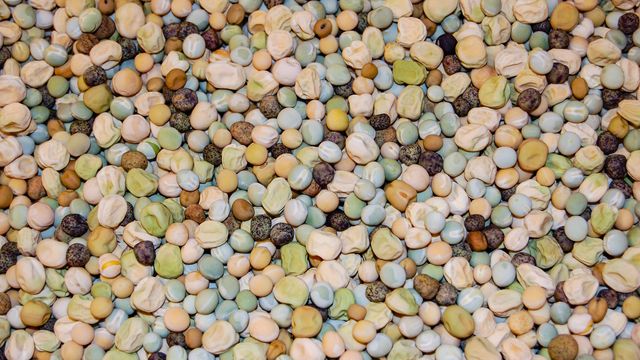
Is it smooth or wrinkled? 51 promising pea varieties found
Using a new AI method, researchers discovered 51 ancient pea varieties that are no longer used in agriculture but appear to have promising properties as plant foods, such as high starch and protein content.
This method can automatically measure the shape, color, size, and surface of seeds from regular photographs. By combining image data and information about protein content, it becomes possible to select proteins even though the AI is small. Representative samples of peas can be collected and analyzed in detail.
About NordGen
NordGen acts as a collaborative gene bank for plants in the Nordic countries and as a knowledge center for genetic resources. The genebank contains more than 33,000 seed samples from approximately 450 plant species and 95 potato varieties, which are preserved as living cuttings. NordGen's main mission is to ensure the conservation and promotion of sustainable use of genetic resources in plants, livestock and forestry across the Nordic region (see www.nordgen.org for more information).
“Different varieties have very different characteristics, especially when it comes to starch and protein content, so it makes a lot of sense to revive some of the older varieties in the search for suitable raw materials for new types of plant-based foods,” says René Rametti.
This study shows that the appearance of a seed is closely related to its chemical composition. One characteristic in particular is how smooth or wrinkled the seeds are, which is closely related to the type of starch present in the pea. This means for the first time that researchers can partially predict chemical properties based solely on images.
“The balance of two important proteins in peas, legumin and vicilin, exhibits surprisingly large variations, much greater than in today's commercial varieties. This makes old peas in the gene bank an untapped goldmine for future plant-based food development,” René Rametti concludes.
reference: Xing Q, Ye Z, Yuan B et al. Mapping seed composition of pea by strategic selection of accessions from the Nordic Gene Bank. food chemistry. 2025;492:145478. doi: 10.1016/j.foodchem.2025.145478
This article has been reprinted from the following material: Note: Materials may be edited for length and content. Please contact the citation source for details. You can access our press release publishing policy here.


