
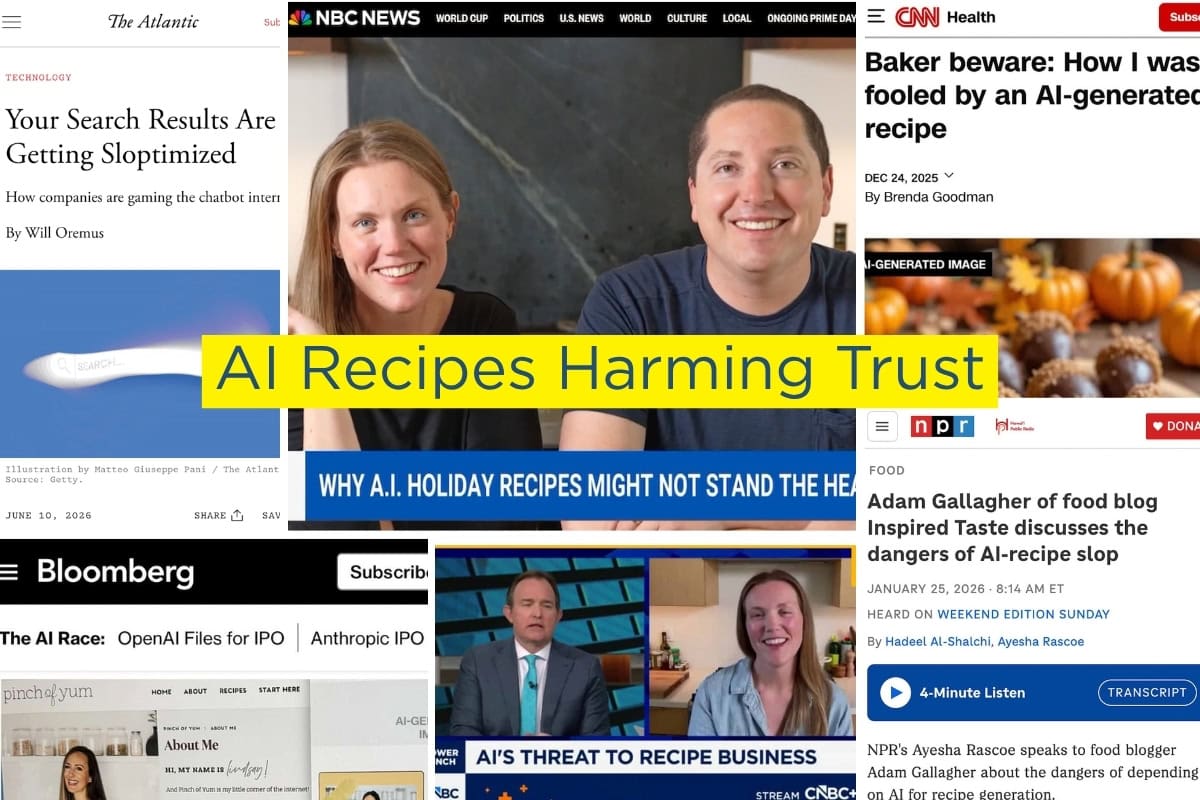
For practitioners, this recipe case is a concrete example of how generation failures can cause tangible harm to users and lead to revenue loss for creators. Models trained on scraped food text and images can combine incompatible instructions, amplify low-quality sources, or produce output that looks plausible but is actually unusable. This pattern influences trust signals in search and recommendation systems, elevating the importance of provenance, search quality, and targeted evaluation to the instruction-following generation.
The failures that can be observed in these examples are consistent with known shortcomings of generative models. That is, unsafe mixing of sources, loss of fine-grained procedural constraints (timing, temperature, measurements), and surface-level photo-to-text correlations that make the output appear reliable rather than testable. From a data perspective, scraped chef blogs, forum comments, and social pins produce an uneven and noisy training signal. Search expansion generation or summarization layers that do not encode provenance or authenticity can produce merged instructions that are internally inconsistent.
Observed impact on creators and users The report frames this as an economic and trust issue for independent recipe creators. The Guardian documents creators witnessing traffic declines and repurposing content of unknown origin, PPC Land features video tests that show wildly different results, and CNN offers anecdotes of consumer harm. The combination of declining referral traffic and visibly low-quality aggregated output risks eroding user trust in recipe search results and a broad corpus of practical, instruction-based content.
Observers and practitioners should monitor some measurable signals rather than inferring intentions.
- •Changes in search rankings for long-tail creator-owned recipe pages and aggregated AI output
- •Frequency of instruction mismatch errors in generated recipes (measurement mismatch, impossible steps)
- •Availability of provenance metadata in search snippets and model responses
- •Report lost revenue or DMCA/attribution complaints for creators related to AI-generated content
Practical takeaways for ML teams
Teams deploying instruction generation and summarization in the practical domain need to treat recipe-style content as an assessment benchmark for not only fluency but also practical accuracy. Useful approaches include more rigorous provenance-aware searches, structured schema extraction of ingredients and procedures, targeted unit tests (e.g. mass/volume conservation checks), and labeling pipelines that separate authored recipes from forum comments. Industry reports highlight that ignoring these engineering controls can produce plausible but unusable artifacts, with downstream reputational and financial implications for creators.


