
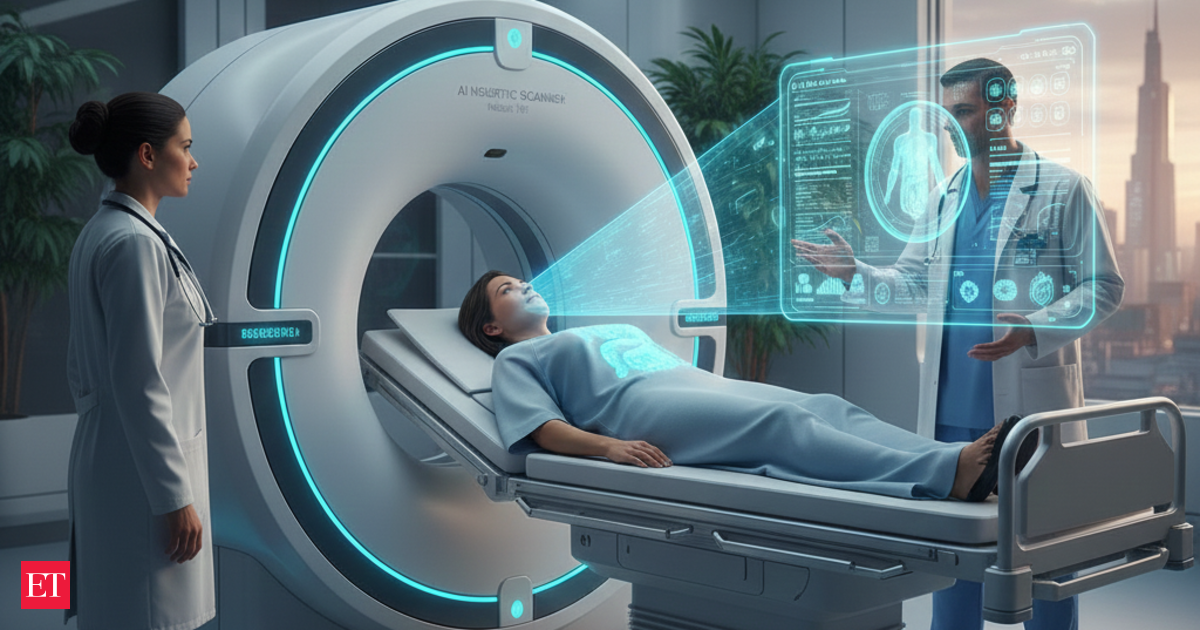
AI helps doctors act during critical golden hours
Experts at the Stroke & AI 2025 conference in Delhi said AI-based tools can analyze brain scans within seconds, allowing doctors to diagnose stroke cases faster and begin treatment within the life-saving “golden hour.” Faster decision-making can help determine whether a patient needs a clot-busting drug or an emergency procedure such as a thrombectomy to remove the blood clot.
“Time is of the essence when it comes to stroke, and AI is helping us save time,” said Dr. Kameshwar Prasad, chair of the conference. He pointed out that the process that used to take several minutes is now completed almost instantly, reducing brain cell damage and increasing the chances of recovery, TOI reported.
Experts emphasized that the impact of AI will not be limited to large urban hospitals. AI-powered telestroke services can connect district and remote hospitals and specialists in real-time to address the shortage of neurologists in small towns and rural areas. Doctors said this could significantly reduce disability and improve survival rates for patients outside major cities.
Dr Biplab Das, organizing secretary of the conference, told TOI that faster and more accurate treatment will reduce complications, reduce hospital readmissions, shorten years of rehabilitation and make stroke treatment more affordable in the long run.

India's digital health network is expanding, and experts believe the country has the potential to become a world leader in AI-driven stroke care if training and infrastructure are scaled up across the country. However, they stressed that technology alone cannot replace early action.
Doctors emphasized the importance of recognizing warning signs such as sudden weakness on one side of the body, slurred speech, drooping of the face, or loss of balance and arriving at an AI-enabled hospital without delay. They said that even as AI enhances the ability of health systems to respond quickly to stroke emergencies, timely response remains essential.
(With input from TOI)


