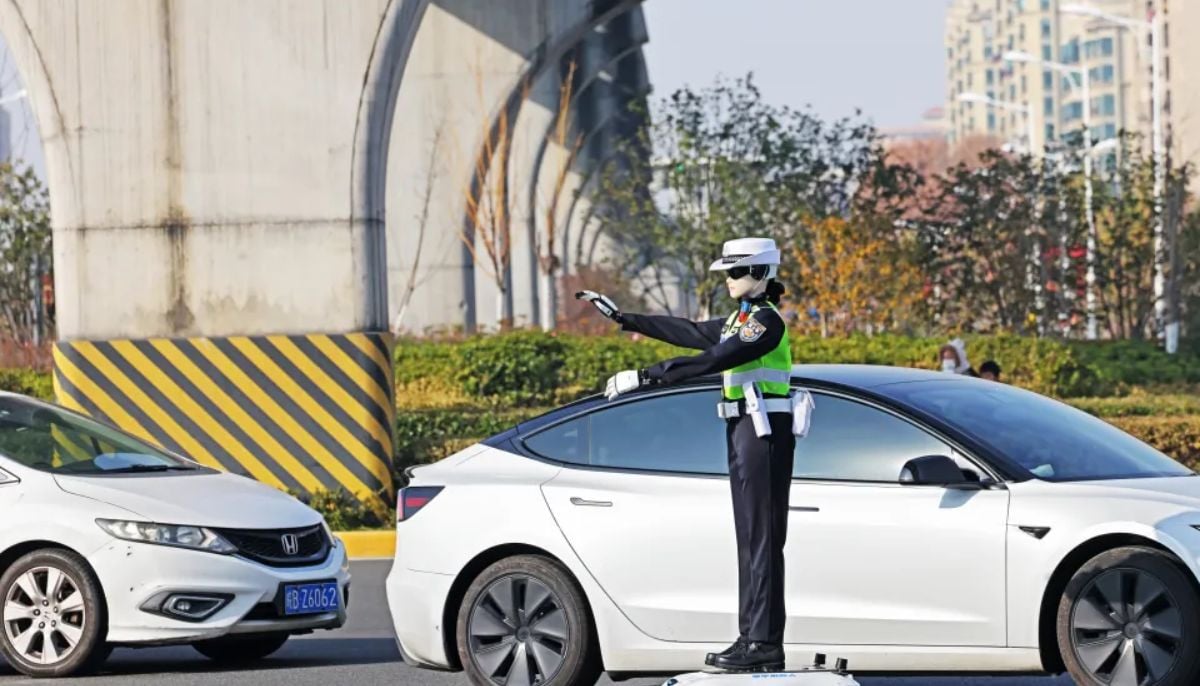
Police will begin using police robots with artificial intelligence capabilities for basic patrol tasks within the next two years, according to a recent study. Scientists believe that advanced robotic systems could help police officers prevent criminal activity, track suspects and carry out high-risk tasks.
The 1987 science fiction film “RoboCop” introduced the public to the development of AI police technology and humanoid robots, sparking both excitement and concern about the future of law enforcement.
RoboCop: A robot that never gets tired or collapses.
Professor Ivan Sun of the University of Delaware told an American Association for the Advancement of Science conference in Arizona that robot cops could soon go beyond their bomb-disposal roles. He said the machines can withstand being shot and stabbed and can track suspects over long distances without fatigue.
“We already have bomb robots,” he said. “The use of force and high-speed chases are not in our imaginations. It’s coming soon.”
A Sun study found that police departments around the world are leveraging robotics and artificial intelligence to improve operational efficiency and protect officers.
China is deploying humanoid robots to control border traffic, and Thai police departments are implementing crowd control robots with 360-degree vision into their operations. Security robots that move on wheels are operating in casinos and shopping centers in the United States and Singapore.
British Transport Police in the UK uses AI facial recognition technology to identify suspects entering public areas. Experts predict that robotic systems will develop the ability to assess threats and identify weapons from distances of more than 200 meters while making split-second decisions.
Professor Sun believes that robots will assist police in their work, so even if police organizations increasingly deploy artificial intelligence, human officers will not be completely replaced. He suggests that using the machine in conjunction with trained staff can reduce potential hazards that can occur in high-risk environments.