
Artificial intelligence (AI)-powered sexing technology uses computer vision to automatically identify and classify feather-sexed birds (approximately 80% of commercially available broilers) at a rate of up to 160,000 birds per hour.
Unlike traditional systems that require conveyors and multiple workers to manually separate and gap the sorted birds, the system's modular design automatically handles the entire process through integrated landing and distribution zones. The birds move through the system and separation occurs downstream automatically without human intervention until the camera captures an image for sexing.
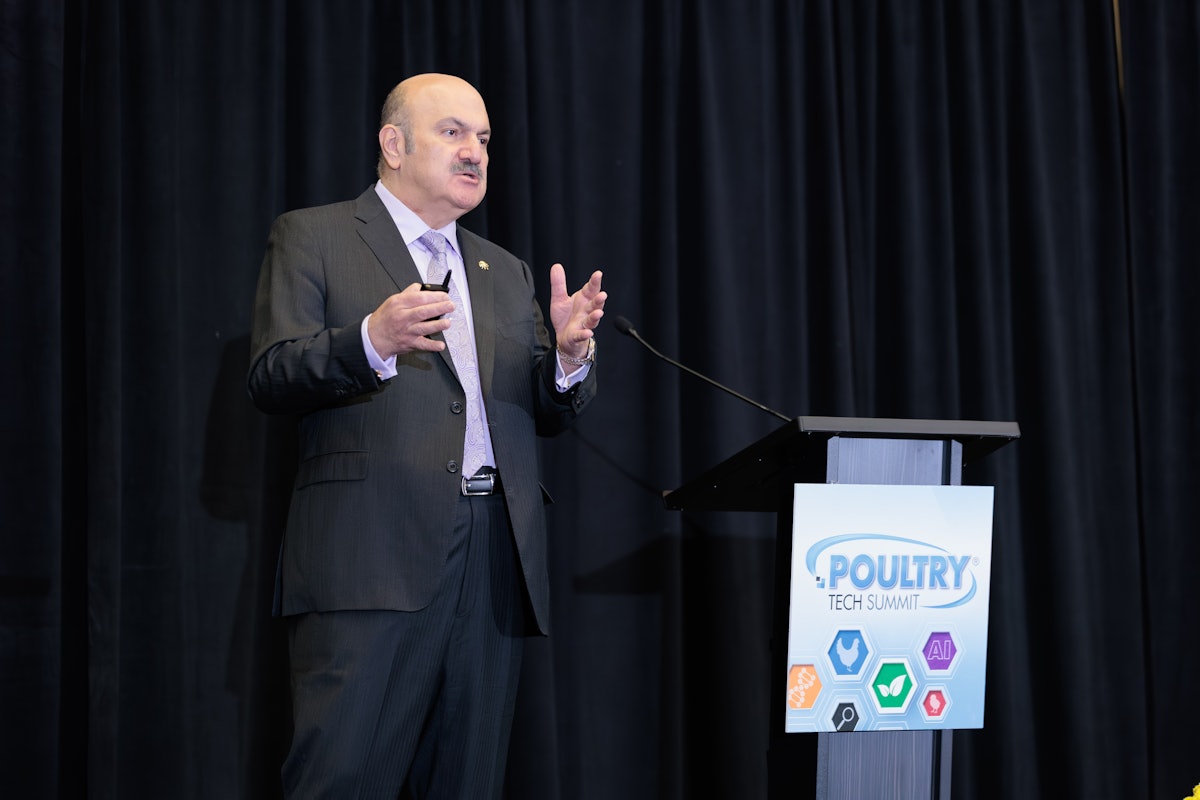
“You don't need a conveyor or four other people behind a machine to actually separate and space the birds by hand,” Ramin Karimpour, founder and CEO of TARGAN, explained at the 2025 Poultry Technology Summit. “We already do that automatically in landing zones and distribution zones.”
This system can improve the accuracy of chick selection in hatcheries while minimizing reliance on manual labor.
The economic case for automatic sex identification goes far beyond labor savings in hatcheries. Karimpour says producers who implement the technology can improve feed conversion rates by up to 2 to 5 percentage points on the farm and up to 0.5 to 2 percentage points in the processing plant, depending on whether the operation uses manual or automated boning.
Ensure reliability with cloud-based monitoring
The chick selection technology incorporates comprehensive cloud-based monitoring that tracks temperature, motor performance, camera functionality, sensor status, and operating speed in real time.
This allows hatchery managers to monitor performance via smartphone, tablet, or desktop computer, while enabling field service teams to identify and address potential issues before downtime occurs.
The system operates on a lease model where payment is dependent on system operation, directly aligning the company's financial incentives with customer success and system reliability.
Vaccine delivery technology will arrive in 2026
Building on its success with gender identification, TARGAN plans to launch a complementary vaccine delivery system in 2026 that uses the same AI-powered computer vision technology to individually vaccinate chicks at the same high throughput rate.
Karimpour said hatcheries that process 1 million birds each week could save between $2.2 million and more than $4 million a year in feed costs by reducing disease circulation and improving bird health with improved vaccination effectiveness.

