

This post is also available at:
 Jesus (Hebrew)
Modern militaries are generating more data than ever before, but turning that data into timely battlefield advantage remains a challenge. Sensors, drones, logistics systems, and command networks all generate massive flows of information faster than human staff can absorb or manipulate. While the availability of artificial intelligence tools is increasing, militaries are struggling to deeply integrate this technology into daily operations rather than treating it as an external add-on.
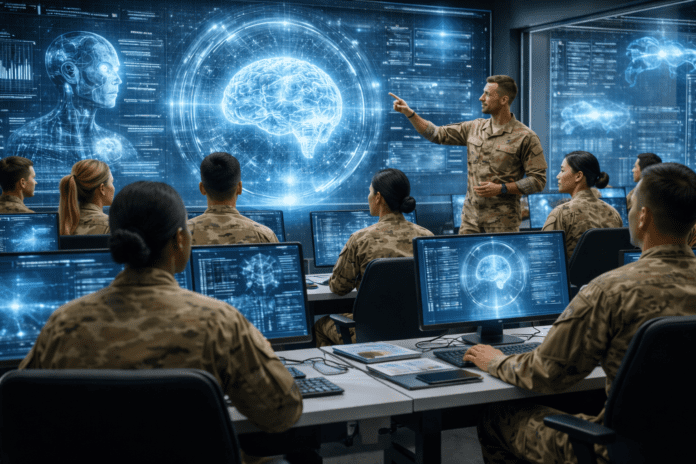
The U.S. Army is now taking structural steps to address that gap by establishing a dedicated officer specialty focused entirely on artificial intelligence and machine learning. This new role, called 49B Artificial Intelligence/Machine Learning Officer, aims to develop a unified professional whose primary mission is to integrate AI capabilities directly into operational units and planning processes.
The Army is building in-house expertise within its officer corps, rather than relying primarily on contractors and civilian analysts. Personnel participating in the 49B Pathway will receive training in developing, deploying, and maintaining AI-enabled systems, with an emphasis on practical application rather than theoretical research. The goal is to ensure that AI tools are easy to use, reliable, and fit the needs of the real battlefield.
According to Interesting Engineering, this new specialty will be offered to officers through the Army's Volunteer Transfer Incentive Program, allowing mid-level personnel to transition into new fields. There are no formal prerequisites, but candidates with a technical or academic background in data science, machine learning, or related fields are expected to be competitive. The first formal selection committee is expected in early 2026, with initial officers completing the transition by the end of the financial year (September 2026).
Once qualified, 49B officers operate across multiple mission areas. Their efforts are expected to support faster decision-making at tactical and operational levels, improve logistics planning and supply forecasting, and support the large-scale fielding of autonomous and semi-autonomous systems. This includes overseeing AI-enabled drones, robotics, and data-driven command tools that are already in operation.
From a defense perspective, this move reflects a recognition that AI is no longer experimental. As the country's military invests heavily in autonomy, algorithmic targeting, and decision support, the ability to quickly adapt and trust AI systems will become a core element of combat effectiveness. Uniform inclusion of AI specialists also reduces dependence on external providers in competitive or sensitive environments.
Army leaders describe this new path as a permanent change rather than a pilot program. By restructuring career structures to incorporate AI expertise, they are demonstrating that machine learning is becoming as fundamental to modern warfare as communications and intelligence. These must be owned, understood and directed from within the force itself.


