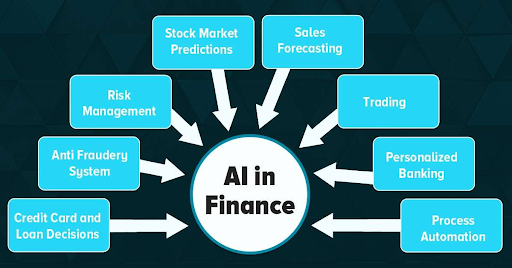
The financial industry is undergoing a major transformation due to artificial intelligence (AI). From predictive analytics to fraud detection to portfolio optimization, AI in finance is revolutionizing the way financial institutions operate, make decisions, and deliver value. As AI technology evolves, its role is expanding beyond automation and redefining the strategic foundations of financial services.
In a world where every millisecond counts, implementing AI in finance is no longer just a competitive differentiator, but a necessity for long-term success in the digital economy.
The evolving role of AI in finance
AI in finance has progressed from pilot projects to enterprise-wide transformation across the financial sector. today, AI for finance It is widely adopted by banks, insurance companies, and investment firms for creditworthiness assessment, risk management, portfolio optimization, and large-scale anomaly detection. By leveraging machine learning models and advanced analytics, financial institutions are moving beyond traditional rules-based approaches toward more adaptive and intelligent systems.
By processing massive datasets in real-time, AI enables financial leaders to make data-driven decisions faster, increasing accuracy while significantly reducing human error. This level of analytical precision is especially important in areas such as trading, compliance, and risk management. In this sector, traditional models often have difficulty responding to market complexity and rapid change. For example, advanced AI algorithms can identify early signs of market volatility, allowing companies to proactively adjust portfolios, improve risk management, and protect assets well before disruption materializes.
Real-world applications redefining financial services
- Predictive risk management
AI models analyze historical and transactional data to predict loan defaults, credit risk, and market fluctuations. These insights allow financial institutions to improve underwriting and enhance the accuracy of credit scoring. - Fraud detection and compliance
Machine learning algorithms continuously monitor transactions and detect anomalies and suspicious activity. This real-time capability helps organizations avoid financial losses while maintaining compliance with global regulatory standards. - Personalized financial advisory
AI-powered robo-advisors provide customized investment recommendations based on your personal goals, risk appetite, and spending patterns. These systems make asset management more accessible and provide personalized advice services to a wider range of users. - Algorithmic trading and market prediction
AI-powered trading systems execute trades with high frequency and precision and instantly adapt strategies based on live market data. This adaptability allows you to maximize returns while minimizing risk. - Streamline and automate operations
AI automates repetitive tasks such as reconciliation, reporting, and data entry, reducing costs and freeing professionals to focus on strategic decision-making.
Why financial leaders are investing in AI
Financial institutions are turning to AI to drive agility, compliance, and resilience as they operate in an environment marked by volatility and regulatory pressures. The impact of AI adoption is clear across key dimensions.
- Speed and accuracy: Real-time analysis enables faster and more accurate decision making.
- Cost optimization: Automation streamlines operations and reduces overhead.
- Risk mitigation: Predictive insights help you proactively manage your financial risks.
- Enhance customer experience: Intelligent personalization builds trust and loyalty.
Partnering with an experienced AI consulting service enables these benefits to be realized efficiently and sustainably, allowing institutions to scale their AI deployments with minimal risk.
Overcoming implementation challenges
Introducing AI into the financial sector has compelling benefits, but it also comes with challenges. Legacy systems, fragmented data, and strict regulations often impede progress. A strategic roadmap that is aligned with business objectives and supported by ethical and explainable AI is critical to success.
Partnering with an established AI consulting firm can help you overcome these barriers. These companies bring cross-domain expertise in data architecture, model validation, and compliance frameworks to ensure that AI deployments meet both operational and regulatory standards.
Upskilling employees is equally important. Finance professionals need to understand how to interpret and responsibly act on AI-generated insights to protect trust and accountability.
From concept to impact: The role of AI implementation services
Moving from experimentation to full-scale integration requires structured execution. This is important. AI introduction service play an important role. These services help organizations identify high-value use cases, develop scalable models, and securely deploy them across the enterprise.
It also establishes a governance framework for transparency and continuous improvement. By combining advanced analytics and process expertise, deploying AI ensures that technology augments human judgment, rather than replacing it.
AI products that accelerate transformation
To maximize the value of AI in finance, companies are increasingly adopting specialized AI products that bridge the gap between strategy and execution. Hackett Group® offers two breakthrough solutions designed to rapidly track AI transformations and drive measurable results: AI XPLR™ and ZBrain™.
- AI XPLR™ We help organizations identify, evaluate, and prioritize AI opportunities using Digital World Class® standards to accelerate decision-making across business functions, including finance.
- ZBrain™ It serves as an intelligent execution platform that operationalizes AI insights, enabling finance teams to automate workflows and deploy secure, scalable solutions.
Together, these tools create a cohesive ecosystem that turns AI ambitions into enterprise-wide execution.
Driving digital transformation in finance
AI is at the heart of digital transformation, reshaping the way financial institutions operate, compete, and innovate. By integrating AI across end-to-end financial workflows, organizations can move from legacy-driven systems to intelligent, data-centric ecosystems that drive agility and continuous improvement.
Through digital transformation, companies can modernize core systems, integrate data, and implement AI-driven processes that increase productivity and transparency. Partnering with an experienced digital transformation provider ensures that your AI deployment aligns with broader modernization goals that bring together cloud, analytics, and automation within a unified framework.
By combining AI innovation and transformation expertise, financial institutions can future-proof their operations and establish a scalable foundation for sustainable growth.
Future Outlook: From Automation to Intelligence
The next stage of AI in finance will be defined by adaptive intelligence, or systems that can reason, predict, and advise autonomously. Generative AI and large-scale language models are set to transform financial planning, reporting, and compliance documentation.
Imagine a CFO leveraging an AI co-pilot that synthesizes real-time insights, identifies risks, and recommends strategic actions in seconds. This paradigm shift redefines the role of finance, allowing teams to focus on strategy and growth rather than administrative tasks.
Success in this new era depends on continuous learning, ethical governance, and strong collaboration between humans and machines.
Conclusion: Building an Intelligent Enterprise
AI is no longer a future consideration, but a present necessity. Financial institutions that strategically adopt and implement AI can reap lasting benefits in efficiency, risk management, and customer experience.
Leveraging advanced tools like AI XPLR™ and ZBrain™ and supported by expert AI consulting services, organizations can move beyond the pilot and toward impactful transformation. Partnering with a trusted AI consulting firm ensures that each initiative aligns with long-term business goals, regulatory requirements, and ethical standards.
The future of finance will be shaped by people leveraging AI not just for automation, but for intelligence, strategy, and sustainable growth.