monetary policy report | Winter 2026 (Box 2)
(Author: Jakub Moučka, Tatiana Vivodíková)
With the advent of chatbots like ChatGPT and Gemini, artificial intelligence (AI) has become more accessible than ever. People use it as an assistant to facilitate their work both in their personal and professional lives. In the corporate sector, the emergence of AI is reshaping production organizations and influencing decision-making and the direction of innovation. The scope and methods of AI utilization vary depending on the company’s size and business field.
The purpose of this analysis is to assess the scope and structure of AI implementation in companies across Europe and to identify the potential impact of AI on productivity gains and competitiveness. This analysis is based on Eurostat survey data.[1] About ICT use and electronic commerce in companies. The survey is conducted annually[2] Covers businesses with 10 or more employees (and self-employed individuals) across the major NACE categories of economic activity.
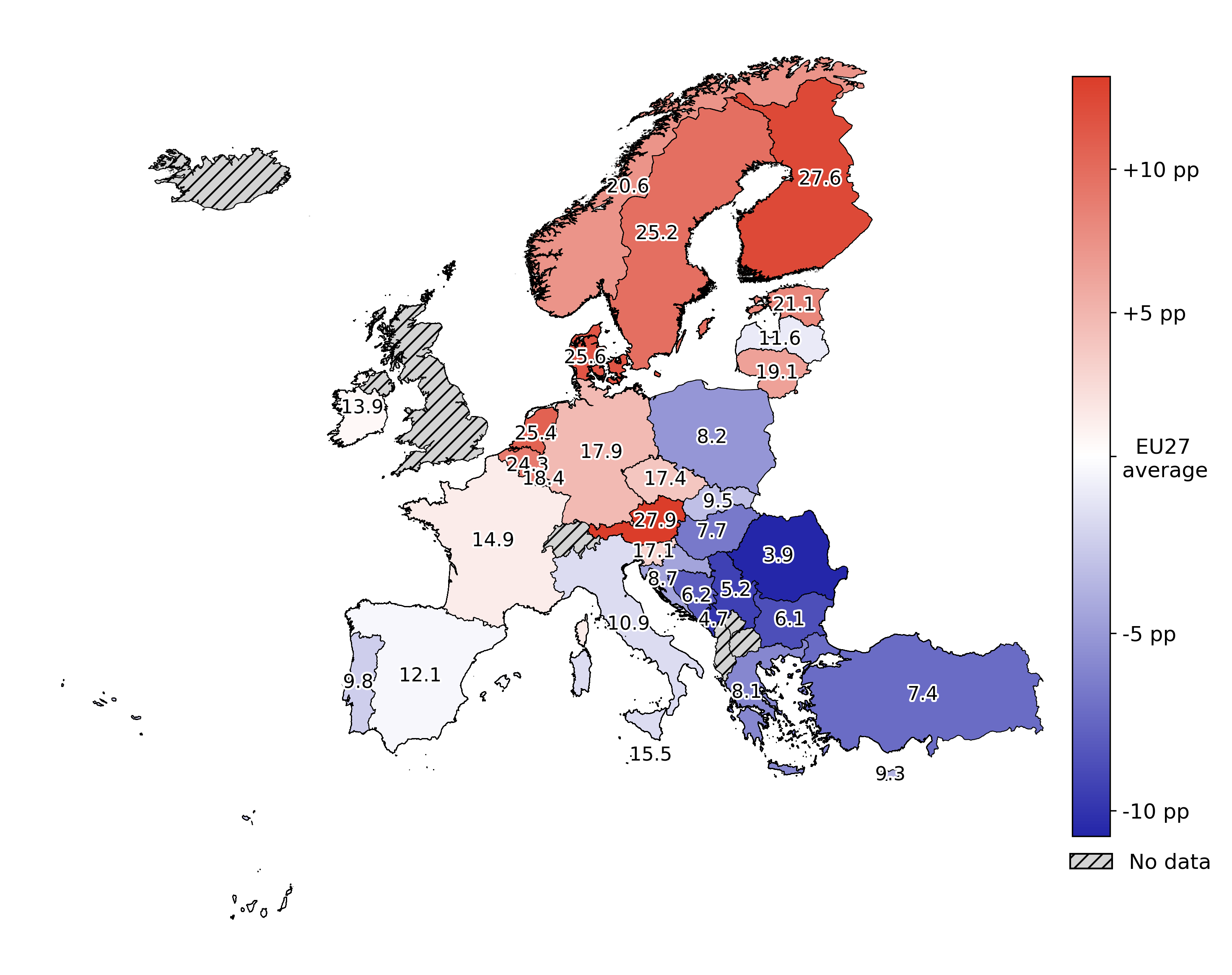
European companies are gradually starting to incorporate AI into their processes (see Figure 1). Central and northern European countries such as Finland, Sweden, Denmark, and Austria are leading the way in the use of AI. These economies are investing heavily in software[3] relative to both GDP and gross fixed capital formation. The Czech Republic ranks above the EU average (14.6%) in terms of its use of AI. In contrast, southern European countries and most eastern EU member states remain below the EU average. According to the analyzed data, AI is mainly used in large enterprises. By 2025, more than 50% of large companies surveyed in the EU will be using AI. The AI adoption rate was about 30% for medium-sized companies, while it was less than 20% for small and medium-sized companies. The lower adoption rate among small and medium-sized businesses likely reflects the cost of acquisition and the complexity of implementing AI into existing processes.[4]
Chart 1 – Countries in Central and Northern Europe record the highest use of AI
The numbers on the map show the percentage of AI use among companies in each country. The color scale shows the difference in AI usage in pp from the EU27 average (blue = below average, red = above average). Shaded areas indicate missing observations. Data for 2025. Source: Eurostat
Increasing heterogeneity in the use of AI is observed not only across countries but also across economic activities[5] (See Figure 2). The highest levels of AI adoption are in information and communication and professional, scientific, and technical activities, where companies typically have more highly qualified employees. These areas will also see a sharp increase in the use of AI from 2023 onwards. In contrast, manufacturing, wholesale and retail industries[6] AI adoption rates in these areas are also low, but are gradually increasing. One explanation could be that lower adoption rates in these areas are leading to higher implementation costs. According to data from the Czech Statistical Office (CZSO), these companies have recently recorded a decline in profitability and therefore have limited resources to invest heavily in AI or integrate it into existing processes. Another possible reason is the lack of talented people in the AI field.
Figure 2 – The use of AI is most prevalent in information and communication technologies
Use of AI in EU Member States. % in a particular sector. Source: Eurostat
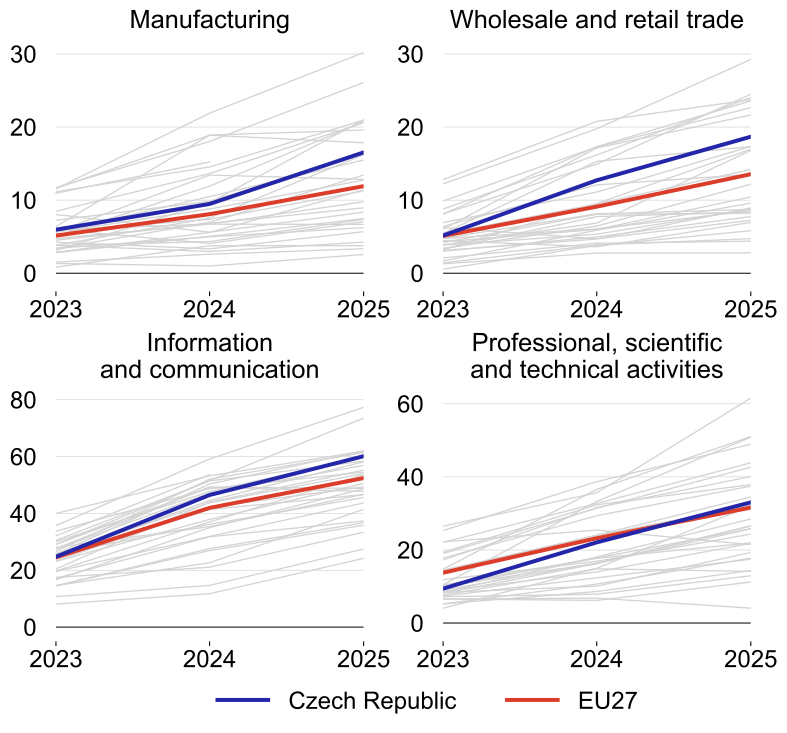
Austria is the most powerful neighbor of the Czech Republic. Another long-standing feature has been a high proportion of software investment. At the other end of the regional spectrum are Slovakia and Hungary, where adoption of AI in business processes has been much slower than other countries and remains well below the EU average. The Czech Republic performs above average in the main activities of the manufacturing industry. There is also a strong foundation for leveraging AI in wholesale and retail trade in the Czech Republic, where companies face wage pressures in a tight labor market. This could increase incentives to invest in technologies that improve productivity and optimize logistics and prices.
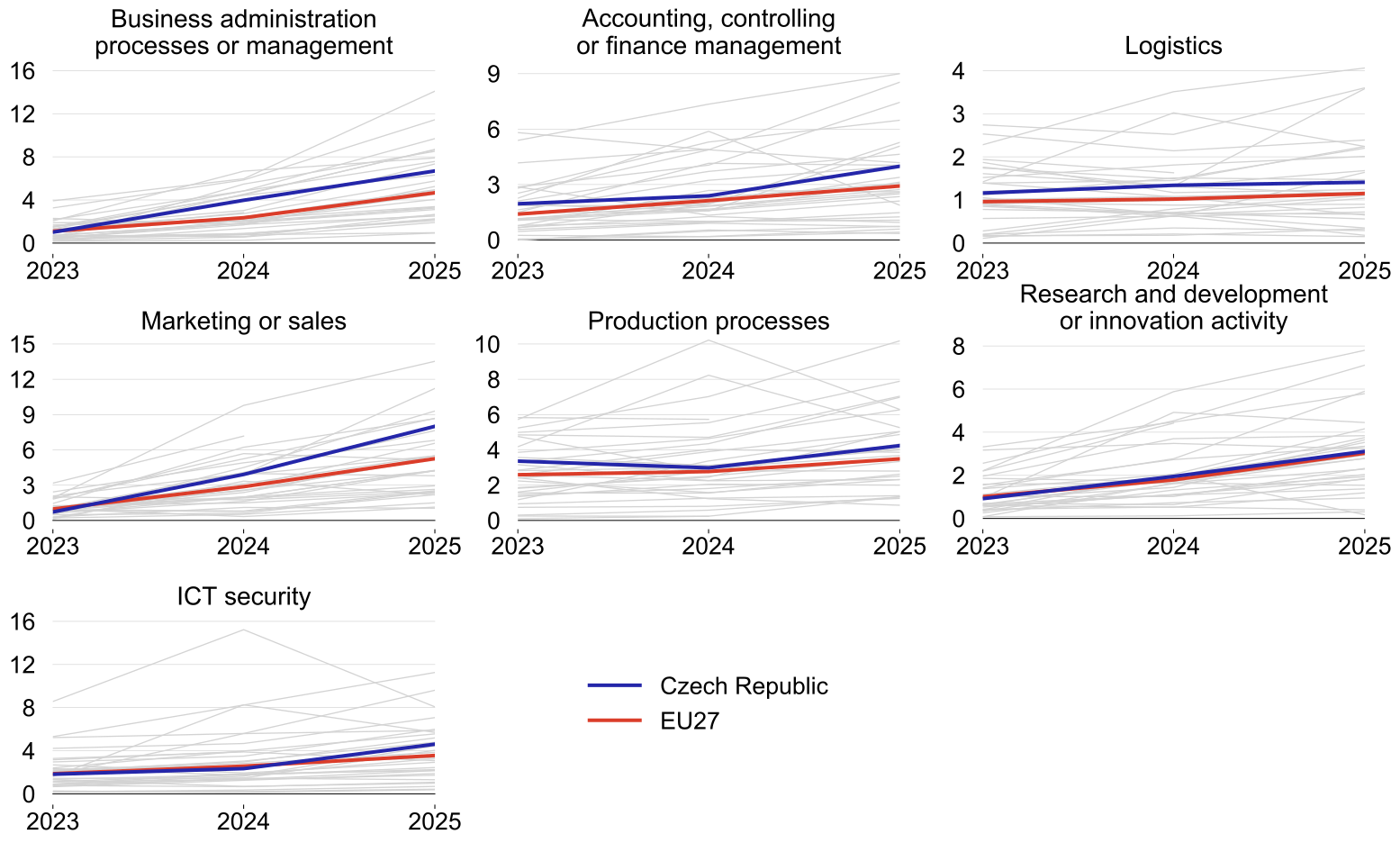
A closer look at the use of AI in manufacturing (see Figure 3) reveals the activities in which companies most commonly use AI. The most commonly used are Business Administration and Administration, Marketing and Sales, and Accounting. In contrast, in logistics, ICT security, and production processes, the level of AI use is lower, albeit gradually increasing, perhaps reflecting the increasing technological and capital demands for implementing AI in these areas. In particular, 2024 and 2025 will see a significant increase in the use of AI in marketing and management/administration activities. This may be due to companies seeking to use existing resources more efficiently and reduce costs in response to increased competitive pressure and declining profitability in this sector. It is natural to think that companies would prefer tools that allow them to easily access and implement more complex solutions aimed at optimizing their production processes at a lower cost.
Figure 3 – In manufacturing, AI is primarily used in administrative processes and marketing.
The use of AI in manufacturing in EU member states. % by activity. Source: Eurostat
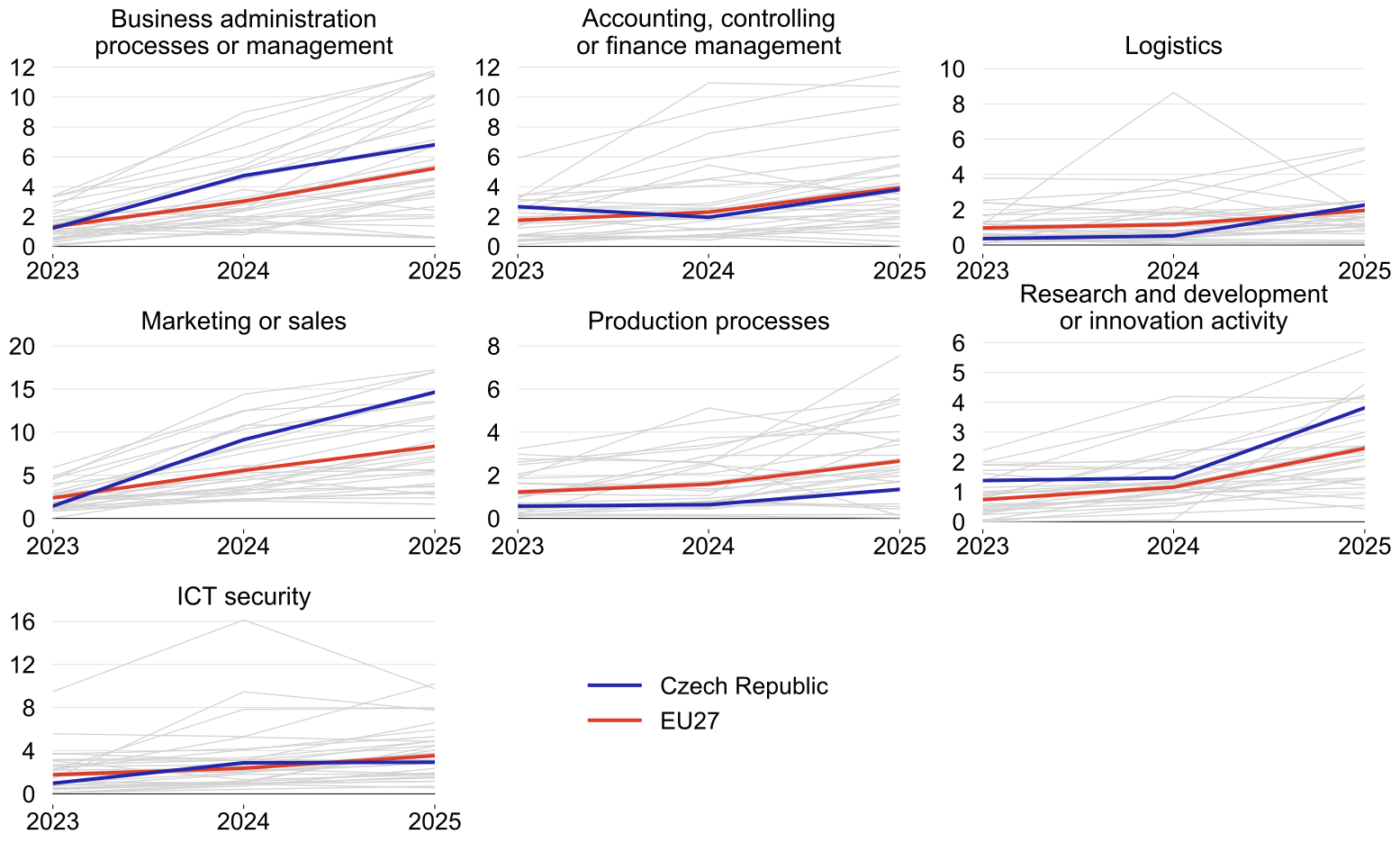
Czech companies leverage AI more than average across most processes in trade (see Figure 4). The biggest leads are seen in marketing and sales, where the use of AI is rapidly increasing, reaching 15% by 2025. These figures place Czech companies among the leaders in Europe.
Overall, the adoption of AI in Czech companies is increasing across the economy. The use of AI is higher than the EU average, and especially in the past year, AI technology has developed rapidly and expanded into all areas of daily life and business processes. But if we look deeper, we see that there is still room for more intensive use of AI in all sectors, especially manufacturing, and in all business processes. In recent years, manufacturing has faced major challenges such as the energy crisis and competition from low-cost economies. One way to increase your competitiveness is to increase your investments, including the introduction of AI into your business processes.[7] Investments in AI have the potential to further improve productivity in the future. Therefore, the current winter 2026 MPR forecast includes a small expert-based upward revision of labor productivity growth for both last year and the upcoming period. This could increase the potential growth rate of the economy as a whole in the medium term. This trend is also encouraged by the government through subsidy programs.
Figure 4 – In trade, AI is most used in marketing and sales
Use of AI in wholesale and retail trade in EU member states. % by activity. Source: Eurostat
[1] Further information about the study can be found on the Eurostat website. In 2024, 157,000 companies, or about 10%, of the approximately 1.54 million related European companies were targeted for investigation. In the Czech Republic, approximately 8,000 companies out of over 40,000 (approximately 20%) were surveyed each year, with a response rate of approximately 90%.
[2] A pilot study on the use of AI was conducted in 2021. This has been a standard part of surveys since 2023. Therefore, the analysis uses data from that year forward.
[3] Total software investments span a broader range of areas, including invoicing, accounting, and customer service, than AI-related software alone. In 2024, Austria ranked fourth among the selected sample of countries in terms of software investments relative to gross fixed capital formation, accounting for 14% of software investments in the same year. In the Czech Republic, the figure was 13%.
[4] See also “Use of Artificial Intelligence in Enterprises”, European Commission, 2025.
[5] The analysis focuses on manufacturing, wholesale and retail trade, the largest sectors of the Czech economy and important activities in terms of GDP generation. Information and communication and professional, scientific and technical activities are crucial for the growth of future economic potential due to their role in software development and research.
[6] For clarity, the term “wholesale and retail trade” in this box refers to the entire Section G of the NACE Rev. 2 classification, whose full title is “Wholesale and Retail Trade, Motor Vehicle Maintenance and Repair.”
[7] For more information, see the survey České farmy berou AI vážně. Celkem 9 z 10 s ní už v roce 2026 počítá (Czech companies are taking AI seriously: 9 out of 10 already expect to use AI in 2026 – Czech only), Czech Artificial Intelligence Association, January 2026. This study shows that the implementation of AI is becoming a standard feature of Czech companies’ investment strategies. Most companies see AI as a tool to increase productivity, improve process efficiency, and maintain a competitive edge. Approximately 90% of companies surveyed plan to use AI in 2026.