

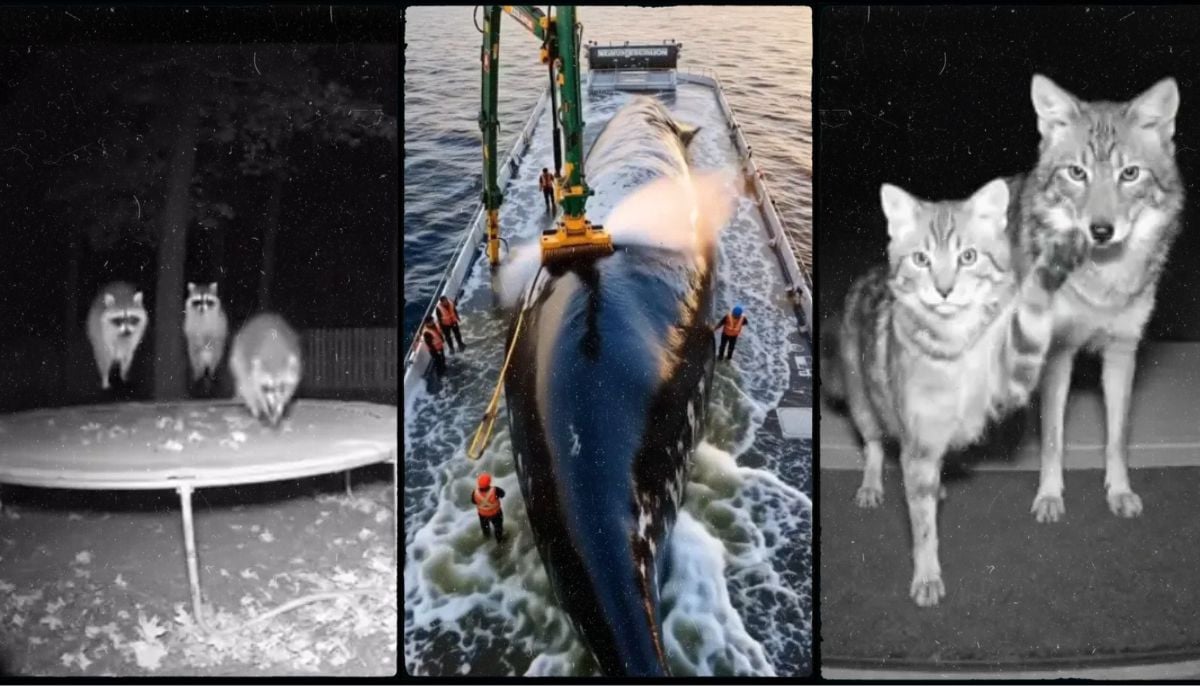
Generative artificial intelligence is taking over much of the online content, and the internet is full of adorable AI-generated animal videos.
Strange clips of a lion running away from a mouse, a wolf having fun on a trampoline, and an interspecies playdate have been dominating social media feeds lately.
However, recent research shows that conservation biology warns against these types of videos, saying these convincingly fake creations are putting conservation efforts at risk.
This paper was authored by José Guerrero from the GESBIO Group at the University of Córdoba, Spain. In an interview with Phys(dot)org, he said, “These reflect characteristics, behaviors, habitats, or relationships between species that are not real.”
Guerrero said the videos often depict predators and prey playing together and show animals exhibiting human-like behavior that is far removed from reality.
Research collaborator Rocio Serrano pointed out that this kind of indistinction between humans and animals is only exhibited by children attending school due to a lack of knowledge.
The authors added that such “unrealistic” and “fabricated” scenarios pose a danger to conservation efforts, adding: “These videos show a wealth of endangered species, which is very negative for conservation.”
The study also said that these videos may give children the false impression that they might want to play with the dangerous animals they see in the AI-generated videos.


