
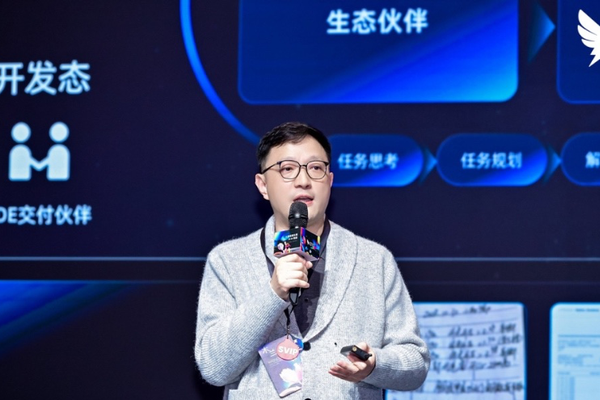
On the afternoon of December 23rd, the 2025 DingTalk Summit – General Manufacturing Special Session hosted by DingTalk was successfully held. Focusing on the paradigm upgrade of manufacturing in the AI era, the event brought together representatives from numerous DingTalk ecosystem partners and manufacturing companies to jointly discuss the thorough integration and value realization of AI technology in core manufacturing processes such as order fulfillment, production scheduling, quality control, and process optimization.
Zhu Hon, DingTalk CTO: AI that does not participate in the production process is essentially just a demo
“China is a manufacturing powerhouse. Currently, more than 50% of China's top 500 manufacturing companies use DingTalk, covering more than 30 major manufacturing categories,” Zhu Hong, CTO of DingTalk, pointed out in his opening speech. For AI to truly take root in the manufacturing industry, it needs to be introduced into companies' production processes.
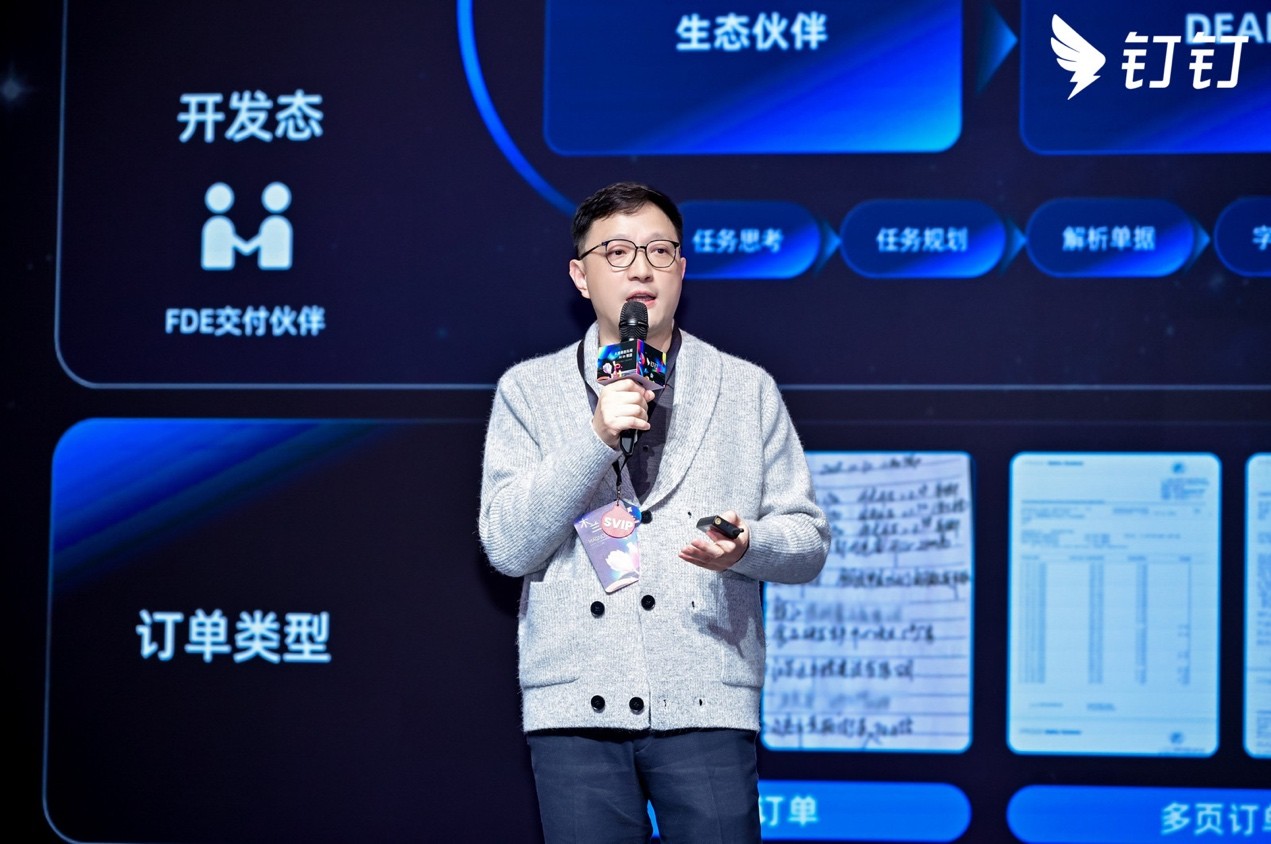
When manufacturing companies leverage AI, general-purpose large-scale models alone cannot solve problems. The real complexity lies not in the algorithms, but in the ability of AI to continuously deliver long-term operations, continuous collaboration, and ever-changing business scenarios. He believes that AI in manufacturing must be a combination of industry-specific models and systematic capabilities of agile agent development.
For this reason, DingTalk chose to build an agent OS. It's not just an AI feature, it's an operating system that allows you to run AI in your enterprise over time. DingTalk provides underlying AI capabilities such as computing power, access to various large-scale model capabilities, and low-code and no-code development platforms to enable enterprises to rapidly generate and iterate business applications. Ecosystem partners bring industry algorithms and practical experience to enable the implementation of differentiated scenarios. Through a “platform + ecosystem” approach, R&D becomes more agile and intelligent, enabling business innovations within the enterprise to be implemented faster and continuously iterated.
Zhu Hon emphasized that there are three core concepts in DingTalk's construction of this operating system. One is user-centric and AI-driven. We don't use AI for AI's sake, we use it to solve real problems in our production processes. Second, empowerment. AI is not a one-time project. It should be reusable, repeatable, and extensible. DingTalk works with partners who have deep platform knowledge to build platform capabilities. Third, the scenario must be implementable. AI that does not participate in workshops, work teams, or production processes is essentially just a demo.
Take Youcheng as an example. After using Order Agent, developed based on DingTalk's DEAP platform, Youcheng reduced the processing time for unstructured orders from an average of 1.4 hours to less than 30 minutes, improving efficiency hundreds of times. At the same time, based on co-creation practices with customers, DEAP developed a dual-format paradigm in which the “development state” is responsible for agile construction and the “operation state” is responsible for efficient execution, to address the long-tail customization needs of the manufacturing industry.
Regarding the assurance system, Zhu Hon detailed the core design of the DEAP platform in security and data engineering. The platform supports full-scale private deployments and creates a trusted data security environment through end-to-end encryption, identity authentication, privilege systems, and full-link auditing. DEAP also introduces “data engineering.” It continuously transforms messy, unstructured data into high-quality data that can be used directly by AI through a “machine + human” collaborative model. This feeds back into the iterative optimization of company-specific models, forming an evolutionary closed loop that “gets smarter and more professional as you use it.”
Collaborate with ecosystem to create intelligent agent “Zhi Xiao Q” to tackle production quality control challenges
As DingTalk's deep co-creation ecosystem partner in the field of manufacturing AI, Yao Chi, founder and CEO of Yizhiweisi Intelligent Technology Co., Ltd., shared how the two sides worked together to solve the most core quality control challenges in industrial settings. He pointed out that manufacturing production lines have long had problems, including isolated data islands, complex semantics, and traditional analysis that relies heavily on engineer experience and professional software. Therefore, based on DingTalk's DEAP platform, combined with middleware functions such as AI table and AI voice recording, Yizhiweisi jointly developed “Zhi Xiao Q”, an intelligent agent product focused on production quality control.
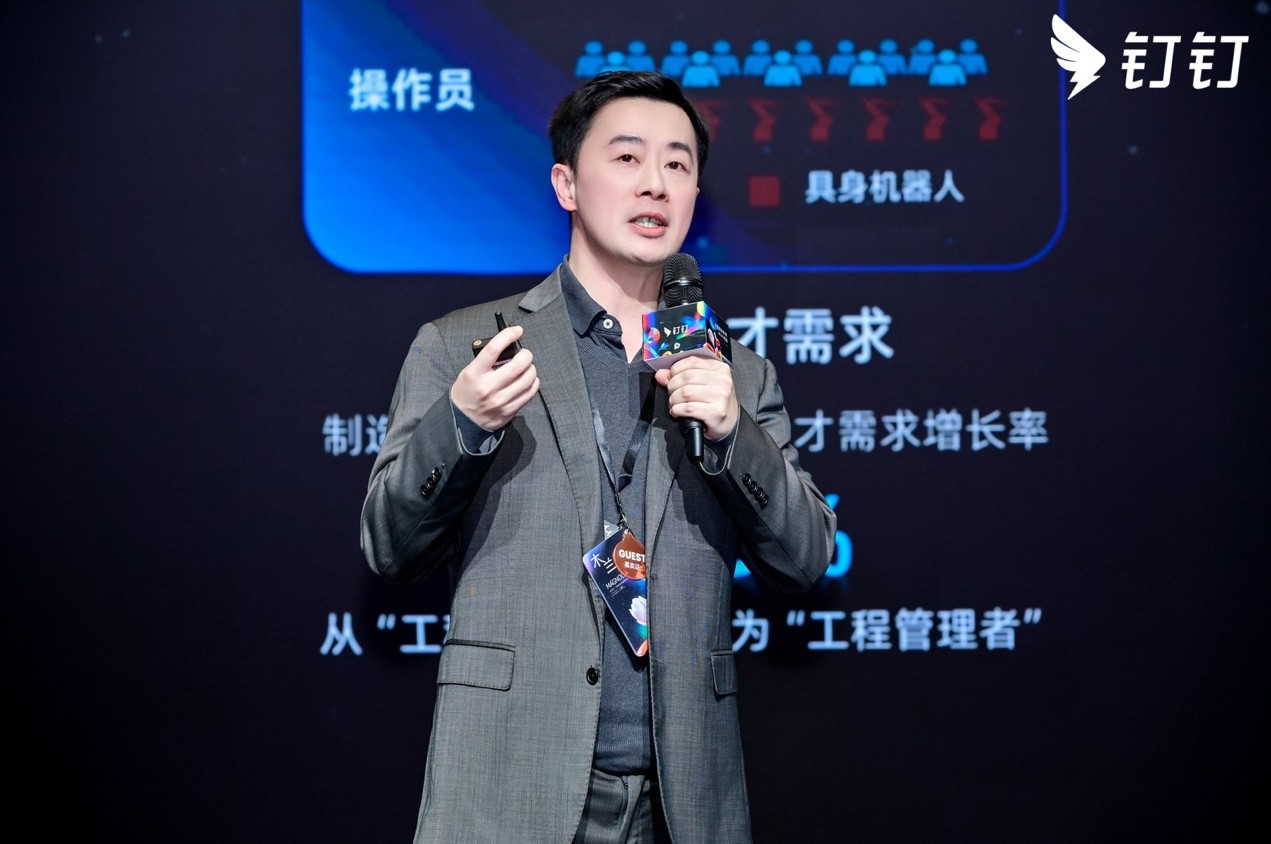
The core innovation of “Zhi Xiao Q” is that it is not a single language model, but a composite intelligent agent that integrates a large-scale industrial time series model and a large-scale industrial vision model. This “large-scale model + professional tool add-on” architecture allows AI to truly understand the physical meaning behind time-series data such as current, voltage, and vibration on the production line, unearth patterns in complex production processes, and realize the leap from “language recognition” to “machine language interpretation.”
In actual implementation, “Zhi Xiao Q” can take on the daily work of quality engineers. For example, when an engineer issues an instruction such as “Run an SPC analysis every night at 6pm,” the intelligent agent automatically retrieves data from the MES/ERP system, calls built-in specialized tools to generate control charts, and provides analysis conclusions.
Yao Chi used the world's leading sensor company as an example. In the production line of the company's Chinese factory, “Zhi Xiao Q” has already been able to independently complete about 40% of the tasks of production quality engineers, covering important links such as business insight, process capability analysis, anomaly detection, and forecasting. All deployments are completed locally at the customer's site and no data leaves the factory, ensuring absolute security of production data. The combination of DingTalk's Agent OS platform and the deep industry capabilities of our ecosystem partners allows us to efficiently make explicit and standardize the manufacturing industry's tacit knowledge, quickly generalize it to different scenarios, and provide a reusable paradigm to solve the industry's long-tail needs.
Direct work experience from benchmark manufacturing companies such as steel, electrical, solar power, etc.
At the event, representatives from benchmark companies in industries such as steel, electricity, and solar power shared their real-world experiences on AI and business integration from their respective perspectives.
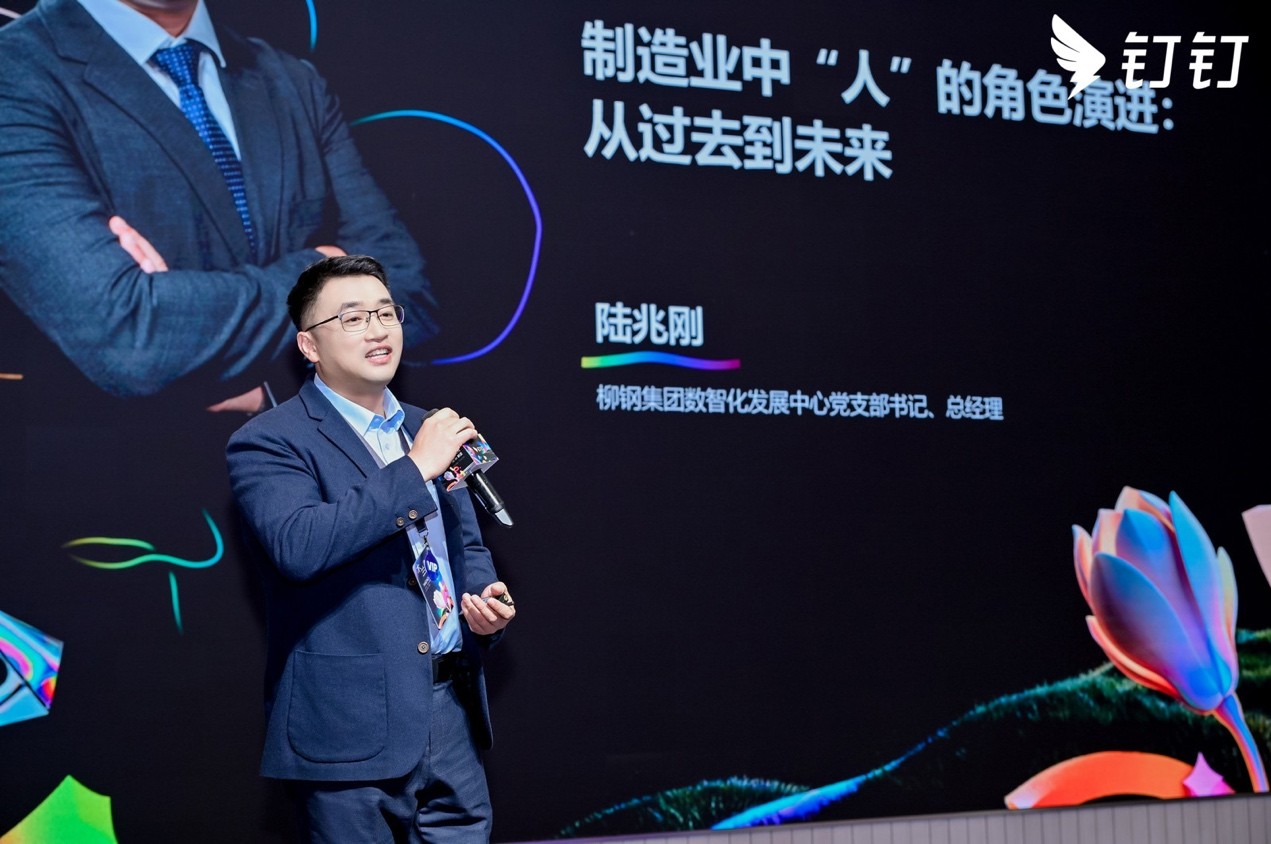
Lu Zhaogang, party branch secretary and general manager of the Digital and Intelligent Development Center of Liugang Group, emphasized that AI should serve people. Liugang has provided AI capabilities to frontline employees through two core initiatives: the “10,000 AI Employee Plan” and the “Complete Set of Digital and Intelligent Tools.” By holding an AI skills competition, employees were inspired to create thousands of intelligent assistants within a week, covering multiple scenarios such as workshop, office, and sales. At the same time, Liugang used the “Ask for Data” application to reverse the standardization of data governance, incorporate AI into daily tasks such as quality control and inspection alerts in team meetings, and facilitate the transformation of employees from physical “doers” to intellectual “authorities.”
Li Peng, IT director of Tianzheng Electric, shared his company's experience in driving AI adoption with a “small step, fast run” strategy. Li Peng mainly shared three major achievements made possible by DingTalk's AI. He presented a quality control case that shows the power of AI tables that business departments can create their own applications for. So far, Tianzheng has created several AI table applications and configured over 1,000 automated workflows, greatly improving the company's digital development capabilities. For meeting collaboration, with the help of AI voice recording, the time to create post-meeting minutes has been reduced to minutes, and the speed of task completion has been significantly reduced. In sales empowerment, AI sales assistants reduce the time required for complex product selection, solution generation, and technical data queries to seconds, significantly improving the efficiency and accuracy of sales responses, and driving the transformation of sales expansion from an “experience-driven” to a “data + AI-driven” model.
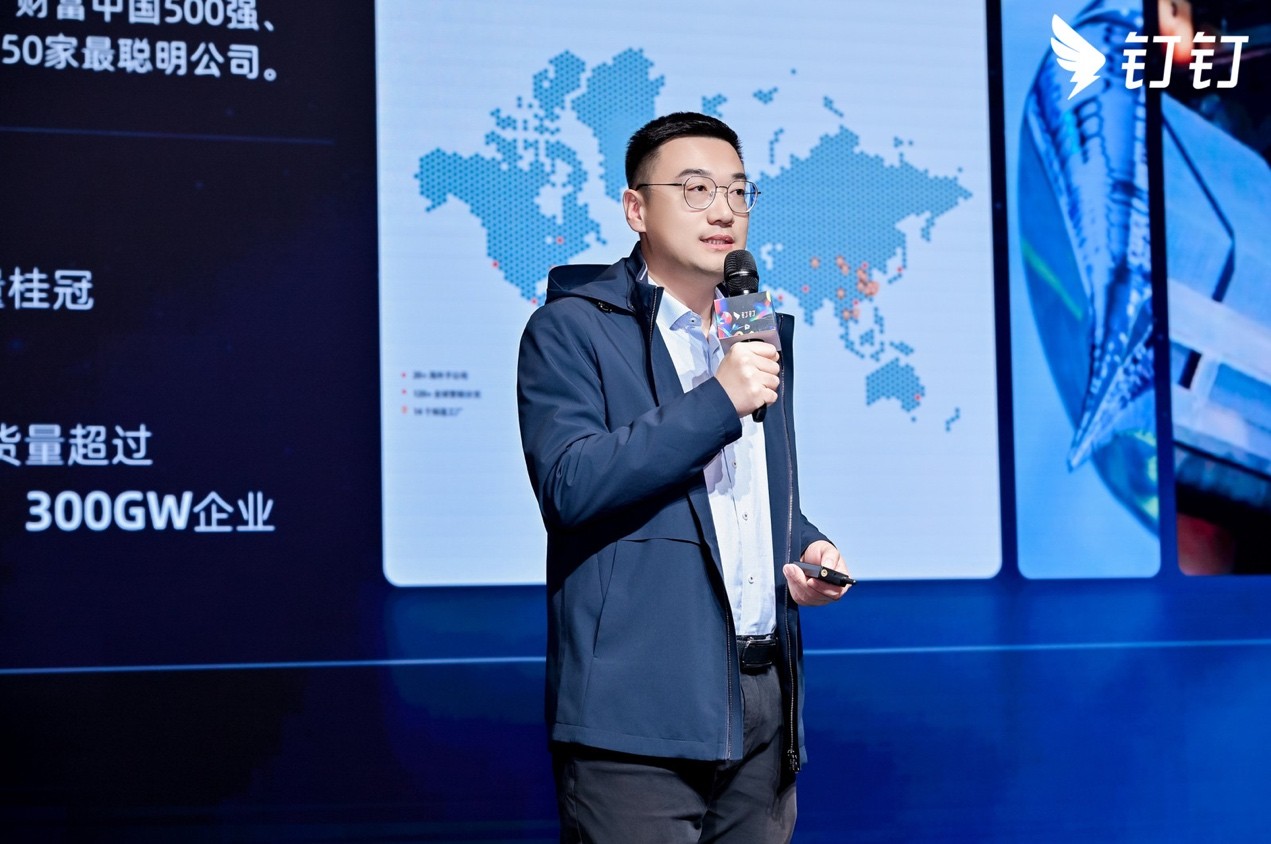
Shen Dongkun, deputy general manager of IT for planning and architecture at JinkoSolar, detailed the top-level design of “1310” for AI transformation from a systemic perspective. In other words, based on paradigm change, we organized the three main businesses and AI together with the company's business strategy, broke it down into 10 main areas, implemented it in an X scenario, and supported it as a guarantee system with the AI platform, organization, structure, and culture. He particularly emphasized that AI transformation is not just an application of technology, but also a “redesign of the relationship between human and machine intelligence.” JinkoSolar promoted the thorough penetration of AI culture by establishing an AI management committee led by the CEO, organizing digital and intelligent competitions, and establishing a digital talent training and certification system. In the production process, JinkoSolar uses AI process analysis intelligent agents for root cause analysis of quality issues. By linking multiple technologies such as AI, we will monitor “real-time detection + audio broadcast + DingTalk push” in real time, standardize operations, and improve yield and reduce losses.
At the end of the event, five major manufacturing companies, including Sanhua Intelligent Control, Runjian Co., Ltd., Dahua Technology, Greenworks, and Zhongjiate Electric, each signed cooperation agreements with DingTalk. The two companies will deepen cooperation in areas such as co-creation of AI intelligent agents, manufacturing site management, global business collaboration, digitalization of organizations, and intelligent sales, and will jointly promote the digitalization and intelligentization of the manufacturing industry and the introduction of AI applications.


