

The UK could gain more than £5tn over the next decade from the adoption of AI and cloud technologies, according to a new report commissioned by Microsoft.
AI presents a £550bn opportunity for the UK over the next 10 years, as revealed in a new report commissioned by Microsoft.
Independent consultancy Public First created the report using comprehensive data modeling techniques and an extensive survey of more than 1,000 senior business decision makers. Unlocking the UK’s AI potential.
The findings predict multiple ways in which AI could boost the UK economy if the UK ramps up its AI efforts. The report also estimates that rapid investment in digital technologies and skills could increase society's average return on investment (ROI) by more than 5:1 over the next decade. This means that for every £1 that businesses spend, the economy can grow by £1. 5 lbs.
The UK is well-positioned to demonstrate AI leadership in Europe, with the world's second-largest cutting-edge technology sector after the US. In 2021, the UK Government launched the National AI Strategy, a 10-year action plan to make the UK an ‘AI superpower’. Digital technology is already one of the UK's biggest drivers of growth, with the country receiving more than £20bn in private investment in AI since 2016.

But the report suggests that delaying the rollout of AI over the next five years could cost the UK £150bn by 2035.
Hugh Milward, vice president of corporate, external and legal affairs at Microsoft, said:
“Planning, powers and permissions are critical to unlocking the sector’s capacity to invest faster and make the most of the UK’s opportunities.”
To maintain momentum in AI adoption, the UK needs to take action on key bottlenecks.
Bottleneck 1: Infrastructure
The UK's digital technology infrastructure is less advanced than many other countries. As of 2022, the UK had just 1.3% of the world's computing power. Remaining at the forefront of the rapidly changing AI market requires significant resources and capabilities, including adequate data center infrastructure and a reliable supply of powerful GPU computer chips.
According to the report, nearly a third (31%) of SMEs (small and medium-sized enterprises) have not yet adopted cloud, and almost half (47%) currently use AI tools, applications, AI robotics, or machines. Is not … To harness the potential of AI, companies need to become more proficient in digital technologies.

Bottleneck 2: Commercial awareness
According to the report, nearly one-third (31%) of small and medium-sized businesses have not yet adopted the cloud, and nearly half (47%) currently do not use AI tools, applications, AI robotics, or machinery. yeah. To harness the potential of AI, companies need to become more proficient in digital technologies.
Bottleneck 3: Lack of skills
Research shows that two-fifths of companies are struggling to find talent with strong digital skills, with a shortage of traditional digital roles such as data analytics and IT.
Additionally, the need for workers with new skills specific to AI, such as agile engineering, will likely increase. The report says it will be essential to provide retraining and upskilling opportunities in AI-related fields over the next decade.
How can we ensure that these bottlenecks are addressed to maximize the potential of AI?
Securing the UK’s AI future
Microsoft has announced it will invest £2.5 billion ($3.2 billion) in AI skills, security and data center infrastructure in 2023, and aim to procure more than 20,000 cutting-edge GPUs. [Graphics Processing Units] Microsoft will support the UK's momentum in the age of AI by making the largest investment in the UK in its 40-year history, more than doubling its data center infrastructure across the UK.
At the same time, the government has committed to investing £1.5 billion in computing capacity and building three new supercomputers by 2025.
Setting new standards in the public sector
While the debate around AI is often dominated by private companies, the economic benefits and digital innovation will have a real positive impact on real life, the report says. This is perhaps most important in the public sector, which currently faces significant pressure on resources.

The report reveals that strategic use of AI could save the UK public sector £17 billion by 2035. This is enough to pay the salaries of more than 330,000 nurses. Moreover, the predicted enhancement effect of AI in public sector occupations is only about 15% less than in private sector occupations.
AI is already helping support early detection of cancer and disease in the NHS. This will not only save the NHS an extra £500m by 2030 but also transform outcomes for patients and families.
Elevate your workforce with AI skills
While concerns about AI displacing jobs or having negative impacts sometimes dominate the headlines, the report argues that AI is unlikely to create job losses in the short to medium term. . Rather, AI has the potential to not only increase the productivity of individual workers, but also provide upskilling and new employment opportunities for many people.
Job opportunities may emerge in new AI products and services, as well as in fast-growing AI-related fields such as data and prompt engineering. Even between 2020 and 2023, the demand for AI roles increased by twice the average labor demand.
Contrary to general concerns that AI will disproportionately negatively impact low-income workers, the report finds that AI actually This suggests that it may help earners catch up.
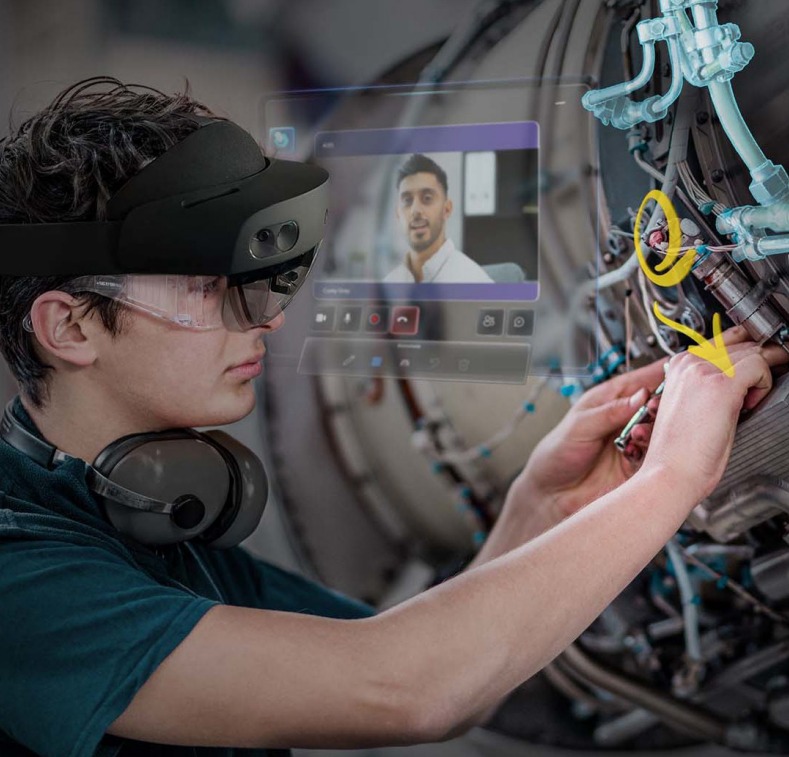
To help strengthen its workforce, Microsoft UK has invested millions of pounds to train one million people with the skills they need to work with AI.
The UK has key employment sectors that are particularly suited to the use of AI, including financial services, professional services, health, biotechnology and science, among others.
Supporting AI advances in these areas could not only boost the UK economy but also benefit society. In a recent example, Microsoft and the research institute PNNL combined AI and high-power computing to discover a new type of battery material in just weeks instead of years as predicted.
Helping the UK realize the potential of AI
The impact of generative AI has been compared to the industrial revolution, but at a much faster pace and on a much larger scale. The UK must act proactively or risks being left behind, the report concludes.
Microsoft is working to help the country realize its ambitions and become an AI superpower, with potentially transformative benefits for the economy, public services, and society as a whole.


