The creative landscape is at a tipping point. AI is no longer a futuristic tool. It's here to shape how creators ideate, produce, and edit video content. From scripting and storyboarding to finishing the final cut, AI streamlines workflows and accelerates production schedules. With new power comes new responsibility.
Platforms like YouTube have shocked the creator community. Announced limits About monetizing “inauthentic” content, including AI-generated material. Creators were immediately concerned, forcing platforms to clarify that the change primarily targets duplicate AI content, or “AI slop.” While this one example may have initially been far-fetched, make no mistake: we are at a tipping point in the era of unregulated AI content. Some AI content is already ruin The viewer experience, and the platform, won't allow that to happen.
AI is an amplification of human creativity, not a replacement for it. When used intentionally, it allows creators to work faster, iterate more freely, and focus on what humans do best: storytelling, connection, and insight.
Increase efficiency without sacrificing creativity
AI is great at handling repetitive or time-consuming tasks, and in video production, it can streamline workflows and help with story ideation. Natural language processing tools (chatbots) can generate first drafts of scripts, suggest vocabulary for different audiences, and provide summaries tailored to learning and story goals. For storyboarding, this technology can generate placeholder visuals for characters, props, environments, and more, allowing teams to quickly explore multiple concepts and ensure the visual tone matches the creative vision.
During filming, AI can support workflow efficiency without replacing human creativity. The tool can also automate camera settings, track subjects, and suggest lighting adjustments. For animated and virtual elements, AI can quickly generate variations, allowing creators to experiment without starting from scratch.
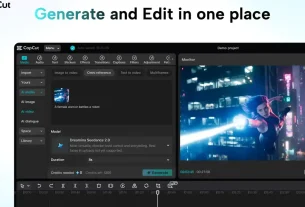
Editing is often the most time-consuming stage, and this is where AI can be a game-changer. AI-powered features can automatically remove background noise, level audio, adjust lighting, stabilize footage, and create captions and translations. It can also flag discrepancies between script and visuals, identify pacing issues, and generate suggested cuts, saving editors hours of repetitive work. Beyond technical fixes, AI can also make creative suggestions, such as recommending transitions and scene order, while leaving the final choices in the hands of human creators.
However, technology currently has its limitations. Make an educated guess. AI doesn’t understand nuance, context, or human emotion, and overreliance on AI can produce polished but generic content, leaving videos that feel monotonous or disconnected from the creator’s brand voice. The boundaries of AI use can easily blur, so creators can ensure effective and responsible use by evaluating their approaches based on the HUMAN framework's five guiding principles. This framework encourages the adoption of new tools while keeping content based on what your audience really needs. This acronym allows creators to easily remember: HLeverage their expertise and UUnderstand your audience; MMake it real, not artificial. aI don't just aim to be fast, I aim to be better. NNever skip a review.
Human framework in action
Leverage your expertise
Authenticity is the ultimate currency for creators, and protecting it requires intention. While AI-powered videos may look polished, they can lack depth, context, and originality. This happens when creators let AI take over their entire workflow. Each creator knows their own style best, so you should draw on their own expertise when creating. They also know their audience best.
understand your audience
As mentioned earlier, AI often has a hard time understanding context, resulting in generic content. They lack the human judgment needed to connect the dots between what is being said and to whom it is being said. That's why it's important for creators to always keep their audience front and center. When developing content, ask yourself, “Who is this for?” and “What should they walk away knowing?” If you don’t have those answers, the AI tools don’t have the answers either.
Make it real instead of artificial
Audiences also respond best to authentic content that is rooted in human expertise, empathy, and real-world situations. Mistakes, common visuals, or lack of context can quickly erode your audience's confidence. The solution is to use AI to enhance creativity rather than replace it. Although it may be easier said than done, it can be beneficial to slow down your creative process.
Aiming to be better, not just faster
Speed may be appealing, but efficiency alone does not guarantee quality. It's easy to think of AI as a shortcut, but when creators let AI take over their entire workflow, they end up with disjointed results. Before using AI, creators must clearly define their story, audience, and goals, and allow the technology to support those goals by drafting scripts, generating placeholder visuals, and streamlining routine editing tasks. Slowing down the process also allows time for intentional human oversight at every step.
Don't Skip the Review
All videos, especially those created with AI-powered tools, still require human review. Even in the simplest scenario, the creator's reputation is at risk. Just one wrong caption, mismatched screen recording, or missing step can make your video feel sloppy and quickly destroy your audience's trust.
The future of video production belongs to those who treat AI as a partner rather than a replacement. When used thoughtfully, AI is more than just a speed tool. It catalyzes better storytelling, deeper audience connections, and lasting creative work. By following the principles of the HUMAN framework, creators can ensure that their AI-assisted videos are accurate, engaging, and aligned with their audience's goals, regardless of the tools or technology they use.