
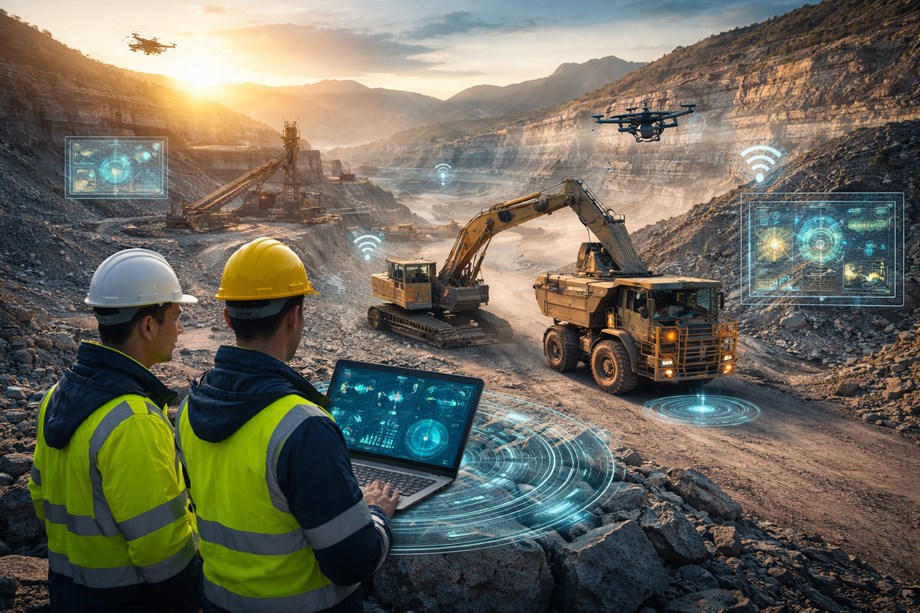
Mining companies around the world are increasingly relying on advanced analytics and artificial intelligence (AI) to address rising operating costs, stricter environmental regulations, and increased demand for mineral resources. Machine learning tools are currently being used in some of the world’s most complex industrial environments to predict equipment failures, improve extraction plans, and monitor safety conditions.
the study Machine learning in smart mining: A systematic review of applications, algorithms, benefits, and challenges.provides a comprehensive review of the adoption of machine learning in the mining sector. This study synthesizes findings from dozens of scientific publications to assess where machine learning is delivering measurable benefits and where significant challenges remain.
Predictive maintenance and automation lead smart mining shift
This study shows that the most widespread use of machine learning in mining is focused on predictive maintenance and operational monitoring. Modern mines generate vast amounts of data from sensors embedded in heavy equipment, drilling systems, transport vehicles, and environmental monitoring platforms. Machine learning models analyze this data to detect patterns that indicate potential failures or unsafe conditions.
Predictive maintenance systems allow operators to identify equipment failures before costly downtime occurs. In traditional mining operations, unexpected breakdowns can halt production and lead to significant economic losses. Machine learning models trained on operational data can predict the likelihood of equipment failure and recommend maintenance actions before failure occurs. This approach not only reduces downtime but also extends the life of expensive machinery.
Another major application area involves predicting the lifetime of critical equipment components. Machine learning systems help engineers predict wear and tear and optimize maintenance schedules by analyzing performance patterns over thousands of operational cycles. These insights allow mining companies to strategically plan repairs rather than reacting to unexpected failures.
Logistics and transportation optimization is another important area for machine learning adoption. Mining operations often rely on large trucks and self-driving vehicles to move raw materials across vast sites. Machine learning models analyze traffic patterns, route efficiency, and operational constraints to optimize vehicle movement. Autonomous transportation systems are also becoming more common, allowing vehicles to operate with minimal human intervention while maintaining high levels of safety and efficiency.
Machine learning is also playing a growing role in mineral detection and classification. By analyzing geological and geochemical data, algorithms can locate valuable mineral deposits and identify patterns that help determine ore quality. This capability allows mining companies to refine their mining strategies and reduce waste by targeting areas with higher concentrations of valuable materials.
Safety monitoring is another area where machine learning is making great progress. Mining remains one of the most dangerous industrial sectors, with risks ranging from equipment accidents to geological instability. Machine learning-powered computer vision systems analyze video feeds from underground tunnels and open-pit mines to detect hazardous conditions, monitor worker behavior, and identify obstacles and hazards in real time.
Environmental monitoring is also emerging as a growing application. Machine learning models can analyze satellite imagery, remote sensing data, and environmental sensor readings to track land degradation, emissions, and water quality. These systems help mining companies detect environmental risks early and comply with increasingly stringent environmental regulations.
Popular machine learning algorithms reflect industry data needs
This study uncovered a variety of machine learning algorithms used across mining applications, reflecting the complexity of the data involved in mining operations. Some algorithms are preferred because they provide strong predictive performance, while others are preferred for their interpretability and ease of integration with industrial systems.
Decision tree models are one of the most frequently used algorithms in mining applications. These models break down complex decisions into a series of logical branches, allowing engineers to understand how predictions are made. It can handle many different types of operational data, making it particularly useful in industrial environments where transparency is important.
Artificial neural networks also play an important role in mining analysis. Inspired by the structure of the human brain, neural networks can identify complex patterns in large datasets. These are typically used to analyze sensor readings, operational metrics, and geological information.
Deep learning architectures are another rapidly expanding category of algorithms. These models are particularly effective for analyzing high-dimensional data such as images, videos, and multisensor datasets. Mine operations use deep learning models for tasks such as analyzing satellite imagery for mineral exploration, monitoring slope stability in open-pit mines, and detecting anomalies in equipment operation.
Clustering algorithms such as support vector machines, gradient boosting, and K-means are also widely used. These models are particularly useful for classification and pattern recognition tasks, such as identifying different rock types and grouping similar operating conditions.
More advanced approaches such as reinforcement learning and Bayesian networks are also starting to appear in mining research. Reinforcement learning models allow systems to learn optimal strategies through trial and error, making them suitable for tasks such as equipment control and resource allocation optimization. Bayesian networks provide probabilistic reasoning capabilities that help engineers assess risk under conditions of uncertainty.
This study points out that the selection of algorithms in mining depends on several factors beyond prediction accuracy. Industrial systems must balance interpretability, computational cost, scalability, robustness and performance in harsh operational environments. Mines often operate in remote locations with limited computing infrastructure, making lightweight and reliable algorithms particularly valuable.
Structural barriers continue to slow industry-wide adoption
In particular, many structural challenges continue to limit large-scale adoption, with data availability and quality being the biggest barriers. Machine learning systems rely on large datasets for training, but mining operations often produce incomplete, inconsistent, or poorly labeled data. Sensor calibration issues, missing values, and fragmented data collection methods can reduce model accuracy and limit the ability to apply algorithms to different mining sites.
Data heterogeneity is also a major challenge. Mining operations generate many types of information, including geological surveys, work logs, sensor readings, and environmental monitoring data. Integrating these datasets into a unified machine learning system can be difficult due to differences in data format, size, and collection methods.
High implementation costs are also a major obstacle. Deploying machine learning systems often requires investments in sensors, data storage infrastructure, cloud computing platforms, and specialized software tools. Smaller mining companies may struggle to justify these costs without clear evidence of immediate returns.
Employee restrictions add further complexity. Successful machine learning implementation requires expertise in both mining engineering and data science, but this combination remains relatively rare in today’s workforce. Companies often face difficulty recruiting and training experts who can bridge the gap between business knowledge and advanced analytics.
Resistance to technological change in traditional mining environments can also slow adoption. Many mining operations rely on established workflows and legacy systems that are difficult to replace or integrate with modern digital technologies. Organizational culture and risk aversion can delay adoption of new tools, even when they have clear benefits.
Another technical concern involves the interpretability of machine learning models. Many advanced algorithms function as black-box systems that generate predictions without explaining how the predictions are generated. In safety-critical industries such as mining, decision makers often require transparent models that allow them to justify their recommendations.
Scalability also remains a challenge. A machine learning model trained for one mining site may not perform well in another location with different geological conditions and operating parameters. Mines vary widely in terms of topography, mineral composition, climate and infrastructure, making it difficult to develop universal solutions.
As mining operations become increasingly digital, cybersecurity risks are also becoming a new concern. Connected sensors, autonomous vehicles, and cloud-based analytics platforms expand the attack surface for potential cyber threats. As machine learning becomes more deeply integrated into operations, ensuring the security and resilience of digital mining systems becomes essential.
The study also highlights that limited collaboration between academic researchers and industry players is also a barrier to innovation. Many machine learning models developed in research environments cannot be easily translated into real-world mining applications due to differences in data availability, operational constraints, and economic priorities.
Environmental and regulatory factors further complicate implementation. Mining companies must comply with complex environmental regulations that vary by region. Introducing new technology may require regulatory approval or extensive testing before implementation in a production environment.
Mining at the tipping point of digital transformation
The findings suggest that the mining industry is in a transition period in the adoption of machine learning technology. Many operational applications, such as predictive maintenance and equipment monitoring, are already delivering measurable benefits such as increased efficiency, reduced costs, and enhanced safety.
However, the integration of machine learning across mining systems remains limited. Fully connected, intelligent mining environments, where machine learning models coordinate activities across exploration, mining, processing, and environmental management, are largely still in development.
This study suggests that achieving this vision will require coordinated efforts across multiple sectors. Improving data governance and establishing a standardized data architecture are essential to achieving more reliable machine learning models. Investments in digital infrastructure and employee training will also play a key role in supporting long-term adoption.
Greater collaboration between academia and industry can accelerate innovation by ensuring machine learning research addresses real-world operational challenges. Regulatory frameworks may also need to evolve to support responsible experimentation with new technologies while maintaining environmental and safety standards.


