
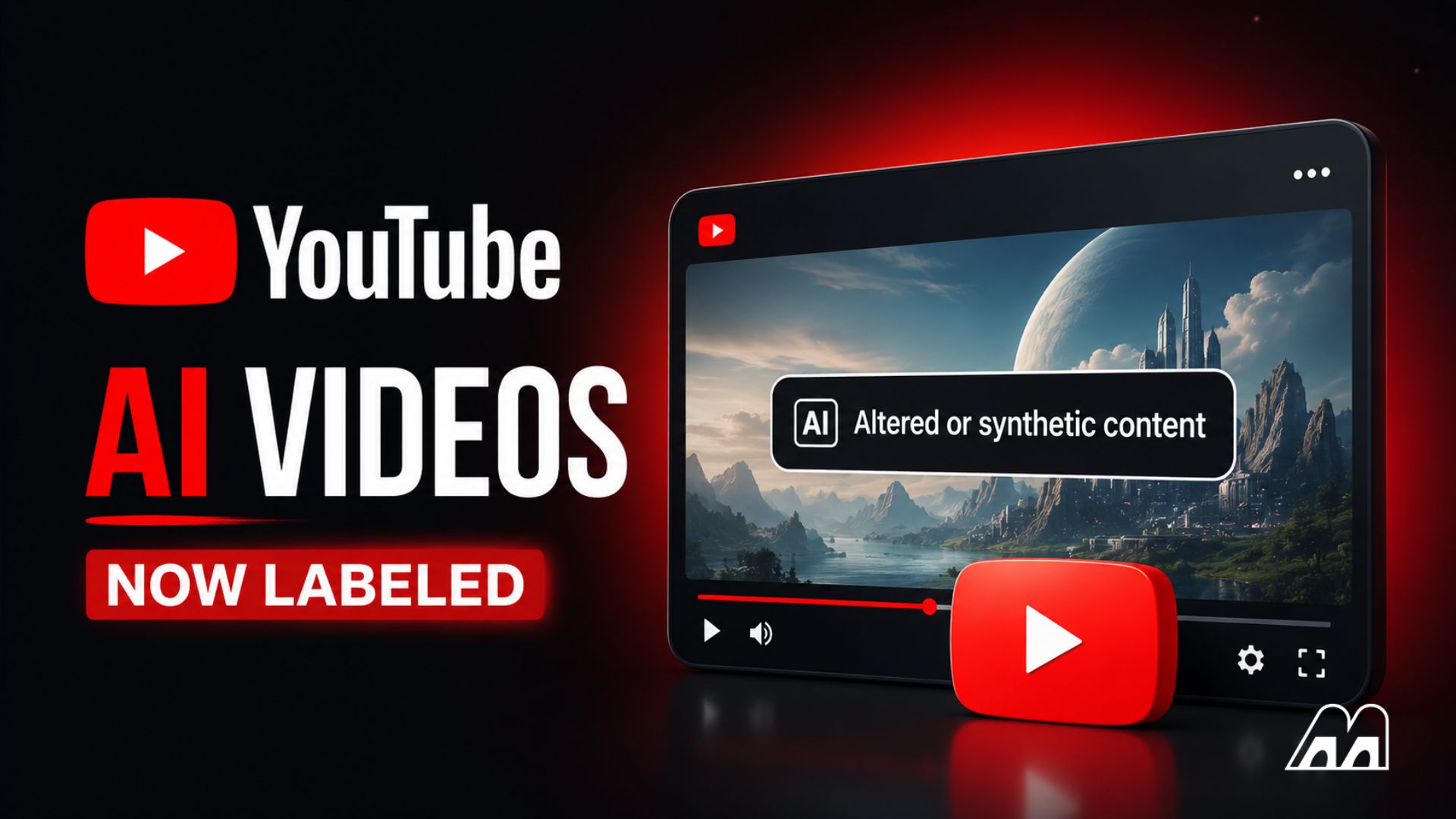
YouTube has made its biggest move yet against unreleased AI content. From May 2026 onwards, the platform will Automatically detect and label videos using photorealistic AIEven if the creator didn’t reveal it. The shift from voluntary disclosure to automatic enforcement will change the landscape for millions of creators around the world.
But YouTube isn’t acting alone. and EU AI law enters full force on 2 August 2026 California’s SB 942 imposes similar rules, and content creators around the world are facing a new reality. AI transparency is no longer optional.
Here’s everything you need to know about how AI video labeling works, what it means for your content strategy, and how to stay ahead of the curve.
How YouTube’s new AI auto-detection system works
According to YouTube’s official blog postthe platform is rolling out two major changes to how it handles AI-generated content.
First, labels are now much easier to read. For long videos, the AI disclosure label appears just below the video player, above the description, so you never miss a thing. For short videos, labels appear as an overlay on the video itself. Previously, these disclosures were buried in extended descriptions and were never seen by most viewers.
Second, YouTube is introducing automatic AI detection. The platform’s internal systems now scan videos for significant photorealistic AI usage. If a creator uploads a video without disclosing the use of AI, and YouTube’s systems flag it, Labels are applied automatically.
Creators can dispute incorrect labels through YouTube Studio. However, there are cases where the label becomes persistent and cannot be removed.
- Videos created using YouTube’s own AI tools veo or dream screen
- Content containing C2PA metadata Demonstrate the origins of fully generative AI
What is C2PA? Why is it important for AI video?
C2PA stands for Coalition for Content Provenance and Authenticity and is an industry standard for tracking how digital media is created and modified. Think of it as a tamper-proof digital envelope that records who created the file, what tools were used, and whether AI was involved.
Main players including Adobe, Microsoft, Google, Open AI, NVIDIA, Eleven Labs All have adopted or committed to C2PA. According to Google’s recent updatethe company has watermarked more than 100 billion images and videos using SynthID technology and is extending C2PA content credentials to include videos captured on Pixel smartphones.
YouTube’s decision to make AI labels persistent for content that includes C2PA metadata is a clear signal. Platforms are building their enforcement infrastructure based on this standard. Creators who use AI video tools that embed C2PA data should understand that their content will receive a permanent, non-removable AI label on YouTube.
YouTube promotes broader AI transparency
The automatic labeling announcement did not come in isolation. This is part of a broader strategy that YouTube has been building for 2025-2026.
Similarity detection program is a typical example. First released to YouTube Partner Program members in September 2025, the tool works similarly to Content ID, but works on human faces rather than copyrighted material. According to TechCrunchYouTube expanded access to politicians, government officials, and journalists in March 2026. By May 2026, the tool was available to all adults on the platform.
Here’s how the similarity detection program works:
- Creators will verify their identity with a photo ID and selfie video.
- YouTube’s AI scans the platform for facial lookalike abuse
- You can review flagged videos and request removal directly through YouTube Studio.
This is an important reason Deepfakes no longer target only celebrities. Mid-level creators, educators, and niche experts with a good reputation are increasingly being impersonated. The combination of automatic labeling and similarity detection gives creators two layers of protection that didn’t exist a year ago.
EU AI Law: Why August 2, 2026 changes everything
YouTube’s timing is no coincidence. Transparency obligations under Article 50 of the EU AI Act will become fully enforceable on 2 August 2026creating legally binding requirements for the labeling of AI content across the European Union.
Regulations require:
- All AI-generated content (text, images, audio, video) machine readable format
- Deepfakes must be clearly labeled and visibly during the first exposure
- AI-generated text published on matters of public interest must be disclosed unless: Substantive human editorial review
- Providers must use technical standards such as C2PA for embedding metadata
- Violations may result in fines of up to 15 million euros or 3% of global annual turnover
On the American side, California SB942 Similar disclosure requirements apply to companies with more than 1 million monthly users. The law’s effective date recently coincided with the EU deadline of August 2, 2026.
For content creators, this means:
- Delivering AI video content to viewers in the EUmay fall under these rules
- Platforms force labeling Whether to disclose voluntarily
- C2PA standard becoming the default technology solution for compliance

How AI labels impact your channel: algorithms, monetization, and audience trust
One of the biggest concerns is YouTube Creator The question is whether AI labels will negatively impact performance, especially as platform rules increasingly impact visibility, monetization, and compliance.
According to Search Engine JournalYouTube confirmed it AI labels do not directly affect how your videos are recommended or whether your videos can be monetized.. Labels are purely informational and are designed to provide context to the viewer.
However, indirect effects are worth considering. If a viewer sees an AI disclosure and chooses not to click, or if they reduce their viewing time, those behavioral signals can impact how well your video performs in recommendations. The label itself is not a penalty, but the audience’s reaction to it can be.
This creates strategic considerations for creators using AI tools.
- Transparency builds trust. Proactively disclosing your use of AI shows integrity and can strengthen audience loyalty
- The label will come anyway. Labels are automatically displayed when YouTube’s systems detect AI content. Trying to hide the use of AI is no longer a viable strategy
- Content quality remains excellent. Well-crafted videos with AI labels perform better than low-effort content without AI labels.
What content creators should do now
Whether you’re a full-time YouTuber, a brand using AI to market your videos, or an independent creator experimenting with different things. AI tools As with Veo, Sora, and Kling, here’s a practical action plan:
Actively disclose the use of AI. Don’t wait for YouTube’s detection system to flag your content. Use YouTube Studio’s publishing options during upload. This allows you to maintain control of the narrative.
Understand which tools have C2PA metadata embedded. If you use an AI video generator from Google, OpenAI, or another major provider, the output may contain provenance data that YouTube can read. Content created with these tools is permanently labeled.
Subscribe to YouTube’s similarity detection program. Protect your identity when you are in public. The registration process requires ID verification and a selfie video, but it gives us a powerful tool to find and remove fraudulent deepfakes of faces.
Prepare for EU AI law compliance. If your content reaches a European audience, start building workflows that include proper disclosure of AI. This is especially important for brands and agencies producing AI video content at scale.
Focus on what cannot be replaced with AI labels. Original research, personal experience, unique perspectives, and genuine human connections are the things that make your audience click, even when they see an AI disclosure label.

The big picture: AI video transparency is just the beginning
YouTube’s automatic labeling is one piece of a much larger puzzle. convergence of Platform enforcement (YouTube, Meta, TikTok), industry standard (C2PA, SynthID), and government regulations (EU AI Law, California SB 942) creates an ecosystem where unpublished AI content has nowhere to hide.
For creators, this is nothing to fear. The platform does not penalize the use of AI. They are punishing the use of covert AI. Creators who adapt to this transparency-first environment first will be the ones to build the most lasting audience trust in the AI video era.
Conclusion: AI video is here to stay, but so is accountability. The sooner you build transparency into your content workflows, the better positioned you’ll be as these rules tighten in 2026 and beyond.
FAQ
Do YouTube’s AI labels affect monetization or algorithmic rankings?
No, YouTube acknowledges that AI labels alone won’t change how a video is recommended or whether it’s eligible for monetization. Labels are for information only. However, if your audience reacts negatively when they see your label (low click-through rate, short watch time), those audience signals can indirectly impact your performance.
Can creators remove AI labels if they believe they were applied incorrectly?
yes. If you believe automatic detection was incorrect, creators can update their publishing status through YouTube Studio. However, labels for content created with YouTube’s own AI tools (Veo, Dream Screen) or containing C2PA metadata that indicate fully generated AI are persistent and cannot be removed.
What type of AI content triggers automatic labels?
YouTube auto-discovery targets Significant use of photorealistic AImeaning content that appears so realistic that it can potentially fool viewers. Unrealistic, animated, or slightly altered content will not trigger a prominent label. Instead, those types of disclosures will continue to appear in the expanded video description.
How will EU AI laws affect YouTube creators outside of Europe?
If your content is accessible to viewers in the EU, it may fall under the transparency obligations of EU AI law from 2 August 2026. The regulation requires clear labeling of AI-generated content and carries fines of up to €15 million or 3% of global annual revenue for non-compliance. YouTube’s unique automatic labeling system effectively helps creators meet this requirement.
What is the difference between C2PA and SynthID?
C2PA embeds signed cryptographic metadata into files that records their creation history and provenance. Developed by Google DeepMind, SynthID embeds an invisible watermark directly into the pixels of an image or video. C2PA metadata can be removed by re-encoding, but the SynthID remains with general changes. YouTube and other platforms are using both approaches together for more reliable AI content detection.
Should I stop using AI tools for my YouTube videos?
Absolutely not. YouTube has made it clear that AI tools are welcome on its platform. In December 2025 alone, over 1 million channels used YouTube’s built-in AI tools. The key is Transparency, not avoidance. Expose your use of AI, understand how tools process provenance data, and focus on creating content that provides real value to your audience.


