Generative AI (Gen AI) has developed so rapidly in recent years, and its ability to mimic reality has advanced so much that it may not seem surprising that one of the latest concerns in the film world is its potential impact on documentary films.
In a talk held at the Amsterdam International Documentary Film Festival (IDFA), the genre's premier annual gathering, documentarians discussed the future of truth in film in the age of AI and the threat it poses to future viewers' ability to distinguish fact from fiction.
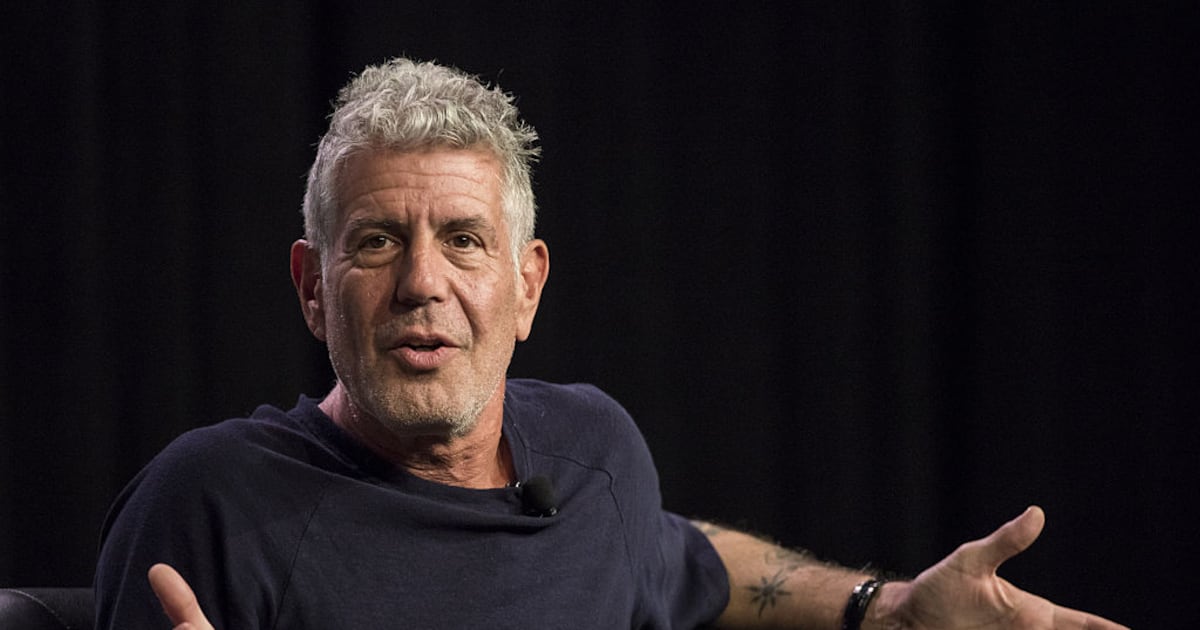
Warnings about AI tools and their impact on media have been ringing in the documentary world longer than in most other industries, with concerns first raised in 2021 when the film was released. road runner Television sensation Anthony Bourdain sparked controversy after it was revealed that the filmmakers failed to disclose that several lines of Bourdain's voiceover had been trained on AI software using samples of his voice to appear as if they had been recorded during his lifetime.
In 2023, the Archive Producers Alliance wrote an open letter in which its members called for “the responsible use of technology in documentary filmmaking” and argued for “transparency and establishing best practices to maintain trust with audiences.”
As the New York Times' Alyssa Wilkinson wrote in a recent article, the open letter pointed to a number of shocking examples of documentary films that have shattered that trust by using artificially created historical audio, AI-generated “historical images,” “fake newspaper articles,” and “non-existent historical artifacts” that are presented as if the audience is “hearing authentic primary sources when they are not.”
Most of us would like to think we're smart enough to tell the truth from the fake when it comes to artificially generated images, but in recent years the ability to generate these has become much more sophisticated and, most worryingly, easily created by anyone with a mobile phone. This means millions of deepfake AI-generated videos and photos are circulating in an unregulated environment, potentially causing serious headaches for future archivists, viewers, and documentary filmmakers.
Documentary viewers long ago came to normalize the use of reenactments in the genre, but traditionally these scenes are shot in a stylized manner that makes it clear that they are not a capture of the moment, or they are labeled as reenactments. Acceptance of these uses is part of the social contract between filmmakers and their audiences, and no one will complain if they are marked as different from real footage, archive footage, or interview footage. The issue occurs when footage generated by the AI begins to look and sound like archival footage generated by prompts connected to the tool.
So how can we trust that true crime and other documentaries, often produced at such speed that they can track high-profile global headlines in just a few months, aren't guilty of cutting corners or making fabrications look like truth?
The solution proposed last year by the Archive Producers Alliance in a series of best practices is that the use of AI, whether it's creating audio from written text, enhancing old photographs, or cleaning up scratchy archive recordings, must be clearly marked as such. These are an easy way to separate historical records from machine creations and prevent potential “clouding of the historical record.”
This may seem like a neat and fair solution to the documentary AI conundrum, but as Wilkinson observes, there is another, thornier, bigger problem that AI poses, not just for documentaries, but “for all of us.” This is a phenomenon known as the “liar's dividend,” a term first coined by two law professors in 2019.
As viewers and society become more aware of how easy it is to create fake videos, it will also become easier for people who find themselves in compromising situations on videos to claim that such videos were generated by AI. As AI proves increasingly capable of creating convincingly authentic images and videos, it becomes difficult to dismiss such claims, leading to a situation where the truth of the tapes, which once seemed indisputable, can no longer be trusted.
As Wilkinson describes it, “Every video is now a Schrödinger video: it's real and inauthentic at the same time.” And if we take the “liar's dividend” idea a step further, the logical conclusion might be that “there is no claim that the video is real.” genuine It will definitely be persuasive.”
The old idea that unearthed buried videos can be used to counter official narratives and falsehoods, and the ease with which anyone with a smartphone can shoot and create videos, foresees an alarming future in which fake videos could be mistaken for real historical archives in the coming years.
AI video generators like the recently released Open AI are not without controversy, but because Sora 2 is trained on millions of hours of existing documentaries, its ability to imitate the visual vocabulary of the genre makes it more difficult to distinguish between reality and unreality. Even films that rely on seemingly undeniable archives, such as police body camera footage or soldiers' camera recordings, can be dismissed by those who refuse to acknowledge the ugly truths they are trying to uncover, based on the logic of the “liar's dividend.”
Documentary producers are planning to codify a new set of best practices aimed at countering the growing threat that AI-generated images pose to truth and their lives, including protecting authentic archival material, developing technical standards that can prove the provenance of online material, and introducing new means of authenticating footage.
In a world where everyone can create their own, whether they will be able to preserve what is left of the concept of “truth” will be determined only by time and the speed of technological development.
This article first appeared on Business Day.