Autonomy is not the same as not being governed.
No matter how independent an AI agent appears, it needs rules that define what it can do, what data it can use, where it can operate, when it should escalate, and, just as importantly, when it should stop. The more work AI can do on its own, the more companies will need to understand the boundaries of that work.
That is the internal contradiction within an autonomous corporation.
The promise is less manual work, faster workflows, and fewer human clicks. In reality, useful autonomy relies on decidedly unglamorous corporate mechanisms such as process logic, systems of record, authority, governance, testing, observability, audit trails, and context.
AI agents may make their work look simple on the surface, but behind the scenes they require a lot of boring rules to do anything useful.
Autonomous enterprises still need a rulebook
Many vendors talk about an autonomous enterprise, where workflows within the enterprise software stack run with little or no human intervention.
This phrase has obvious appeal. This suggests speed, efficiency, and reduced manual effort. Vendors also provide a clear way to describe a future where AI agents, assistants, and co-pilots can perform tasks through the system without humans having to click through every step.
But as many organizations saw during the early AI frenzy, this concept could be a gross misconception at best and a marketing folly at worst if it suggests that cheaper machines will simply take over and eliminate the need for humans.
AI agents can summarize information, extract data, route work, generate recommendations, draft responses, identify compliance gaps, and automate daily tasks. However, automation does not eliminate the need for control, observability, testing, governance, certification, and human judgment. In fact, old corporate discipline becomes more important.
Agent autonomy in the enterprise version does not mean “allowing the agent to take whatever action it thinks is best.” That means “enabling agents to work within a clearly defined process that the company can explain.”
This is the difference between autonomy as a marketing promise and autonomy as something companies can actually use.
Autonomy still requires control
Salesforce’s recent Agentforce update points in that direction. The company is still pushing agent AI, but it’s also adding the less glamorous machinery that enterprises need to manage agents once they’re up and running, such as dashboards, testing tools, orchestration capabilities, human checkpoints, governance controls, and authentication for high-risk workflows.
What the company itself learned from its early use of Agentforce is that customers want more control over their agents. This is important because agents are not traditional software or human workers. They can reason, generate, and behave in useful ways, but are less predictable than traditional applications that follow fixed code.
This is where the distinction between probabilistic and deterministic work becomes important.
LLM is powerful because it can generate flexible responses. This flexibility is useful for tasks that require judgment, modification, or interpretation, such as summarizing customer feedback, drafting outreach, identifying patterns in support tickets, surfacing themes from internal communications, interpreting sentiment, and suggesting next-best actions.
However, many of the tasks required of enterprise systems rely on reproducible results. Billing, payments, approvals, compliance, employee records, inventory reservations, and financial closing tasks cannot be improvised and yield different results every time. In these cases, businesses need consistent and auditable procedures. A plus B must equal C.
So there’s a range when it comes to agents. On the one hand, there are tasks where the agent has room to interpret, summarize, recommend, or improvise. The other process requires agents to follow a fixed path with little or no room for creative action.
Most corporate jobs fall somewhere in between.
Rules require business context
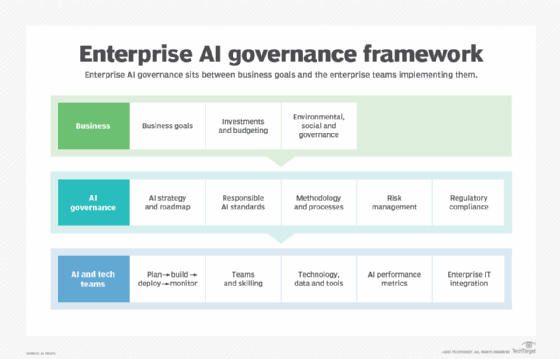
So boring rules are more important than the AI sales pitch suggests. But rules alone are not enough. Agents also need sufficient business context to understand the meaning of the rules.
Many software vendors (and by now we mean almost every vendor in the enterprise software stack) have woken up to the idea that AI requires more than access to models and some agent functionality. Traffic cops are needed to prevent collisions between agents. A common data infrastructure is required. You need governance, security, and compliance built into the lower levels of your enterprise software stack.
One concept that spans these needs is context.
As AI operates across ERP, CRM, HR, customer service, collaboration, and data systems, the rules governing agents are more than just technical guardrails. When agents cross these boundaries, rules alone become insufficient. Agents also need to understand what the rules apply to, which systems serve as sources of truth, what each business term means, and what policies or compliance restrictions apply.
This means agents need more than just a login to the appropriate systems. You need to have some understanding of how your business uses the information in its systems.
A good example is customer records. In some systems, an active customer might mean a company that currently has a contract. Another example could mean companies with recent purchasing activity, open support cases, or upcoming updates. A supplier may be approved in one region but not in another. A candidate in one system may already be an employee in another system. A customer may appear ready for renewal in the CRM, but may still be pending compliance elsewhere.
If agents do not understand these differences, they may end up doing the wrong thing even if they follow the rules.
Access to raw data is not context. Giving an agent a database connection is not the same as telling the agent what your business does, which definitions are important, and which policies should govern its actions.
This is why context engineering is gaining importance in the enterprise software field. As AI agents move between ERP, CRM, HR, customer service, and collaboration systems, enterprises need a way to make business meaning available to AI, such as definitions, relationships, source-of-truth logic, access policies, freshness signals, and provenance. Otherwise, agents may get the correct data but apply it to the wrong business situation.
Rules are only useful if agents understand what they apply to.
AI still requires the old enterprise stack
This is why SAP’s proposal for agent AI makes it clear. While SAP is promoting the idea of an autonomous enterprise, it also insists that the underlying enterprise architecture remains important.
For SAP, ERP is a reliable system of record for business operations. Whether or not that’s universally true, SAP does make a useful point about using AI, whether probabilistic or deterministic, that AI needs structure and rules to function.
For SAP, ERP provides that structure through trusted records, business processes, knowledge graphs, identity rules, and approval controls that allow AI to operate across workflows.
Beyond ERP, the same thinking applies across the broader enterprise software stack. The foundation includes governance, compliance, data security, identity, access control, business definition, workflow logic, and systems of record across ERP, CRM, HR, customer service, collaboration, and other platforms.
The enterprise AI layer operates within that software environment, whether it’s an agent or not. And as the boundaries between enterprise software silos blur, the work required of AI will increasingly span and intersect these systems. This makes common ground even more important, not less.
There is a counterintuitive point here. The more autonomous an AI interface becomes, the more important the underlying system becomes.
Records, permissions, process logic, identities, and approvals may seem outdated and basic. But without them, AI won’t come close to what we need now, let alone what we’ll need in the future.
Agents can be a new gateway to corporate work. However, the underlying system still defines what the enterprise knows, what agents can access, what users can see, and what actions to comply with.
So, counterintuitively, autonomous companies are actually not that autonomous. It just looks that way.
The most useful enterprise agent may not be the one with the most human-like behavior. They may know when not to improvise.
James Alan Miller is a veteran technology editor and writer who leads Informa TechTarget’s Enterprise Software Group. He oversees coverage of topics in ERP and supply chain, HR software, customer experience, communications and collaboration, and end-user computing.