
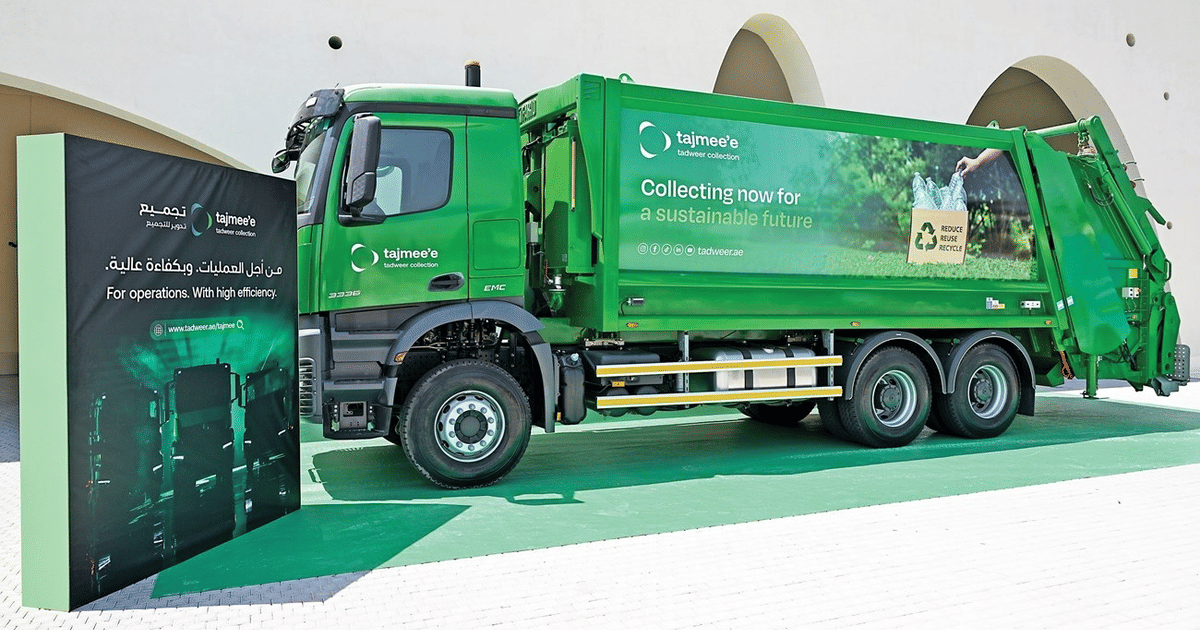
The fully integrated digital fleet covers an operational area of more than 36,000 square kilometers and carries out approximately 50,000 operations daily, the ministry said. Supported by real-time tracking systems, advanced operational data, and 360-degree smart cameras, fleets are improving operational management efficiency and reducing response times in the field.
DMT further revealed that smart fleets lead to a significant 40% reduction in carbon dioxide emissions, from 13,401 tonnes in 2024 to 9,537 tonnes in 2025, representing an annual reduction rate of 29%.
Abu Dhabi strengthens efforts to combat climate change
This environmental impact is equivalent to the carbon sequestration capacity of approximately 175,000 trees, strengthening the emirate’s efforts to combat climate change and achieve environmental sustainability.
In this context, the Ministry highlighted that the fleet’s resource management system has delivered advanced results, with 94% of waste being disposed of outside of landfills, maintenance oil being fully recycled and up to 22% of resource value recovered. These results support circular economy principles and improve resource efficiency.
Smart technology for waste detection and fuel reduction
DMT explained that the integration of smart technology within the fleet has improved operational planning and enhanced proactive monitoring of waste and non-compliance. This directly contributes to improving quality of life by reducing fuel consumption, reducing response times and achieving higher standards of cleanliness across roads and public facilities.
The Ministry emphasized that these results reflect the success of the first operational phase of the Smart Fleet and reaffirmed its commitment to further develop the system and expand the use of artificial intelligence and Internet of Things (IoT) technologies across municipal operations. This will strengthen Abu Dhabi’s position among the world’s leading smart cities and improve the efficiency and quality of government services in line with community expectations.
500 eco-friendly cars reduce carbon emissions by 1,775 tons per year
By the end of 2025, DMT has deployed over 500 eco-friendly vehicles to enhance public cleaning services across the emirate. The new vehicles include specialized vehicles for mechanical road sweeping and washing, heavy machinery, water tankers, and boats for beach and coastline cleaning. During its operational period, the fleet contributed to reducing carbon emissions by up to 40%. This equates to approximately 1,775 tonnes of CO₂ per year.
Advanced system and high resolution camera
The vehicles are equipped with advanced IoT-enabled systems to ensure optimal coordination of cleaning operations. These systems include high-resolution 360-degree cameras, and some vehicles are equipped with AI-powered scanning sensors that can identify waste types, compliance violations, and infrastructure damage, while pinpointing locations through geospatial data.
These systems are directly linked to DMT’s public cleanliness platform, enabling efficient staffing, enhanced asset monitoring, and reduced reliance on manual inspections, delivering higher levels of operational excellence in municipal services.
During the pilot phase, AI technology will be installed in 10 vehicles within selected areas of Abu Dhabi City and Al Dhafra region, with plans to expand to Al Ain and the rest of the emirate as part of a phased rollout across the fleet.
This initiative follows Abu Dhabi’s rise to fifth place in the world in the Smart City Index published by the International Institute for Management Development (IMD), moving up five places from 10th place in 2024.


