Sequence modeling is an important area of machine learning, encompassing applications such as reinforcement learning, time series forecasting, and event forecasting. These models are designed to process data where the order of the input matters, and are essential for tasks such as robotics, financial forecasting, and medical diagnosis. Traditionally, recurrent neural networks (RNNs) have been used due to their ability to efficiently process sequential data, despite limitations in parallel processing.
Rapid advances in machine learning have highlighted the limitations of existing models, especially in resource-constrained environments. Transformers, known for their excellent performance and ability to leverage GPU parallelism, are resource-intensive and therefore unsuitable for low-resource environments such as mobile and embedded devices. The main challenge lies in their secondary memory and computational requirements, which prevent their deployment in scenarios with limited computational resources.
✅ [Featured Article] LLMWare.ai named to the 2024 GitHub Accelerator: Small, specialized language models enable the next wave of enterprise RAG innovation
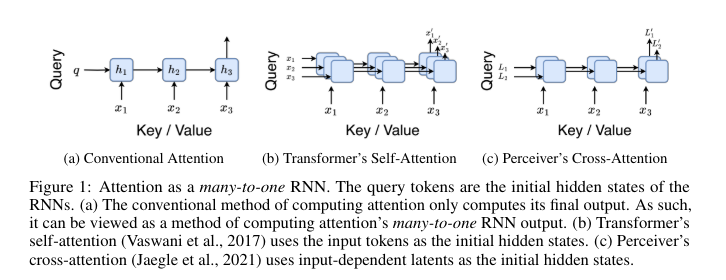
Existing research includes several attention-based models and methods. The Transformer is resource-intensive despite its good performance. Approximations such as RWKV, RetNet, and Linear Transformer linearize attention for efficiency but have limitations on token bias. As shown by Rabe and Staats, attention can be computed recursively and softmax-based attention can be reformulated as an RNN. Efficient algorithms for computing prefix scans, such as the one by Hillis and Steele, provide foundational techniques for enhancing attention mechanisms in sequence modeling. However, these techniques need to fully address their inherent resource intensiveness, especially in applications involving long sequences such as climate data analysis and economic forecasting. This has led to the exploration of alternative techniques to improve resource efficiency while maintaining performance.
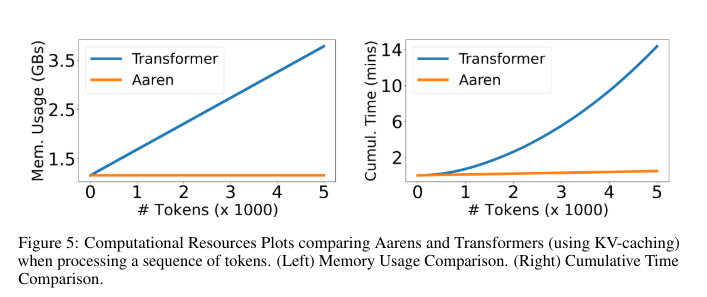
Mila and Borealis AI researchers present Attention as a Recurrent Neural Network (Aaren), a new way to reinterpret the attention mechanism as a form of RNN. This innovative approach preserves the parallel training benefits of Transformer while allowing efficient updates with new tokens. Unlike traditional RNNs, which process data sequentially and struggle with scalability, Aaren leverages a parallel prefix-scan algorithm to compute attention outputs more efficiently, processing data sequentially with constant memory requirements. This makes Aaren particularly suitable for low-resource environments where computational efficiency is paramount.
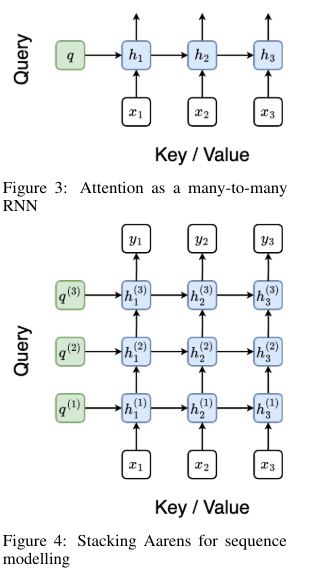
In detail, Aaren works by viewing the attention mechanism as a many-to-one RNN. Traditional attention methods compute the output in parallel, requiring linear memory in terms of the number of tokens. However, Aaren introduces a novel way to compute attention as a many-to-many RNN, significantly reducing memory usage. This is achieved through a parallel prefix scanning algorithm, allowing Aaren to efficiently update state while simultaneously processing multiple context tokens. The attention output is computed using a series of associative operations, keeping memory and computational load constant regardless of the length of the sequence.
Aaren's performance has been empirically validated on a variety of tasks, demonstrating its efficiency and robustness. For reinforcement learning tasks, Aaren was tested on 12 datasets within the D4RL benchmark, including environments such as HalfCheetah, Ant, Hopper, and Walker. Results show that Aaren achieves performance competitive with Transformer, scoring such as 42.16 ± 1.89 on the Medium dataset in the HalfCheetah environment. This efficiency also extends to event prediction, where Aaren was evaluated on eight popular datasets. For example, on the Reddit dataset, Aaren achieved a negative log-likelihood (NLL) of 0.31 ± 0.30, performing comparable to Transformer, but with reduced computational overhead.
Aaren was tested on eight real-world datasets in time series forecasting, including weather, exchange, traffic, and ECL. On the weather dataset, Aaren achieved a mean squared error (MSE) of 0.24 ± 0.01 and a mean absolute error (MAE) of 0.25 ± 0.01 for a forecast length of 192, demonstrating its ability to efficiently handle time series data. Similarly, Aaren performed comparable to Transformer in time series classification across 10 datasets from the UEA Time Series Classification Archive, demonstrating its versatility and effectiveness.
In conclusion, Aaren represents a significant advancement in sequence modeling in resource-limited environments. By combining the parallel training capabilities of Transformer with the efficient update mechanisms of RNNs, Aaren provides a balanced solution that is computationally efficient and maintains high performance, making it an ideal choice for applications in low-resource settings where traditional models fall short.
Please check paper. All credit for this work goes to the researchers of this project. Also, don't forget to follow us: twitter. participate Telegram Channel, Discord Channeland LinkedIn GroupsUp.
If you like our work, you will love our Newsletter..
Please join us 43,000+ ML subreddits | In addition, our AI Event Platform

Nikhil is an Intern Consultant at Marktechpost. He is pursuing a dual degree in Integrated Materials from Indian Institute of Technology Kharagpur. Nikhil is an avid advocate of AI/ML and is constantly exploring its applications in areas such as biomaterials and biomedicine. With his extensive experience in materials science, Nikhil enjoys exploring new advancements and creating opportunities to contribute.