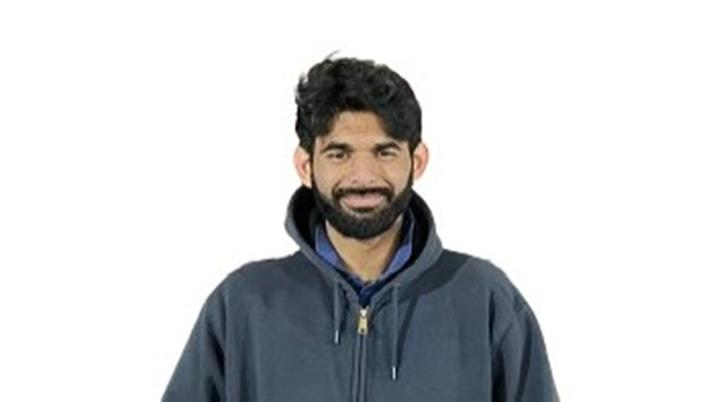
At the cutting edge of experimental design and foam target manufacturing, experts are leading a groundbreaking effort to integrate machine learning into advanced tape drive experiments. This innovative approach harnesses the power of artificial intelligence to increase precision, efficiency and accuracy in experimental setups, promising to revolutionize the way experiments are conducted. By leveraging the synergy between traditional methodologies and cutting-edge technology, this effort marks a major step forward in pushing the boundaries of scientific exploration and discovery.
In a major leap forward for high energy density research, the experts have been spearheading the installation of advanced experimental facilities at the General Atomics Laboratory in San Diego's Laser-Based Repeatable Instrumentation Development Laboratory (GALADRIEL). This state-of-the-art facility has already achieved impressive results, including the commissioning of a successful shot that used laser wakefield acceleration with a nitrogen jet to generate electrons up to 1MeV. As the facility continues to evolve, Shreyas Kotian and his team are now working on further experiments aimed at studying ablative plasmas from various materials using an advanced tape drive system. This endeavor not only highlights the capabilities of the facility but also highlights the potential for breakthroughs in high energy density physics.
At the organization, his work has had a significant impact, especially through his involvement in the development and operation of the highly acclaimed experimental facility. The facility serves as a key testing platform for advanced experiments that require precision and cutting-edge technology. His areas of responsibilities include development of targets, diagnostics, data processing, machine learning algorithms and feedback control systems. By conducting experiments with the highest level of precision, Shreyas has also helped ensure the success of the facility and fostered innovation within the team, advancing our capabilities in high energy density research.
Of his most important projects in this field, the first was the development and operation of GALADRIEL, which has been completed. This facility now serves as an important platform for high-repetition experiments. The second project focuses on studying ablative plasmas of solid targets to determine their potential for gamma-ray production, potentially replacing expensive foam targets with more cost-effective solid targets. The third project is funded by the Air Force Office of Scientific Research and remains classified due to its sensitive nature.
In the complex realm of laser experiments at GALADRIEL, Kotian faced major challenges and overcame them to achieve remarkable results. One of the main hurdles was assembling the complex components of the laser facility, consisting of oscillators, stretchers, amplifiers and compressors. Each component required meticulous attention to detail, adding to the complexity of the work. Moreover, precise alignment of numerous optics and cameras was essential to capture the right parameters when observing the plasma. With unwavering determination, Shreyas overcame these complex challenges and ultimately achieved extraordinary results in the experiment.
An accomplished expert in the field of experimental instrumentation for energy research, Shreyas Kotian provides valuable insights into the significance of his work and future directions for the field. With a keen understanding of the evolving energy landscape, Shreyas highlights the critical role of experimental instrumentation in providing a stable source of energy following oil, gas and petroleum. His pioneering efforts are particularly significant in the context of inertial confinement fusion, where high repetition rate experiments are essential to ensure a continuous supply of energy. Through his first-hand experience and contributions to key projects, Shreyas provides valuable perspective on the current trends and practices shaping the field and points the way to future advancements in energy research.


Stay up to date with our daily newsletter. Subscribe now!