Alphabet Inc.'s Google, which announced several new generative artificial intelligence features on Tuesday, said the new technology would expand rather than cannibalize its multibillion-dollar search business and make results more relevant. Ta.
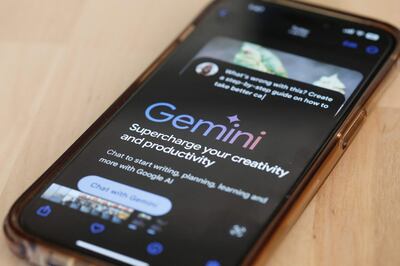
CEO Sundar Pichai said Google's generative AI tool Gemini, formerly known as Bard, is unlikely to threaten the company's already profitable products.
“How we've approached everything since day one, and what we're doing now at this moment, is to remain focused on our users and respond to them as their needs evolve…and… “We're seeing people respond more and engage with our products,” he said. Pichai spoke at a media event.
“We are excited to expand our use cases and support more complex user questions across search at Gemini. I see all of this as a positive and believe this is a moment of growth and opportunity. , I feel it is not the other way around.”
Google Search and related businesses accounted for more than 57% of the company's total revenue in the first quarter of this year. Overall revenue increased by nearly $46.2 billion, an increase of 14% on an annual basis.
However, Gemini has not yet shown a significant contribution to the company's sales.

The company announced a variety of new AI features and products Tuesday at the annual Google I/O conference at its headquarters in Mountain View, California.
Alphabet's stock rose slightly following the announcement, trading at $171.84 as of 11:50 pm in the United Arab Emirates (UAE) on Tuesday, giving the company a market value of $2.11 trillion. became.
Gemini 1.5 Flash: “Cost Effective” Model
Google announced Gemini 1.5 Flash, its latest generative AI model designed to be more sophisticated, faster, and more efficient than previous versions.
Google DeepMind CEO Demis Hassabis said the new variant is “optimized to handle high-volume, high-frequency tasks at scale and is more cost-effective.”
The lightweight 1.5 Flash allows you to perform multimodal inference on vast amounts of information for quick summaries, chat applications, and data extraction from long documents and tables.
It has been trained by its predecessor, the 1.5 Pro, through a process called distillation, which “transfers the most important knowledge and skills from the larger model to the smaller, more efficient model,” Hassabis said. .
In December, Google launched Gemini 1.0, its first multimodal model in three sizes: Ultra, Pro, and Nano.
It was followed by an enhanced version 1.5 Pro with a 1 million token context window. The latest 1.5 Flash is trained with up to 2 million token context windows.
In natural language processing, a token refers to a single word or character.
“We are truly pioneering the frontier here and moving toward the ultimate goal of infinite context windows,” Pichai said.
Next generation open model
Google also announced Gemma 2, a next-generation open source model that will be accessible to developers around the world through a variety of platforms. The company said its aim is to build AI innovation more “responsibly.”
First announced in February, Gemma is built with the same research and technology used to create Gemini, a closed AI model.
Google and Microsoft-backed OpenAI, a front-runner in the generative AI field, maintains a largely private underlying model, with large language models manipulated to avoid misinformation and other potentially dangerous content. They have expressed concern that it may spread.
But proponents of open source software argue that keeping these systems closed unfairly stifles innovation and hinders their potential to improve the world.
Gen AI for creators
Google also announced its latest video generation model, Veo, and Imagen 3, the company's “highest quality text-to-image conversion model to date.”
Veo includes a sophisticated understanding of natural language and visual semantics. The company says it can generate videos that faithfully represent the user's creative vision. Google plans to add Veo features to YouTube Shorts soon.
Google said Imagen 3 can produce more detailed, life-like images with fewer distracting visual artifacts than the company's previous models.
“Imagen 3 better understands the natural language and intent behind prompts, incorporates finer details from long prompts, and improves text rendering, which has traditionally been a challenge for image generation models. It's also the best model,” said Vice President Eli Collins. Product management.
Both Veo and Imagen 3 will be available to select creators starting Tuesday.
What about responsible AI?
Google has faced backlash over its use of AI in the past.
Gemini stopped generating images of individuals in February after criticism over its handling of racial issues. At the time, Google apologized for “missing the mark.”

“This is completely unacceptable and we were wrong,” Pichai wrote in a February employee memo seen by officials. National.
In 2015, the company was forced to apologize after its photo app labeled a black couple as “gorillas.”
The company announced Tuesday that it is taking steps to address challenges posed by generation technology.
“We have been working with the creative community and other external stakeholders to gather insights and listen to feedback to improve and deploy technology in a safe and responsible way,” Ms Collins said. Ta.
“We have conducted safety tests, applied filters, installed guardrails and put our safety teams at the center of development.”
AI Overview comes to the US
Starting Tuesday, Google will make AI Overview available to all users in the United States. The company plans to add more countries “soon” and offer the technology to another billion people by the end of the year.
AI summaries are added to search results and are intended to help users with complex questions.
“Rather than splitting your questions into multiple searches, you can ask your most complex questions all at once, keeping in mind all the nuances and caveats,” said Liz Reid, vice president and head of Google Search. says.
For example, if a user is looking for trendy cafes and brunch spots in Dubai that are rated by locals, have outdoor seating, and are pet-friendly ” you can ask. Details on outdoor seating availability and pet policy. ”
Google to send alerts about suspected fraud during phone calls
Google said it is using Gemini nano to test a new feature that will alert you in real time if it detects conversational patterns associated with potential fraud during a call.
For example, if a bank representative asks for an urgent funds transfer or gift card payment, or requests personal information such as a card PIN or password (requests from banks are not common), the user may Receive alerts.
“All of this protection happens on the device, so your conversations stay private,” said Sameer Samat, president of the Android ecosystem.
Google said it will share more details about this opt-in feature later this year.
Updated: May 14, 2024, 8:18 p.m.