On March 9, Elon Musk launched a new company focused on artificial intelligence, according to state company filings.
The company, called X.AI, is based in Nevada, USA, and has Musk on its board of directors, with Jared Virtual, director of Musk’s family office, as secretary.
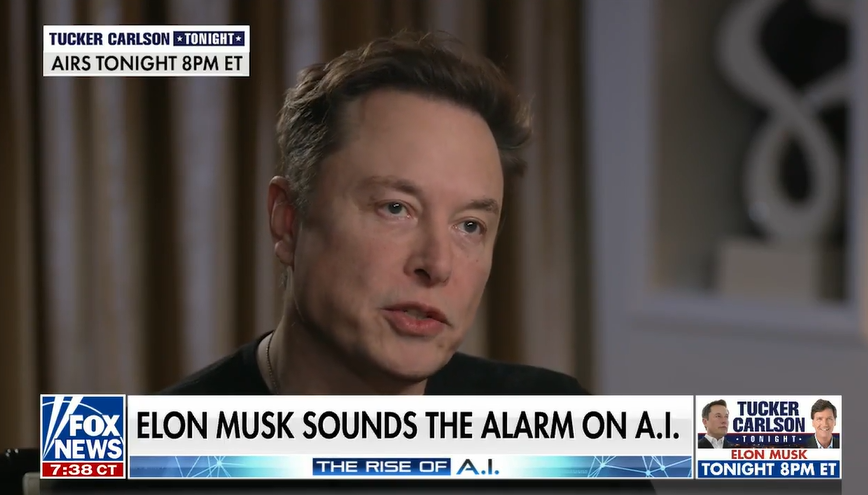
In an interview with Fox News, the billionaire CEO of Tesla and Twitter said TruthGPT, the “maximum truth-seeking AI” that “understands the universe and is the best way to safety” to compete with ChatGPT. announced that they are working on it.
According to Musk, TruthGPT focuses on safety and is the antithesis of ChatGPT, which he describes as AI “trained to lie by OpenAI.”

To launch X.AI, Musk reportedly purchased thousands of high-performance graphics processing units (GPUs) and sought funding from investors in SpaceX and Tesla. “A lot of people are investing in it…it’s real and they’re excited about it,” a person familiar with the talks told the Financial Times.
The visionary company that brought us PayPal, Tesla, and SpaceX also hired top AI researchers and engineers from leading AI labs, including Google subsidiary DeepMind.
But I wonder if Musk has the ability to see through the development of this “maximum-truth-seeking AI”, or is he making empty claims, much like the chaos he caused on Twitter? I wonder if it’s just
Realization of truth-seeking AI

Before evaluating the TruthGPT concept as a whole, let’s take a step back and evaluate the fundamentals of generative AI tools.
All these tools like Google’s Bard, ChatGPT, and Microsoft’s Bing all rely on one thing: LLM. LLMs (Large Scale Language Models) are machine learning models trained on large databases of text data that AI tools consult to generate human-like responses to prompts.
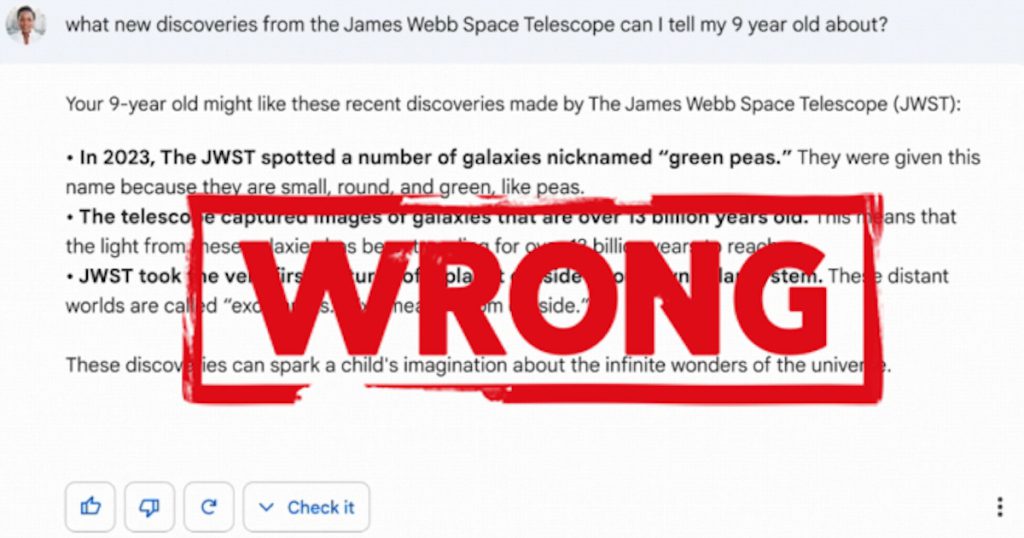
The text used to train LLM comes from various sources such as blogs and social media posts and can be billions of words. Relying on textual data sourced from all over the Internet is bound to result in errors. LLM has no inert way of distinguishing fact from fiction.
Moreover, given the inherent complexity and constant evolution of language, it is difficult to create a model that can account for all variations and nuances.
Of course, Mr. Musk can reduce these errors by training the model himself and teaching it the correct answers, but what is considered “correct”?
For a formula like 2 plus 2, the answer is clearly 4. But when it comes to topics such as politics, how do we define “right”? Is this Musk’s version of “right”?
By training TurthGPT, Musk could inadvertently introduce his own biases into the model. Even the slightest bias Mr. Musk may have, including his interpretation of language and situations, shows up in TruthGPT’s output, no different from any other of his LLMs.
In fact, even OpenAI CEO Sam Altman has said that ChatGPT will always have biases that are hard to eliminate. Developing a 100% accurate and “truthful” AI model is extremely difficult, and frankly nearly impossible. How exactly Mr. Musk can achieve this remains a question.
Will it be a chatbot that reflects Mr. Musk’s version of “truth”? If so, how is it different from other generative AI bots that reflect developer bias?
If the construction of TruthGPT succeeds, it will become a latecomer in the AI scene

Looking at the state of the AI industry today, it’s hard to see how Musk could successfully compete with the industry giants who already dominate the space.
OpenAI has already established itself as an industry leader today. This has only been possible after years of persistent experimentation and refinement, the culmination of billions of dollars in financial investment, and the strategic acquisition of AI’s most talented talent from prominent technology companies. companies such as Google and Microsoft.
Additionally, in January, Microsoft invested $10 billion in OpenAI, building on the $1 billion it poured into the company in 2019, with additional investments in 2021. In doing so, the tech giant gained an early lead in his AI field. We are currently in the arms race and are working to integrate ChatGPT into a range of products including Microsoft 365.
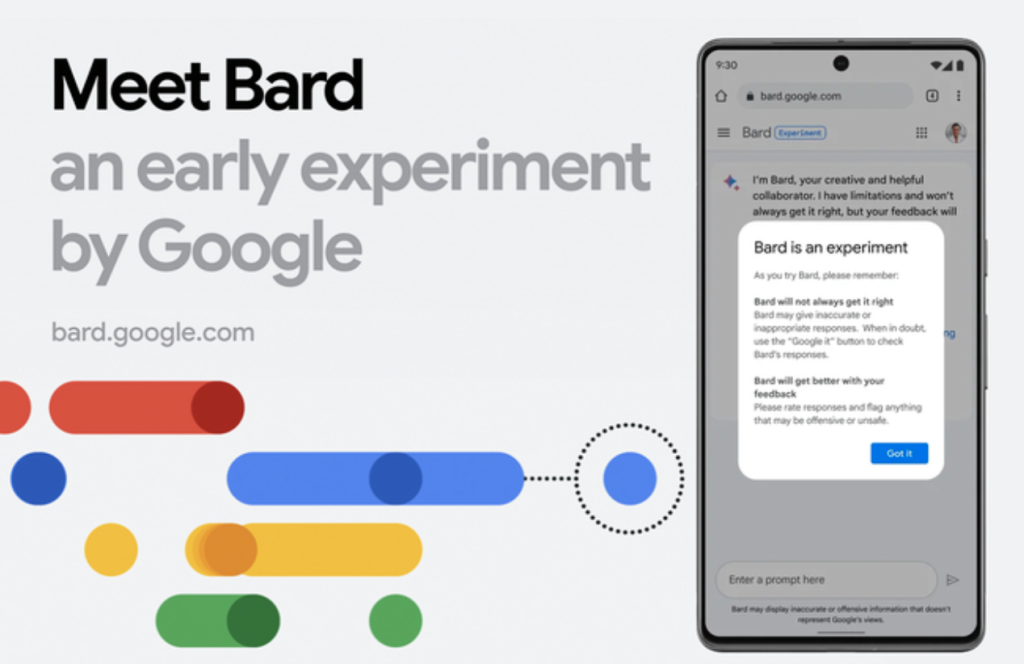
Meanwhile, Google launched its own chatbot, Bard, not long after ChatGPT’s release. Besides Bard, the tech giant invested around US$300 million in his AI startup Anthropic to further boost its capabilities.

These AI breakthroughs come only from US-based tech giants. What about other companies like China-based Baidu and Alibaba that are making big strides in developing AI?
Additionally, these companies have expanded beyond business-to-consumer (B2C) offerings to offer business-to-business (B2B) solutions, further reducing the chances of TruthGPT challenging the status of these tech giants. increase.
Securing funding for the billionaire’s AI projects could also be difficult, given his precarious management style, along with competition from these companies.
Just last year, Musk’s controversial takeover of Twitter drew widespread criticism, with Tesla investors losing faith in the billionaire after Tesla’s stock plummeted, prompting Musk to step down as Twitter CEO. bottom.
Was Musk chasing time to catch up with ChatGPT?
Musk’s incorporation of X.AI came before he signed an open letter calling for a halt to AI development, saying the technology poses “significant risks to society and humanity.” It raises questions about whether it intends to buy time to catch up with OpenAI.
In the letter, Musk called for a six-month pause in AI development beyond GPT-4, the latest version of OpenAI’s language model system. Nonetheless, the billionaire seems to have no qualms about developing TruthGPT, a “space-understanding AI,” which will likely exceed the limits he requested in his letter.
Was the open letter signed in good faith or did the entrepreneur have ulterior motives? I guess they couldn’t.

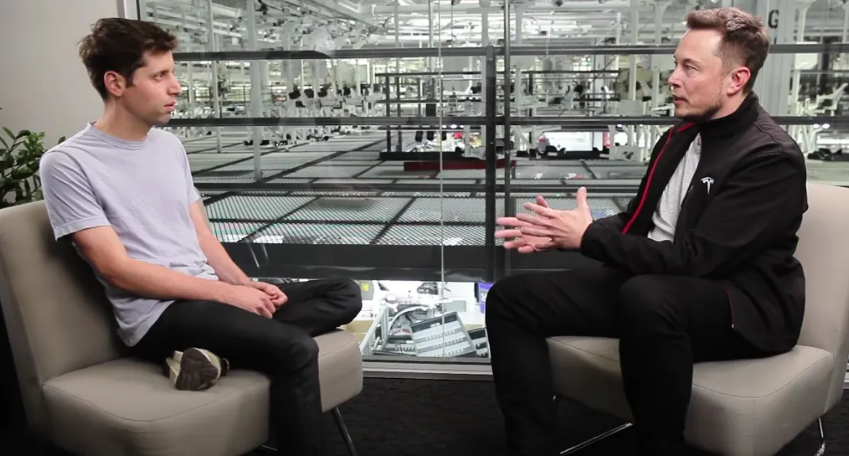
Unbeknownst to most people, Musk actually co-founded OpenAI as a nonprofit with Altman and other founders in 2015. By early 2018, the billionaire had expressed concern that OpenAI was lagging behind Google in AI research, which was why Musk suggested thinking: Direct management of the company.
However, Altman and the other OpenAI founders rejected the idea, which eventually led to Musk’s departure, creating a rift between Altman and Musk.
Musk was “furious” when ChatGPT gained millions of users after debuting in November, according to people familiar with the matter. It further confirms that the billionaire entrepreneur was heartbroken over the fact that he had pulled out of a company he originally trusted. You can’t compete with something like Google.
Musk’s plans to overtake ChatGPT are futile
Regardless of the feud between Altman and Musk, the development and deployment of TruthGPT is unlikely to succeed.
Deploying 100% accurate and “truthful” generative AI models is unrealistic and the AI industry is already dominated by incumbent giants such as OpenAI and Google. What’s more, the erratic behavior of Mr. Musk, who runs Twitter, will only make his AI company’s fortunes worse.
Additionally, the entrepreneur has a track record of starting and abandoning (or suspending indefinitely) projects such as The Boring Company’s Loop Tunnel project and the U.S. Rapid Transit System. TruthGPT may suffer the same fate as these projects.
Featured image credit: Konya
Also read: Surprise Google Leak: Forget ChatGPT – Why Meta and not OpenAI is winning the AI war