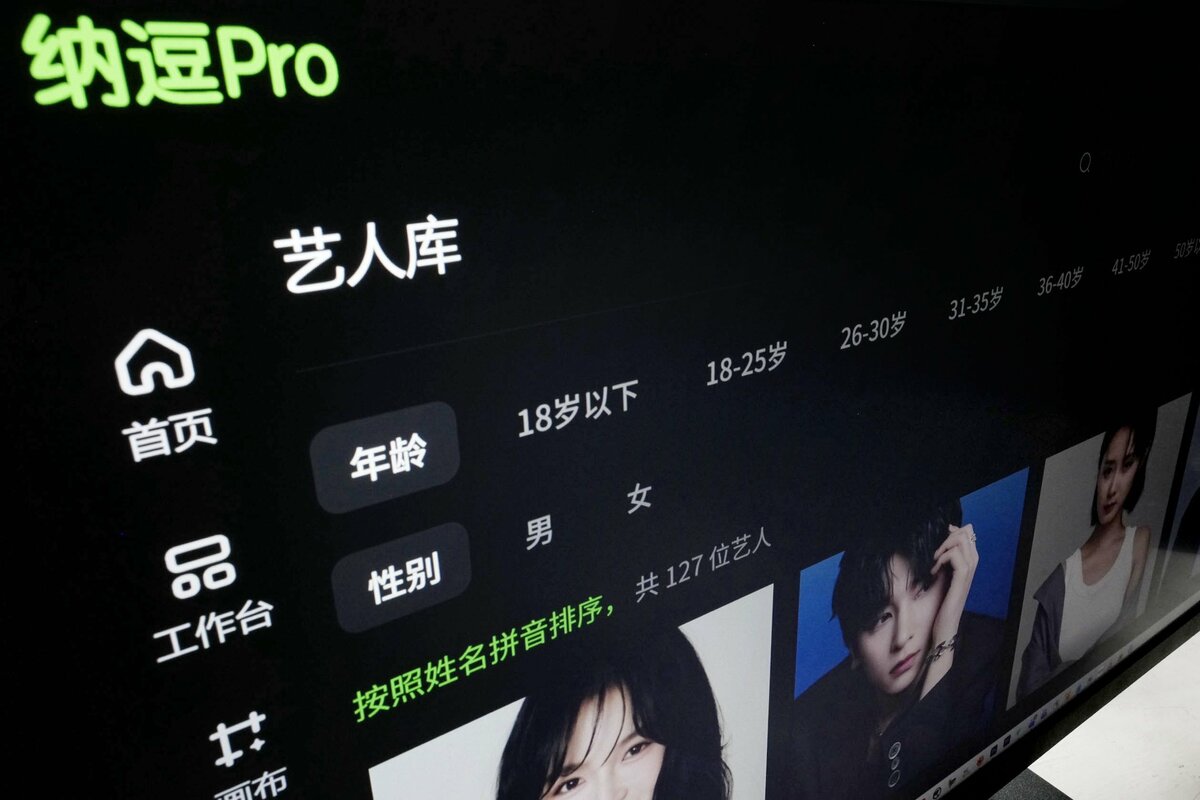
BEIJING – China’s recently launched artificial intelligence-powered platform for professional film and television production has sparked controversy over its use of digital data based on the likenesses and voices of real-life actors.
More than 100 celebrities have signed up for iQIYI Inc.’s platform “Nadou Pro,” which was launched in April and is China’s equivalent of Netflix. Through the AI Talent Pool, creators can negotiate with registered artists about the use of their images, sounds, and movements.
But critics argue that AI-generated content cannot “empathize with viewers” the way human actors can.
iQIYI’s move comes at a time when China’s entertainment industry is fiercely competitive in content production, with AI-generated short dramas without human actors gaining popularity.
According to Chinese media, the AI-driven platform has brought together more than 10,000 creators and helped create about 100 works across genres such as science fiction, thrillers, fantasy, and short dramas.
The platform supports workflows from script development and storyboarding to visual effects and final production, allowing creators to create epic scenes in just seconds. Additionally, digital actors can be created using AI, while eliminating the need for location filming or elaborate sets, significantly reducing costs.
Gong Yu, CEO of Chinese internet search provider Baidu-backed iQIYI, said in April that live-action productions that do not use any AI could eventually become a form of “intangible cultural heritage,” suggesting the trend toward AI-generated entertainment content is unstoppable.
He argued that cutting-edge technology will help improve working conditions for actors by eliminating the need for long filming sessions.
However, Gong’s comments sparked outrage on social media, with many questioning the quality of the work produced through the AI platform.
Following online backlash, some celebrities who were initially open to signing up for the AI talent pool denied that they had agreed to participate in the initiative.