Written by John McCurry
BMW has been one of the companies leading the way in implementing AI on the manufacturing floor for nearly a decade. Brent Westmoreland, head of IT innovation and research for the Americas at BMW Group, says the automaker has been using AI for quality inspection since 2017, and the benefits have been significant. This includes analysis to predict when a machine is likely to fail as a result of a particular vibration response.
Westmoreland says BMW has revolutionized the way it communicates internally using chatbots and text generation.
Westmoreland points out that in addition to its manufacturing plants, BMW has an IT hub for the Americas at the CU-ICAR (Clemson University International Center for Automotive Research) campus. The IT Research and Innovation Center provides IT services to all BMW entities from Canada to Argentina.
“From this office, we created the first visual inspection system that acts as a series of cameras that take the final measurements of every plant product coming off the line. We have been developing AI in this building for quite some time. My team in particular has been working on Open AI since 2022 and has been somewhat ahead of the curve.”
Westmoreland says there are always challenges when implementing new technology.
“BMW is over 100 years old at this point, so we have a lot of legacy to work through. Many of our internal systems are built with people in mind. Imagine using a chatbot to perform certain actions. You’ll end up in a place where there’s a self-support service portal that you have to go to to talk about. There are certain things that you can’t automate yet because you haven’t built it to automate. Those are some things that we think are particularly interesting. ”
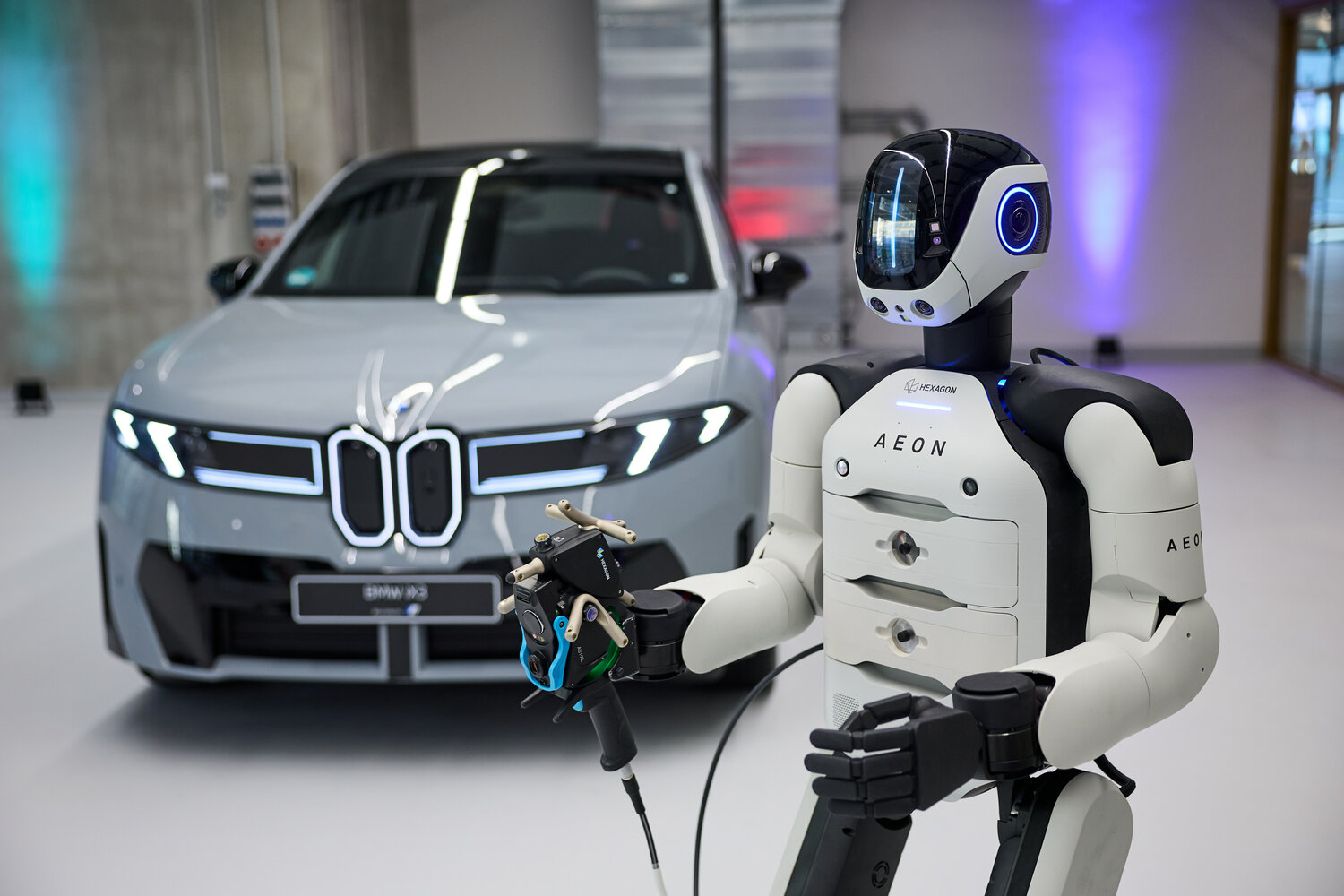
Last year, BMW implemented a project it calls “Physical AI.” This involves attaching small cameras to safety glasses to identify inspection tasks that need to be performed at the end of the line and ensure they are checked.
“The quality inspection process is actually very tedious and this is where we spend a lot of time. At the end of the line, we randomly sample a certain number of cars each day, followed by a 248-point inspection checklist. That 248 It’s very difficult for someone to learn what a point inspection checklist looks like. If you can give someone a hint that this is the next thing in the inspection task and we can confirm that you’ve completed it, that task will be checked off.” This allows for faster vehicle inspections and significantly reduces training time. ”
From a logistics perspective, BMW is also looking at ways to use AI to proactively identify problems. For example, if there is an impending weather pattern that could disrupt overseas supplies, knowing this early can help the company see if there are other ways to obtain parts.
Bosch is another company that is pioneering the implementation of AI. The auto parts supplier selected the Anderson plant to test its AI efforts. Stephen Frost, a data scientist at Anderson, said Bosch sees AI as an important technology with two purposes: to make its products better and to increase productivity within the company. He said AI and generative AI are playing an increasingly important role in software-driven systems.
“What we really want is to have a big impact on the manufacturing floor,” says Greg Arnold, director of technical capabilities at Bosch in Anderson. “We’re not going to do a project just because it looks good on paper. It has to make a difference in our production. It has to have some benefit, either for our customers, our shareholders or our employees. Hopefully we’ll accomplish two or three of those.”
Bosch uses an automated optical inspection machine, which Arnold simplifies as a camera to observe the part.
“Sometimes it’s black and white, sometimes the part is bad, sometimes the part is good, but sometimes there’s a gray area. The pictures in the zone are presented to the operator and they have to grade them. Yes, this is a good part. It’s quite a job, because there are a lot of pictures to be presented to the senior operator. You can imagine sitting at work, looking at images all day long and deciding whether the parts are good or bad.”
Bosch has trained AI to look at images and classify what’s good and what’s bad for the operator. Arnold says this improves quality and also takes this type of “daunting work off the operators’ tasks and redirects it to more value-added tasks.”
Arnold said Bosch uses AI to control the parameters of the machines that make parts. AI helps optimize the output of production processes and increase efficiency. Increase production while reducing scrap. Bosch developed this project in close cooperation with CU-ICAR.
Once Bosch introduced AI, the benefits were immediately apparent, Arnold says.
“We immediately saw an improvement in the quality of the parts, and we immediately saw an increase in output from that machine. But that doesn’t mean it was an easy project right away. It took us eight months of pretty intense work to get it online, but once we got it online, the improvements were immediate.”
Frost said one of the challenges is partnering with machine manufacturers to develop communication between machines not designed for AI and AI running on servers.
“Equipment was not designed with AI in mind, so work may be required to use AI to export data into a format that can be used in current applications.”
Bosch is moving into generative and agent AI through its partnership with Google to use Gemini Enterprise. The goal is to make AI accessible to all employees. Through AskBosch, employees can create AI agents to automate their daily tasks.
“The next wave is generative AI agents that can perform specialized tasks that can be combined with anomaly detection and predictive analytics to notify you when something goes wrong,” Frost said. “This allows people close to the production line to analyze data independently. We are putting AI tools directly into their hands. Part of my role as a data scientist is not only to develop AI systems that work in the background, for example, but also to teach others how to use AI tools that don’t require special knowledge of programming or coding. I think this is the next wave.”