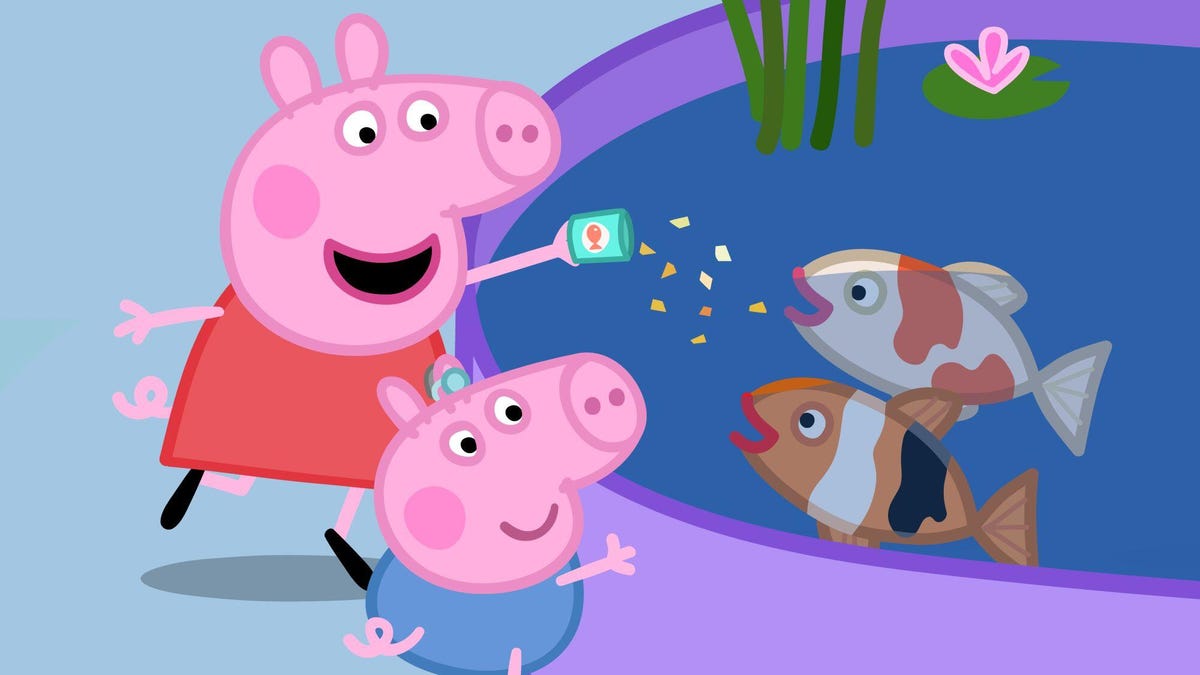
The relationship between the entertainment industry and AI is being tested once again. The owner of the animated series Peppa Pig is facing backlash after asking the show’s child voice actors to sign a contract allowing their voices to be recreated by AI, Hollywood industry news site Deadline reported.
Peppa Pig is available not only on Nickelodeon, but also on streaming services such as Paramount Plus and Amazon’s Prime Video, and is so popular that it is now in its 11th season. It is owned by the toy company Hasbro.
Deadline’s story centers around an open letter from the Agents of Young Performers Association, a UK-based organization representing child performers. The long-running animated television series “offered child voice actors a contract in which they consented to the use of AI and allowed their voices to be used in all commercial assets within the series,” the letter said.
Although the letter does not mention Peppa Pig by name, industry sources confirmed it was a reference to the show, Deadline reported.
The issue is one of consent. “Children are unable to provide informed legal consent, and parental or guardian approval should never be used as a blanket license to capture, clone, train, or reuse a child’s voice indefinitely,” the letter says. “Any agreement involving children’s voices should be completely exempt from the use of AI.”
Hasbro confirmed the existence of the letter.
In response to an inquiry from CNET, Hasbro said in an email: “We are aware of an open letter circulating regarding AI clauses in child performance contracts. We cannot comment on specific negotiations or contractual arrangements.”
Toymakers spoke more generally about bigger topics. “Protecting child performers is at the core of Hasbro and part of our DNA. As industry standards around AI continue to evolve, we are committed to addressing this issue in a responsible and transparent manner,” the statement said.
An AYPA representative told CNET that they have not confirmed the identity of the “international children’s franchise that produces long-running animated television series” mentioned in the letter, and intentionally did not name specific studios or projects.
“Here in the UK, children are not allowed to join Equity until they are 10 years old, but parents of child actors who cannot join a union for support and guidance are asked to waive their rights. No-AI clauses should be standard in all contracts for child actors,” AYPA’s email said.
AI and Hollywood’s troubled relationship
The reaction to the reported contract language is another episode in the uproar over the use of AI in movies, television, music and video games. Deadline’s article was published the same week that the movie studio announced A24 announces agreement with Google DeepMind The move has some indie film fans concerned, as the company is developing an AI filmmaking tool.
AI is the subject of a strike in Hollywood over how the technology is used in screenplays to replicate the likenesses of performers. As the AI model has more sophisticatedraising concerns about whether or when it will replace talent and crew jobs across film and television. AI can speed up production and save studios money, but the increased efficiency could put many people in the entertainment industry out of work.
When artists and studios are not transparent about their use of AI, as happened last year. will smith video The backlash could be immediate, as it included AI-generated concert footage.
Music companies are also waging their own battles over AI deepfakes on music platforms and social media. Allow music use Request AI remixes from major artists, as UMG does.
The video game industry is also at a crossroads. Some studios and developers are adamant that they have no plans to use AI at any stage of game development, while others have no intention of using it. Introducing generative AI To create game assets or supplement voice actors within a title.