The Transient Artifact and Continuous Learning System (TACLS) leverages data from a continuously operating satellite network, combined with machine learning models, to help National Weather Service meteorologists make flash flood predictions more efficiently. This new software is the result of a collaboration between NASA’s Jet Propulsion Laboratory, the University of California, San Diego (UCSD), and the National Oceanic and Atmospheric Administration’s (NOAA) National Weather Service (NWS).
Predictive execution of TACLS tests
close
Visual analysis of TACLS test forecasts performed using 2025 Christmas week flash flood data. This image overlays the probability of a flash flood warning (FFW) generated by TACLS (in shades of red) with the areas that have received a flash flood warning from the National Weather Service (in blue).
Credit: UCSD Scripps Institution of Oceanography
Created with support from NASA’s Earth Science and Technology Office (ESTO), TACLS uses machine learning to automatically identify evidence of impending flash flooding (an abnormal increase in atmospheric moisture) that meteorologists may miss when analyzing large amounts of data. TACLS flags that evidence, shows where flash flooding is likely to occur, and displays that information in user-friendly visualizations for human analysts to interpret. These analysts can then decide whether to issue a flash flood warning or weather warning.
This new framework for tracking extreme weather events and predicting impending flash floods operates in near real-time and generates forecasts in just 15 minutes.
“This is what we really wanted to do: give meteorologists a tool to support their flash flood warning decision-making,” said Yehuda Bock, a fellow at the UCSD Scripps Institution of Oceanography and principal investigator of TACLS.
In simulation tests, TACLS successfully captured 93% of flash flood warnings issued between 2017 and 2023 using data from a variety of severe weather phenomena, including atmospheric rivers, monsoon convection, and remnants of tropical cyclones. National Weather Service meteorologists are currently working to incorporate TACLS into existing systems for predicting flash floods in Southern California.

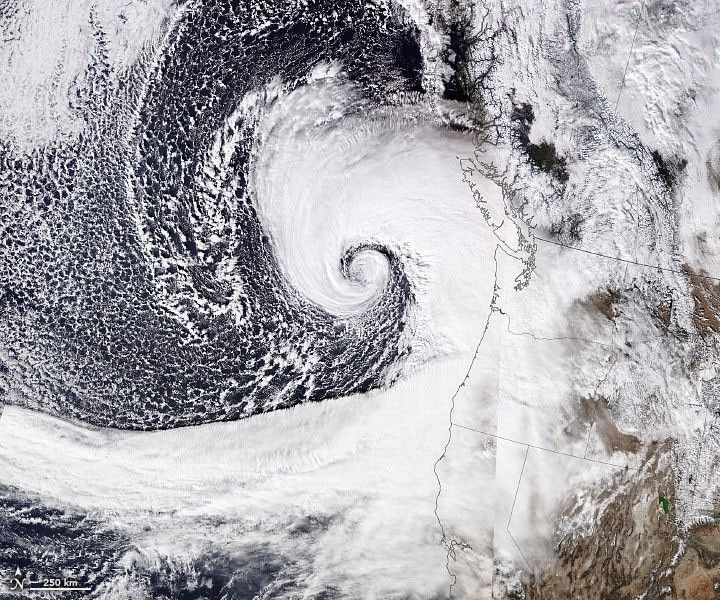
A cyclone will make landfall on the California coast on November 19, 2024. TACLS helps give communities time to prepare for impending severe weather.
Credit: NASA
/Open to the public. This material from the original organization/author may be of a contemporary nature and has been edited for clarity, style, and length. Mirage.News does not take any institutional position or position, and all views, positions, and conclusions expressed herein are those of the authors alone. Read the full text here.