

university of Hawaii in Manoa A research team in the School of Engineering received advanced computing hardware through the NVIDIA Academic Grant Program to support research in artificial intelligence (A.I.) and next-generation wireless communication technology.
The team, led by Assistant Professor Xiaochan Xue from the Department of Electrical and Computer Engineering, in collaboration with Associate Professor Yao Zheng, will receive four NVIDIA RTX PRO 6000 Blackwell graphics processing units. High-performance computer processors support research. A.I.next-generation wireless networks, cybersecurity, and other emerging communications technologies. Computing resources are enhanced ah Manoaimprove their research capabilities while expanding opportunities for students to gain practical experience. A.I. and wireless network technology.
“Our goal is to build wireless systems that are not only faster, but also smarter and more adaptable to real-world environments,” said Xue. “These new computing resources will accelerate our research and provide our students with valuable experience with communications and the tools that will shape the future of communications.” A.I.”
Practical solutions for wireless networks
This project is part of ah Manoais increasing its efforts in communications, cyber-physical systems, and networked infrastructure. Through collaboration with academic and industry partners, the research team aims to develop practical solutions while addressing the challenges associated with future wireless networks. Hawaiitransport, logistics and critical infrastructure sectors.
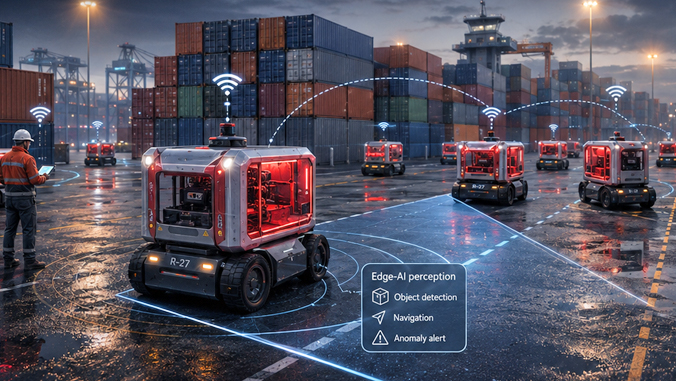
Part of the team’s research focuses on creating digital models of smart ports combined with wireless sensing. A.I.– Powering wireless access networks and real-time infrastructure monitoring. This technology could help improve operations at ports and other large transportation hubs where moving vehicles, shipping containers, and changing conditions can interfere with radio signals.
This research also supports broader efforts to improve connected infrastructure with potential applications in transportation systems, logistics, and other environments that rely on reliable communication networks.
In addition to advancing research, the NVIDIA Awards provide new opportunities for talent development by allowing students to work directly with cutting-edge computing technologies used in industry and academia.


