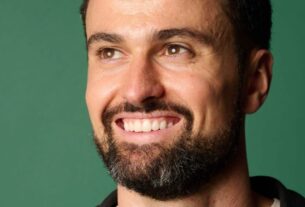
Leah Pinto, GM of IBM South Africa.
South African CEOs reorganize their executive leadership;[–>artificial intelligence ([–>AIAs AI moves from an isolated technology project to the center of business operations, )-driven companies will emerge.
This is according to the findings of the South African version of the IBM Institute for Business Value (IBV) 2026 CEO Survey.
According to this research, organizations are increasingly redesigning their executive teams around AI in a bid to improve efficiency, agility, and competitive advantage.
The study surveyed more than 2,000 CEOs across 21 industries and 33 countries, including SA.
Research shows that local CEOs are restructuring their leadership structures, decision-making processes, and workforce strategies in light of AI adoption.
The study found that 67% of South African CEOs surveyed have already appointed an AI chief executive, indicating that AI leadership is becoming a permanent fixture in the executive team.
Meanwhile, 83% of local CEOs say they are actively incorporating AI into multiple workflows to improve business efficiency.
IBM South Africa General Manager Leah Pinto says AI is fundamentally changing the way organizations are structured and led.
“AI is no longer a future ambition confined to innovation labs and isolated pilot projects; it is becoming the operating model of modern business.”
She points out that South African businesses are increasingly recognizing that the responsibility for AI does not rest solely with the IT department.
“The organizations that are seeing the strongest results are not necessarily the ones that are experimenting with the most AI tools, but the ones that are redesigning their workflows.[–>governance A structure and operational model for integrating AI into the way we actually work. ”
Breaking down leadership silos
Additionally, the findings reveal that traditional executive silos are beginning to break down as AI impacts every business function, from finance and operations to human resources, customer experience, compliance and cybersecurity.


According to the report, 73% of South African CEOs believe all functional leaders need to be technology experts in their area, reflecting the growing importance of technology fluency across the executive team.
Companies are increasingly adopting an integrated leadership model that shares responsibility for AI across the organization, rather than relying solely on the chief information officer or technology department.
This trend aligns with broader global developments as companies seek to operate AI at scale while maintaining governance, trust, and compliance.
Speed is a competitive advantage
The study also highlights the growing shift to faster decision-making as businesses adapt to the pace of an AI-driven economy.
Globally, 79% of CEOs say they are decentralizing strategic decisions to accelerate execution, and 77% say they are enabling their teams to make faster decisions as AI takes on a larger operational role.
In SA, 80% of CEOs surveyed said they would be comfortable making key strategic decisions based on AI-generated insights.
This reflects growing confidence in AI’s ability to provide executives with real-time intelligence, deeper operational visibility, and faster analysis, the study notes.
“AI is increasingly enhancing executive decision-making by providing leaders with the information they need to respond quickly to changing business conditions,” Pinto points out.
“AI does not replace human judgment. AI augments human judgment by enabling organizations to make better-informed decisions faster and at scale.”
She added that success in the AI era will depend on creating an environment where human expertise and machine intelligence work together.
Employee recruitment gap remains
Despite executives’ strong confidence in AI, the study reveals a significant gap between leaders’ ambitions and employees’ adoption of AI.
“87% of South African CEOs believe their employees have the skills needed to collaborate effectively with AI, yet only 18% of employees currently regularly use AI at work, which is below the global average of 25%.”
This finding suggests that workforce readiness may be one of the biggest obstacles to successful AI transformation.
Importantly, 87% of South African CEOs agree that the success of AI depends more on the people who adopt the technology than the technology itself, the report said.
“Organizations are facing increasing pressure to invest in skills development and reskilling programs. CEOs predict that between 2026 and 2028, 27% of employees will need retraining for a completely different role and 56% will need new skills to effectively perform their existing jobs.”
The study concludes that the next stage of AI transformation will be determined by execution, not ambition.
“For South African CEOs, the challenge is no longer whether to adopt AI or not. Instead, the focus has shifted to rewiring leadership structures, enabling faster decision-making and equipping employees with the skills they need to succeed in AI-first companies.”