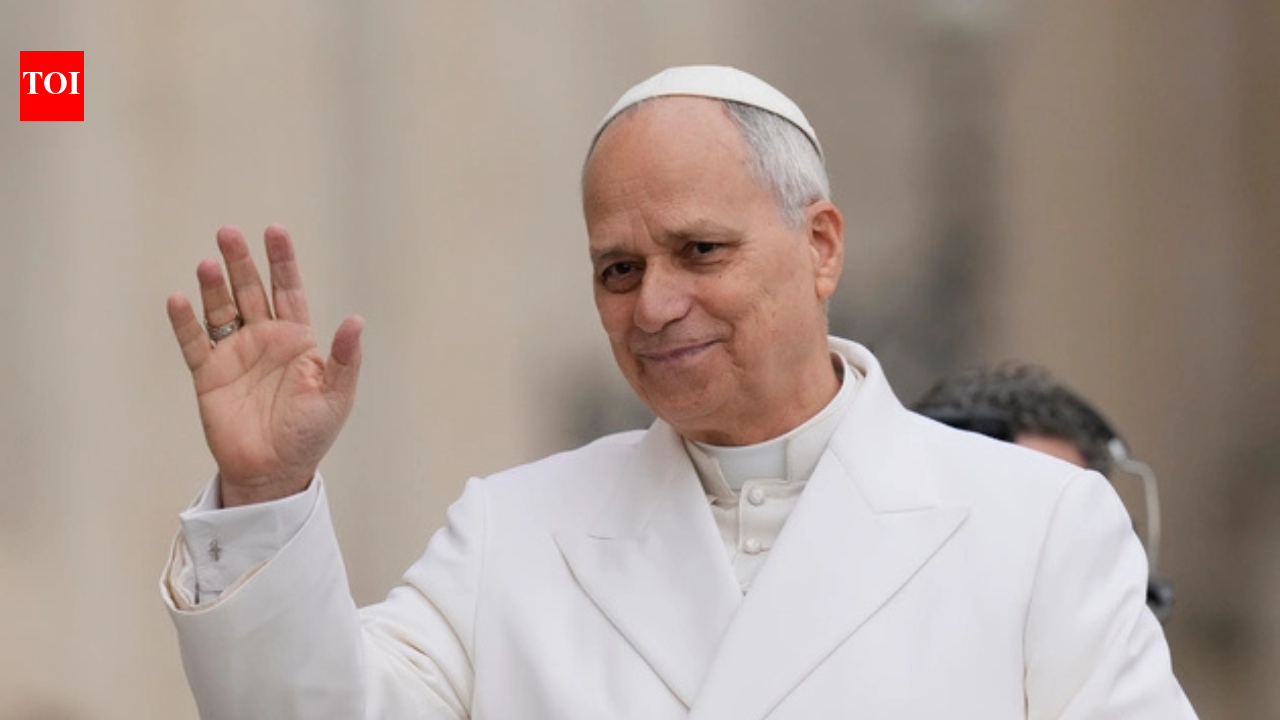
Pope Leo XIV has issued a stark warning about the rapid rise of artificial intelligence, warning that mass job losses due to automation could become a “social disaster” unless governments and businesses act responsibly. In his first encyclical, “Magnifica humanitas” (“Great Humanity”), published on Monday, the Pope argued that while AI can help humanity by taking on dangerous and repetitive tasks, it should never be allowed to undermine human dignity or leave millions of people without meaningful work. The document serves as the first major manifesto of Pope Leo’s papacy and puts AI regulation, ethics and worker protection at the center of a growing global debate over the future of the technology.
Pope Leo warns against sacrificing workers for profit
The Pope strongly criticized the profit-driven approach to automation, saying economic benefits should never come at the expense of human life. He warned that replacing workers on a large scale with AI systems could deepen poverty, inequality and social unrest.“The pursuit of the greater good cannot justify the choice to systematically sacrifice jobs,” Pope Leo wrote, adding that the economic system must remain subordinate to “human dignity and the common good.”He also warned that without “bold decisions” many people could end up being marginalized and replaced by machines and automated systems in their daily lives.
AI should support humans, not replace them.
Throughout the encyclical, Pope Leo acknowledged that AI has the potential to improve society if used responsibly. He noted that technology can free people from “difficult, repetitive or dangerous tasks” and provide intelligent assistance in health care, education and other fields.However, he argued that modern technological systems increasingly prioritize efficiency over humanity. The Pope said that while companies use automation and monitoring tools to maximize productivity, workers risk being reduced to rigid, repetitive tasks.The Pope emphasized that humans are not simply units of productivity, but individuals created for relationships, community and spiritual purposes.
“New Tower of Babel”
One of the document’s most striking sections compares unchecked technological ambition to the Biblical Tower of Babel. Pope Leo warned that humanity risks building a future centered solely on data, performance and control, to the exclusion of moral and spiritual values.He described this as an ancient temptation in “technical guise” in modern times, warning that society could become increasingly dehumanized if technology was allowed to dominate human life without ethical safeguards.The Pope said humanity faces a crucial choice: to build a society that values human dignity and community, or one that is driven entirely by technological power and profit.
Call for stronger AI regulations
The encyclical also calls for governments to take a more active role in regulating AI technologies. Pope Leo argued that data and powerful AI systems must not remain concentrated in the hands of a few companies and political actors.“What is needed is more active political engagement that can slow things down at a time when everything is accelerating,” he wrote.The Pope further warned that AI is not morally neutral, as the values and assumptions embedded in algorithms can shape society, influence decision-making and discriminate against vulnerable people.He also called for greater transparency in how AI systems are developed and used, and said ethical oversight must go beyond simply asking whether technology is being used for good or bad purposes.
Concerns about surveillance and digital control
Beyond employment, Pope Leo expressed concern about mass surveillance and what he described as the “digital attention economy.” He warned that continuous data collection allows companies and governments to profile, predict and influence human behavior, often without people being fully aware.This increasing concentration of data and algorithmic power risks undermining freedoms and discriminating against vulnerable people, especially when automated systems affect access to employment, credit and essential services, the Pope said.He called for greater protection of privacy, transparency and truth in digital communications, and encouraged what he called “digital sobriety” in response to increasingly addictive online platforms.
Pope Leo’s early important statements
The Holy See’s first encyclical, Magnifica humanitas, offers important implications for Pope Leo XIV’s priorities for artificial intelligence, human dignity, and the future of work. The document puts ethical concerns at the center of the global AI debate and calls on governments, businesses and individuals to ensure that technological advances serve humanity, rather than replace or control it.Pope Leo concluded by encouraging people not to be passive bystanders in a rapidly changing world, but to actively defend truth, compassion, community and relationships in the age of artificial intelligence.