

Most people are accustomed to hearing about artificial intelligence (AI) chatbots being used as personal companions, customer service representatives, and more. But some fitness-focused people are turning to AI chatbots as personal digital coaches to optimize their fitness efforts.
Rizal Kamal started his fitness journey in 2024 at the age of 49. At the time, he weighed 94kg and decided to lose weight to become a healthier and fitter version of himself.
He took part in a fitness challenge focused on losing fat, but it became clear that while he knew how to lose weight, he didn’t know how to lose fat.
“I used AI to set my goals. It looked at my weight, height, age, body fat, and skeletal muscle mass and was able to create a program for me,” he says.
From that point on, Rizal utilized the pro version of ChatGPT as a personal trainer and meal planner to further enhance his fat loss journey.
Ask the AI chatbot detailed questions such as “What is the principle behind fat loss?” “What foods should I eat to reach my goals?” – gave Rizal a deeper understanding of his nutrition and how to approach it.
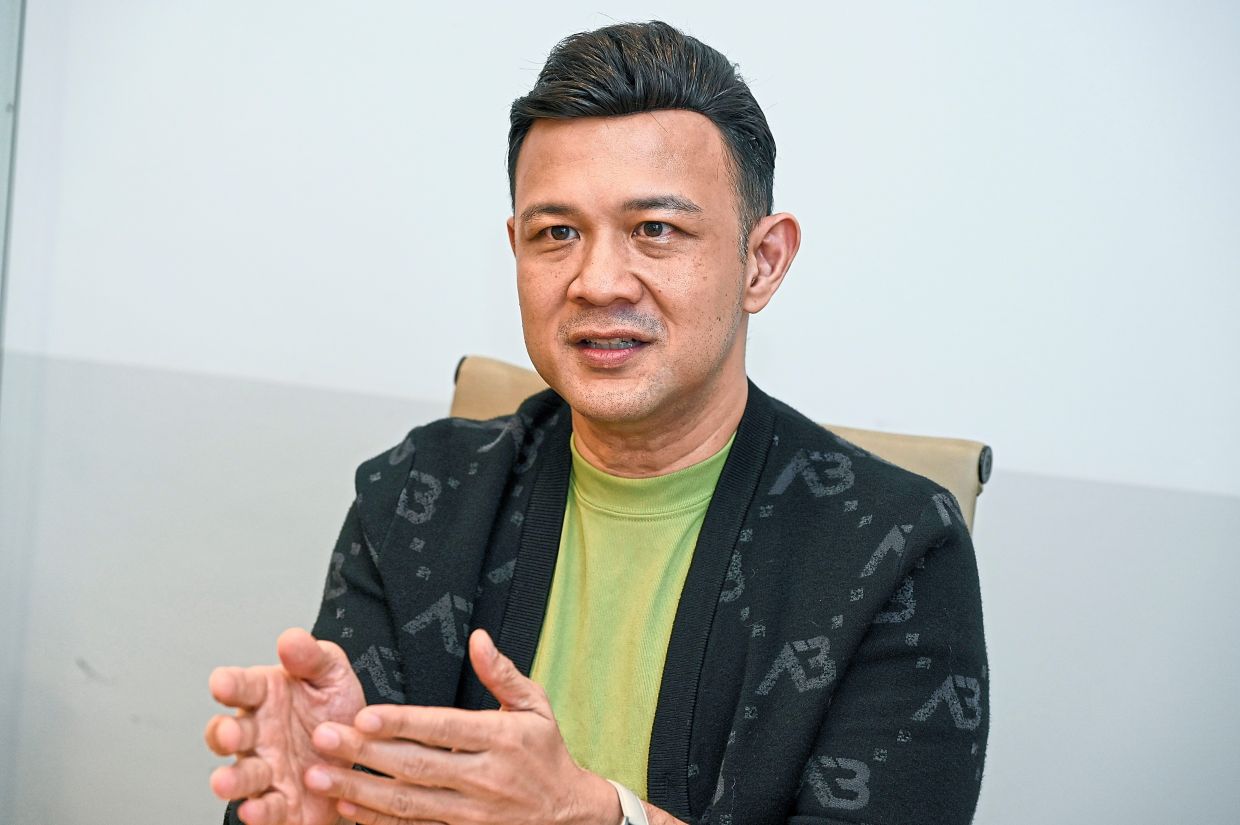
And when it comes to working out, the AI has given him a better understanding of how many times a week he should work out while balancing weight training with pickleball, an activity he particularly enjoys.
“We have ongoing conversations with ChatGPT to fine-tune how the fat loss journey should be designed,” he added.
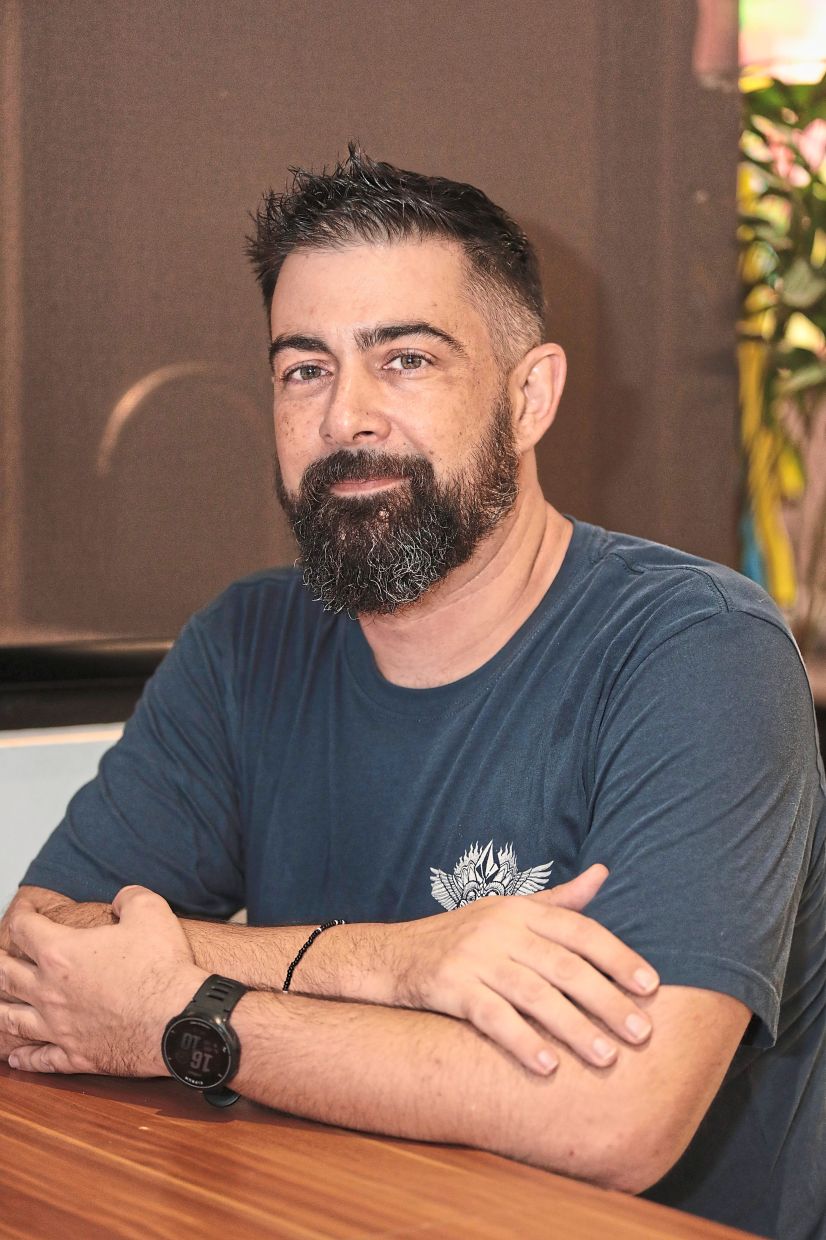
A similar physical evolution occurred with Ben Trenchard. The 43-year-old decided to train for the Subang Jaya Half Marathon and turned to AI-powered fitness applications. luna This is to create a training split plan and analyze your physical performance.
But his use of AI didn’t really begin until he led the implementation of AI in his office. At that point, Trenchard decided to explore the use of AI beyond the office space.
“We had a plan for Claude[Anthropic’s AI platform]and we all got a little bit into AI,” he recalls. After using AI tools for work-related tasks, I started using them to achieve personal goals, such as creating better nutrition plans.
From there, he moved on to using AI for running training. luna The app was able to provide him with AI-generated pre-workout guidance and post-workout analysis for his marathon training.
“I wanted more structured training and I realized that. lunaAI is actually also used to create training plans. And of course, we also use it to track our nutrition plans and training,” Trenchard added.
AI-optimized training
For Rizal and Trenchard, their initial dive into AI was just the first step. The two men realized that to further optimize their fitness journey, they needed to push prompts beyond casual conversation and into the realm of hyper-personalized data entry.
“The most important thing when chatting with an AI is to give it context and give it as much information as possible. I went on a (body scan) machine that gave me about 20 to 30 different points of data and I inserted it into the AI. The more data I put into the AI, the more accurately it can guide me,” Rizal explained.
Providing the AI with such detailed information was key to better understanding his body and optimizing the fat loss process, through which he subsequently successfully lost 14kg.
“AI can really help when it comes to knowing when and how much to eat, and what foods to eat to control blood sugar levels.
Even the smallest details,” Rizal added.
To take her workouts to the next level, Trenchard wanted to eliminate as many distractions as possible when tracking her progress.
Rather than sift through multiple workout tracking apps, he created his own hands-free voice-to-text gym workout tracking tool using AI coding.
“When you’re in the gym, you want to focus on what you’re doing, so we built something that uses Claude code to record audio notes for each workout set, put them all in a folder, and the AI reads those files and generates a workout summary for you,” Trenchard explains.
While Trenchard introduced AI to build orphan tracking tools, Josh Foong is bringing the technology to the forefront of sports.
The 33-year-old, who has years of bodybuilding experience, has been gradually integrating AI as part of his cycling journey over the past year. In it, he is exposed to grueling cycling loads of 200 km to 300 km per week, leaving no room for recovery error.
“I use a platform called Intervals.icu,” Foong said. “What this does is it tracks every ride you upload (heart rate, speed, distance, elevation) and includes lots of meaningful data.”

Using all the data he collected from Intervals.icu, Foong used connectors to sync the data to Claude so the AI platform had constant access to his metrics. This allowed the chatbot to better understand and improve his athletic performance.
“What the AI integration helps with is that it can actually analyze your recent rides as well and say, ‘Hey, I’ve noticed some variation in your heart rate over the last 20 minutes,’ and show you that you’re getting fatigued.
“Then you look back and think, ‘Oh, I was really tired at that time, why?'” So you start analyzing and thinking about how you can ride better and, most importantly, ride smarter, adds Hoon.
Democratizing fitness
The accessibility of AI has enabled Rizal to constantly talk to his digital coach and meal planner, which he believes has solved the “lack of time” problem he would have faced had he not consulted human experts.
“The meeting time with the doctor is 15 minutes, or 30 minutes at the most.During the explanation, you explain your symptoms and wishes, and the doctor gives you advice.However, it takes more than 30 minutes for the doctor to fully understand you and give you the best advice.
“I interact with the AI for months, and it is a continuous process. I have a learning buddy next to me who guides me to the end,” Rizal added.
Dr. Aisha Asmadi, who has a background in sports medicine and orthopedics and is a competitive bodybuilder herself, says the technology could be a great starting point given how approachable AI is.
“The good thing about AI is that it makes fitness advice more accessible. It gives you a sense of control over your health and nutrition, so you feel less lost.
“It can be used as a starting point for knowledge.”
Dr. Aisha explains.
Alert about AI risks
But experts caution against going to the other extreme and sharing detailed medical information with AI chatbots.
A recent study from the University of Oxford in the UK highlights how inaccurate and inconsistent medical advice can pose risks to users.
Research shows that those using AI for healthcare advice are often provided with a mix of good and bad recommendations, making it difficult to determine the best course of action.
“These findings highlight the difficulty of building AI systems that can truly support people in sensitive and high-stakes areas such as health,” said Dr. Rebecca Payne, the study’s lead physician.

a new york times The August 2025 report quotes Dr. Daniel Bitterman, assistant professor at Harvard Medical School and clinical director of data science and artificial intelligence at the Massachusetts General Brigham, as saying, “Just because you’re providing all the information to a language model doesn’t mean it’s using that information as effectively as a physician.”
So despite integrating Claude with Intervals.icu to provide sophisticated data insights, Foong doesn’t treat the chatbot as a solid digital coach. “I argue with AI a lot,” he jokes. “We don’t accept everything that AI suggests as gospel from the start. We have to keep improving.”
Foong admits that while using AI in training, there were moments when the chatbot could experience “hallucinations” and the AI could suggest training plans or recovery times that didn’t make sense.
At times like these, he reiterates the need to challenge AI, rather than treating its output as an absolute law. For Foong, the best defense against algorithmic errors is not more data, but his own history of deep physical training.
“I think my years of bodybuilding have helped,” he points out. “AI can’t tell you how it’s feeling, so I think this is a really big factor in understanding your body.”
Trenchard has the same level of skepticism as Fung when it comes to using AI as a repository of health and fitness information.
Trenchard understands that even when using AI to manage meal schedules or track workouts, its capabilities are limited by the AI model used.
He points out that while AI is great at researching and summarizing information, it doesn’t actually think for you.
“Remember, it’s just a language model,” he added.
Another risk centers on data privacy, with experts saying that once people provide detailed medical data to chatbots, they may have little control over how it is used, stored and processed.
A recent study from Stanford University found that six of America’s top companies feed user input into their models to improve their functionality, and only a few offer users the ability to opt out.
“When you share sensitive information in an interaction with ChatGPT, Gemini, or any other frontier model, even if it’s another file you upload during the conversation, that information can be collected and used for training,” said Jennifer King, the study’s lead author and a privacy and data policy fellow at the Stanford Institute for Human-Centered AI.
According to OpenAI’s FAQ, “We may use content submitted to ChatGPT and other personalized services to improve the performance of our models,” your data may be shared with “a select group of trusted service providers who help us provide our services,” and other humans may view your content. “A limited number of authorized OpenAI personnel and trusted service providers…can access user content only on an as-needed basis.”
of new york times Although the report states that several people redacted names and scrubbed metadata before sharing their medical records with chatbots, Dr. Rainu Kaushal, chair of the Department of Population Health Sciences at Weill Cornell Medicine and NewYork-Presbyterian, said medical data with sufficient details may still be linked to individual users even when no name is attached.
balanced approach
For Rizal, his 14 kg weight loss journey taught him that artificial intelligence serves purely as an interactive mirror for the clarity and sincerity of a user’s personal purpose.
“AI is essentially a reflection of me,” Rizal says thoughtfully. “Garbage comes in, garbage comes out. You can’t blame the AI, because it can give completely different answers from day to day depending on how you prompt it.”
Meanwhile, Dr. Aisha reiterates the fact that AI can be a good educator, but not a good doctor.
“It’s great as a teaching tool, brainstorming, and data collection,” she says. “But it’s not a treatment plan.”
She emphasizes that while the democratization of information provided by AI can benefit public health literacy, advice from experts needs to be leveraged in an integrated way.
“If we want to use AI, it is best to use it in a way that complements the guidance we receive from trained professionals,” Dr. Aisha concludes.


