

Earlier this week, during the Android Show, Google announced that it would be rolling out a feature called “Contextual Suggestions,” which will allow Android devices to proactively recommend actions based on your habits, routines, and real-world behavior.
Powered by Google’s broader Gemini Intelligence system, the feature can suggest a workout playlist when you arrive at the gym or prompt you to cast a sports game to fit in with your regular viewing time.
Google appears to be trying to transform Android from a manually controlled operating system to one that increasingly predicts what you want before you ask for it. This essentially marks one of the biggest changes in smartphone computing since the rise of voice assistants.
Android is becoming proactive rather than reactive
According to a new report from The Verge, Google’s new Android AI features suggest something different is happening now. Instead of waiting for instructions, Android could do things like predict your next action and automatically display relevant tools. It will begin to understand your daily routine and habits and may even suggest actions throughout the app.
This is a major shift from a “smartphone” to something much closer to an ambient AI system.
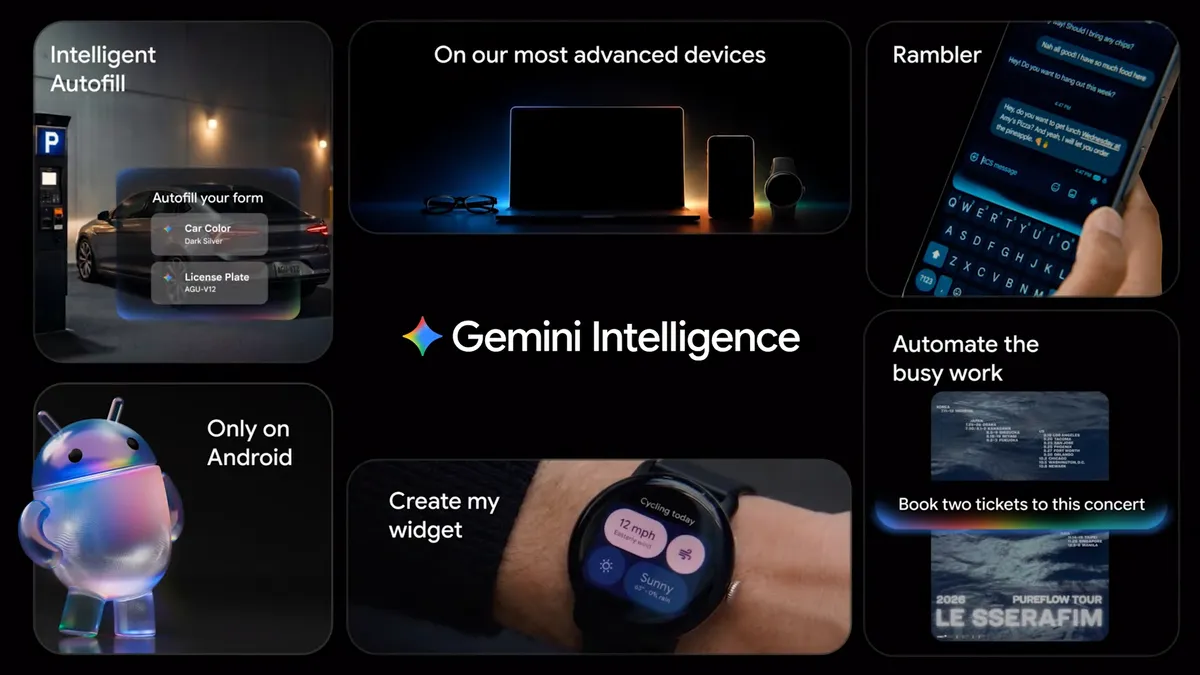
Google has already hinted at this through its new Gemini Intelligence, which the company says will power advanced AI experiences across phones, watches, cars, and other devices.

According to a report from 9to5Google, some of these features may first debut on future Samsung Galaxy devices, including the Galaxy Z Fold 8.
Your smartphone could start acting like an AI agent
Google appears to be aiming for an “agent” Android device that can perform actions rather than simply respond to commands. Instead of constantly having to open an app and manually search, your device will increasingly show you what you need before you even think about it.
Additionally, Google is committed to solving privacy issues. One reason this rollout resonates with users is because Google reportedly says many of these contextual suggestions are made locally on the device in an encrypted environment, rather than entirely in the cloud.
This is important because one of the biggest concerns about AI assistants is the amount of personal data they collect and process remotely. If Android can predict its behavior while keeping more processing on the device, Google may be able to position these features as faster, more personalized, less reliant on cloud services, and more private at the same time.
This reflects a broader industry trend towards local AI processing, with mobile phones increasingly using onboard AI hardware rather than relying entirely on remote data centers.
conclusion
Google’s latest Android direction points towards predictive computing. Rather than interacting with AI occasionally, users may live within an AI-powered operating system that continuously adapts to their behavior, context, and routines in real time.
And if Google is successful, Android smartphones could forever change the way we use smartphones.

to follow Tom’s Guide to Google News and Add us as a preferred source Get the latest news, analysis, and reviews in your feed. Subscribe to Tom’s Guide YouTube and follow us TikTok.


