
Modernizing enterprise AI infrastructure is at a critical juncture as enterprises grapple with decades of technical debt while facing intense pressure to adopt AI. And getting back to IT basics is now the only viable path forward.
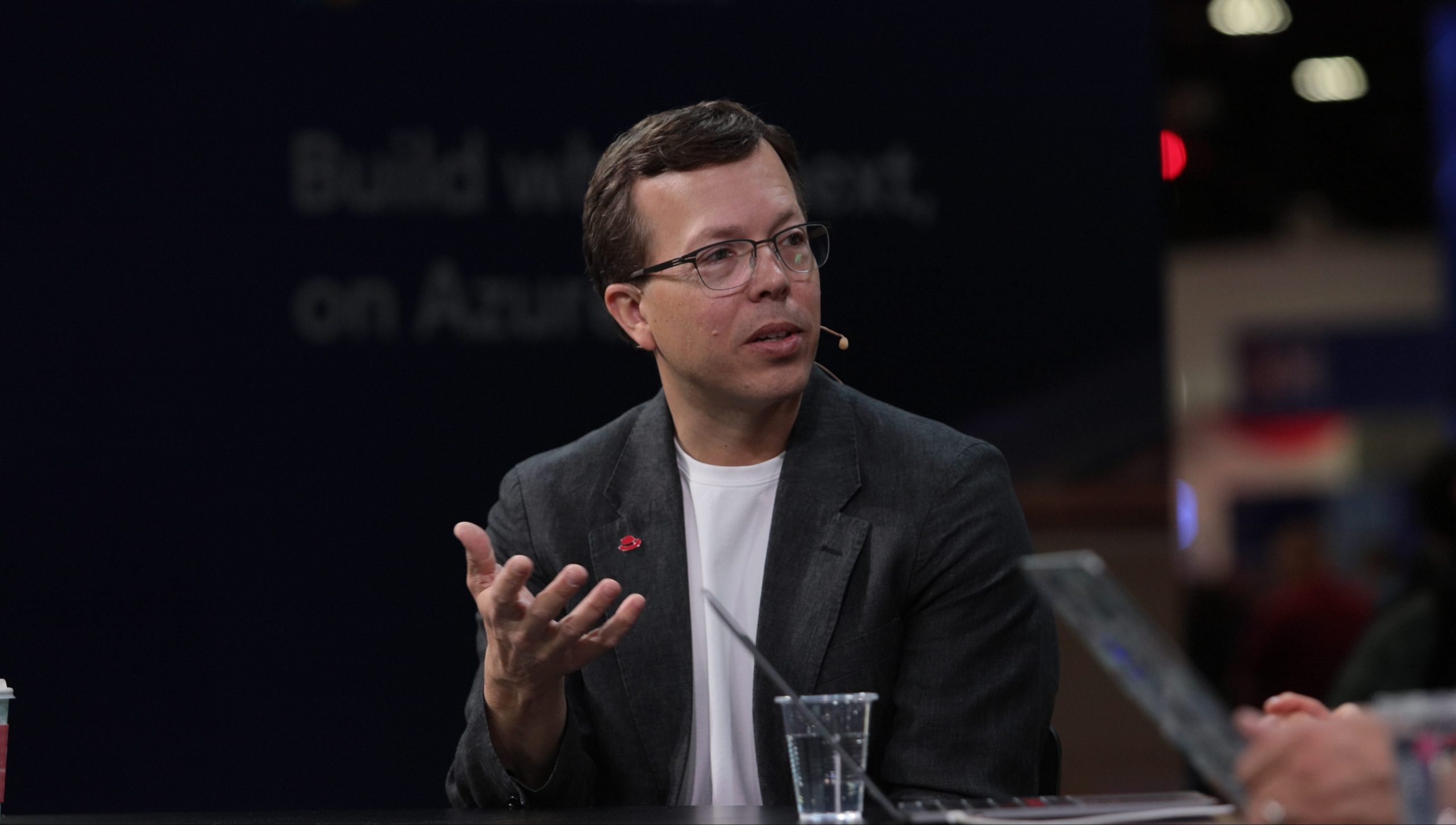
Nowhere is that collision more evident than at the intersection of platform engineering and AI-driven infrastructure. Organizations are realizing that the race to deploy AI is won and lost long before the first model is deployed in production. Red Hat Inc. President and CEO Matt Hicks (pictured) says modernizing enterprise AI infrastructure is now non-negotiable, as boards demand a return on AI investments and IT teams are mired in complexities that can’t be fully resolved.
“From the board level down… there’s a sense of, ‘We have to be able to take advantage of what this technology can do.’ They put that top-down pressure on them. And if you’re on an IT team, over the last 10 years, we’ve been trying to get to the cloud, we’re dealing with a lot of technology, and we end up in multiple places, but we don’t always maintain technical debt. It’s all hitting them at the same time,” Hicks said.
Hicks spoke with theCUBE’s Rob Strechay and Rebecca Knight during an exclusive broadcast of Red Hat Summit 2026 on SiliconANGLE Media’s live streaming studio, theCUBE. They discussed modernizing enterprise AI infrastructure, the pressure on organizations to rebuild their IT teams, and how AI agents are redefining the future of engineering work. (*Disclosure below.)
Modernizing enterprise AI infrastructure requires a return to basics
The tension between AI ambitions and infrastructure realities is most evident in how companies treat the systems they already operate. As Red Hat expands its agent AI strategy with new inference, automation, and governance capabilities, Hicks explained that the company is working to guide customers to close maintenance gaps before pursuing new capabilities.
“We’re now in a back-to-basics mode where we have to learn how to patch systems. A year ago, we might have argued that risk is okay. Thanks to AI, it’s no longer okay to ignore risk,” he said. “IT teams need to do two things: One, they need to learn about this tool and how it can speed up their operations, and two, they need to get back to the basics of maintenance and simplicity. Otherwise, they can’t compete in this world.”
Red Hat provides two core tools for just that task. One is Ansible, an IT automation platform that handles large-scale patching and configuration, and the other is Red Hat Enterprise Linux, which provides a stable, certified operating foundation on which most enterprise workloads (including AI) run, Hicks said. However, the complexities of treating AI as a managed workload, such as zero-vulnerability image requirements, rapid build cycles, and varying stability needs across environments, complicate the challenges IT teams face.
The result is two different infrastructure tracks that must coexist within the same enterprise. AI workloads that require lightning-fast update cycles to stay secure, and mission-critical systems that IT teams are too nervous to touch when they should. This also extends to common vulnerability and exposure images, which are snapshots of the system with known security flaws removed. While the request is simple, it is costly to implement into systems that organizations are afraid to update.
“Perhaps we are looking [the tension] “At this point, there is a universal request to ‘deliver zero CVE images,’ and we do,” he said. but [customers say]”No way, that’s what you need in a system that never changes.”
Beyond infrastructure, Hicks argued that the move to agentic AI is fundamentally rewriting what it means to work in almost every field. For engineers, the art of writing code is being replaced by a new discipline: shaping AI systems to solve problems. For all other departments, such as legal, accounting and sales, the barriers to building and changing things have virtually collapsed, he added.
“The people who are most successful in AI are the ones who have the most questions,” Hicks said. “People who know business, people who know their area, that’s who they are.” [that] There are no barriers to what we can do or change. It’s just getting started. ”
stay adjusted For the complete video interview, part of SiliconANGLE and theCUBE’s coverage, Red Hat Summit 2026:
(*Disclosure: Red Hat sponsors this segment on theCUBE. Neither Red Hat nor any other sponsor has editorial control over the content on theCUBE or SiliconANGLE.)
Photo: SiliconANGLE
Support our mission of keeping content open and free by joining the theCUBE community. Join theCUBE’s Alumni Trust Networka place where technology leaders connect, share intelligence, and create opportunities.
- over 15 million viewers of theCUBE videospowering conversations across AI, cloud, cybersecurity, and more
- 11.4k+ theCUBE Alumni — Connect with over 11,400 technology and business leaders who are shaping the future through our trusted, unique network.
About SiliconANGLE Media
Founded by technology visionaries John Furrier and Dave Vellante, SiliconANGLE Media has built a dynamic ecosystem of industry-leading digital media brands that reach more than 15 million elite technology professionals. Our new, proprietary theCUBE AI Video Cloud leverages theCUBEai.com neural networks to deliver breakthrough advances in audience interaction, helping technology companies make data-driven decisions and stay at the forefront of industry conversations.


