aAs the world grapples with the existential and moral implications of artificial intelligence, U.S. educators remain divided over its place in the classroom.
Should teachers encourage children to use AI language models? Some still think the technology should be banned completely, but others say the goal now is not to police children’s use, but to ensure children are taught how to use it properly and safely.
“I think we owe it to this generation of students and children,” said Shelby Reynolds, assistant director of educational technology and library services for Washington’s North Shore School District. Independent. “I think if we’re going to do our due diligence, we should be able to use the safety of the walled garden of the classroom to educate them in a way that will support them when they enter the workforce. ”
It is already a reality for children to use AI for schoolwork. Thanks to tools like ChatGPT, the use of AI in American high schools is more prevalent than ever and continues to grow, with 84 percent of students reporting using generative AI tools to assist with their schoolwork, according to a study published by College Board last October.
The same study found that half of high school students use AI tools for schoolwork to brainstorm ideas, edit or revise essays, and conduct research to find sources.
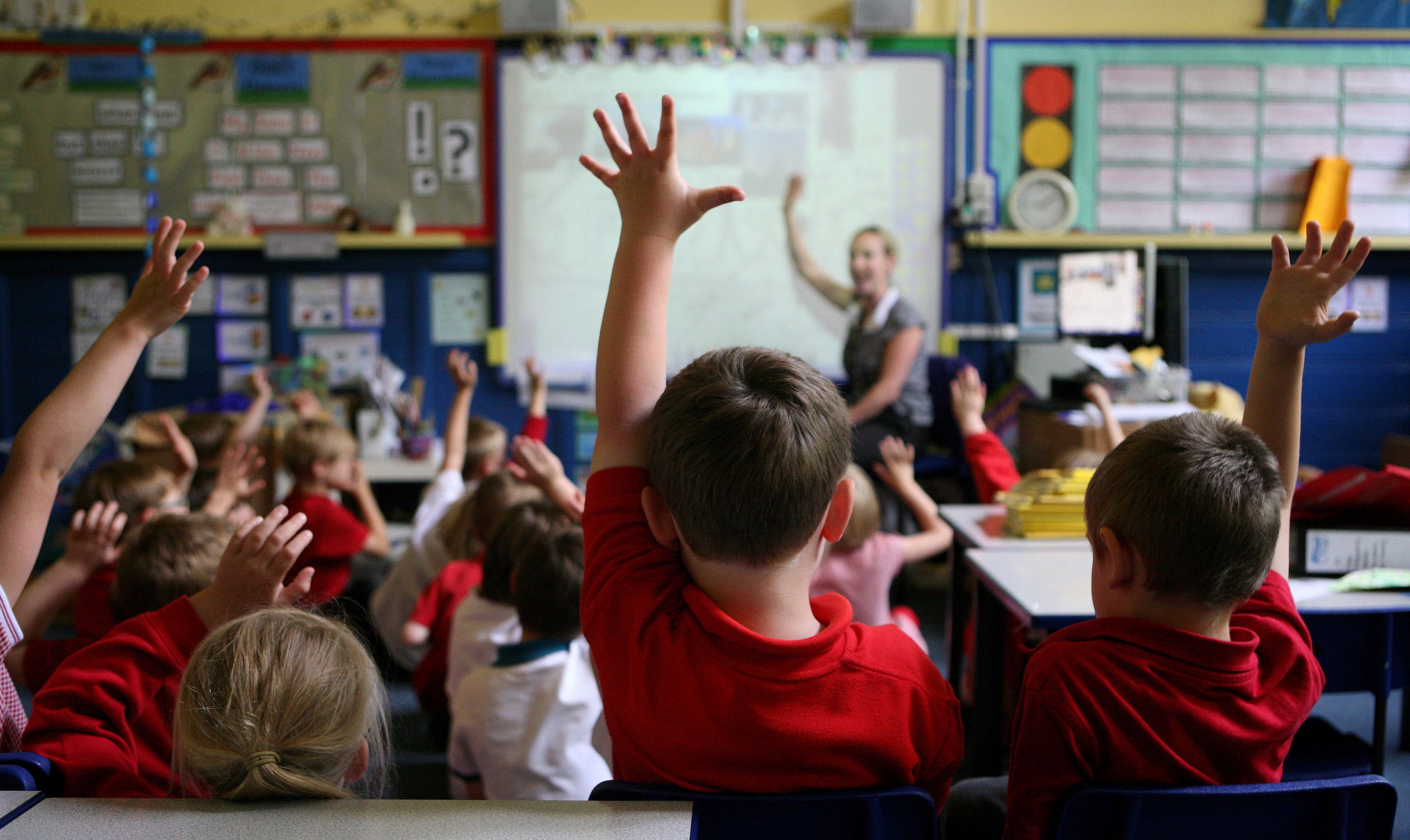
“It’s here. It’s not going away and it’s literally in their pockets every day,” Reynolds added.
Mandatory AI literacy training is not yet widespread nationwide, but more high schools and school districts are starting to implement it. Boston Public Schools announced plans earlier this year to allow all high school students to graduate with AI literacy training, Atlanta Public Schools is now automatically enrolling all upperclassmen in a foundational AI foundation course, and Irvine Unified School District previously introduced AI literacy lessons for students in grades 4 through 12.
Not everyone is happy about the new trend of integrating AI from an early age. In March, in response to guidance from the New York State Department of Education, more than 1,500 parents and educators in New York State signed a petition calling for a ban on AI in the classroom.
The AI Moratorium Coalition, which launched the petition, highlighted the guidance’s recognition that “the long-term effects on how children learn, think and develop in the age of AI are not fully understood” and that “no school system in the world can account for the full impact.”
“Our main concern is the impact on students who are still in the early stages of brain and cognitive development,” said Liat Olenick, teacher and program director at Climate Families NYC, a member of the AIM coalition. Independent. “All the research suggests that the use of AI can have a negative impact on brain development and children’s ability to learn and retain what they learn. We all believe that the purpose of school is learning.”
A 2024 study of 1,000 students in Pennsylvania found that students who had access to ChatGPT solved 48% more practice math problems correctly. However, the same group ultimately scored 17% lower on the test than the group that received no AI help, leading the researchers to describe the chatbot as a “crutch.”
“There is a misconception that in order to get into college you need to learn how to use AI,” says Kelly Clancy of Parents for AI Attention in the Education Space, also part of the AIM coalition.
“But the kids will come. [to college] “And they don’t have any skills because they were only allowed to use these programs to get through high school,” Clancy continued. All that hard stuff they have to learn first. ”
Jared Green, academic director of Inspirit AI, which provides AI literacy training programs for students from kindergarten to college level, says the problem is that young people still lack the right training and applications to supplement their learning.
“I think this is very urgent,” Green said. Independent. “In an ideal world, I would love to see something like this included in the curriculum yesterday. I remember having to learn how to type when I was a kid. It’s a fundamental skill, because one day you’re going to be in front of a computer. I think it’s as fundamental as this.”
Inspirit currently partners with more than 250 schools across the United States and around the world, including the North Shore School District. Last summer, Reynolds organized a two-week “AI camp” to provide AI literacy and focus on real-world applications and problem-solving.
But just because such technology exists in society and is used by adults doesn’t mean it belongs in schools, argues Olenick.
“We regulate everything when it comes to protecting children and what they have access to in school, and I don’t think that should change,” she said.
“We feel it’s much more important to teach critical thinking media literacy, the ability to understand similar sources and primary and secondary sources,” she said. “That prepares students for exposure to this type of technology.”
Last year, New York Governor Cathy Hochul banned cell phone use in schools, a measure that was well received by parents and teachers alike. Olenick sees similarities.
“Many people feel like [the cell phone ban] “It was 10 years too late. Five to 10 years from now, we don’t want to be in the position of an AI that has done tremendous harm to a generation of students and had a chance to stop before it did any harm,” she said.