
Pakistani researchers have achieved excellent results at China’s Nanjing Forum on AI and Green Sustainability, Gwadar Pro reported on Monday.
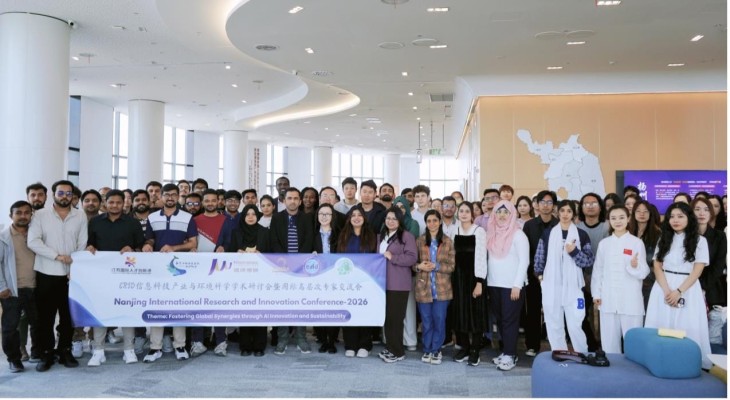
In late April, Pakistani researchers and academics joined more than 100 experts from China, the UK, France, Russia, Malaysia, Bangladesh and Pakistan in an international forum to explore how artificial intelligence can drive global sustainability at the Jiangsu Talent Port Building in Nanjing.
The Center for Research, Innovation and Development’s (CRID) international symposium and expert forum themed “Promoting global synergies through AI innovation and sustainability” highlighted the growing role of cross-border cooperation in combating climate change and promoting green development.
Discussions centered on how information technology and environmental science can work together to support green transformation, translate research into practical solutions, and strengthen international cooperation.
The forum also contributed to global carbon neutrality efforts and a shared vision of building living communities for humanity and nature, goals that resonate not only in Asia but around the world.
Engineering Mohammad Waqas, MSc PhD in Water Resources Engineering from Peshawar University of Technology, participated online to share his research on compound climate risks.
He pointed out that the non-linear interaction of heat and moisture deficiency is increasing climate risks in Peshawar, making extreme weather events more frequent and complex.
His presentation highlighted how international platforms enable Pakistani researchers to access advanced tools and share regional climate challenges with a global audience.
Ms Ruqia Khaliq Dad Akbar, a Pakistani academic who holds a master’s degree in English language and literature from Southeast University in Nanjing, explained how semantics can bridge linguistic structure and cultural meaning across different contexts.
Her research has the potential to integrate theoretical linguistics and computational methods, paving the way for more advanced AI-driven communications.
Her research also shows how her academic training in China prepared her to contribute effectively to regional solutions.
The forum also launched several initiatives to support young innovators. The Shanghai Cooperation Organization (SCO) Youth Entrepreneurship Incubator was introduced, along with an international talent development mechanism designed to support young academics and entrepreneurs from SCO member countries, including Pakistan.
This initiative will help translate academic research into real-world industry, creating opportunities for emerging economies across the region.
Additionally, the start of preparations for the Tower Bridge Global Research Academic Platform was announced.
The platform aims to strengthen international research cooperation and build a solid foundation for global talent collaboration, benefiting countries like Pakistan that aim to improve their innovation capabilities.
Credit: Independent News Pakistan (INP) — Pak-China


