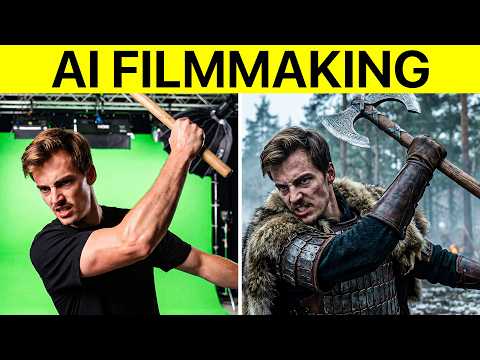
Artificial intelligence is changing the way filmmakers approach their work by combining real footage with AI-driven techniques to enhance both visual and narrative elements. Dan Kieft investigates how Techniques such as motion transfer and relighting This allows creators to precisely adjust movement and lighting, often avoiding the need for expensive equipment or time-consuming reshoots. For example, motion transfer allows you to map a dancer’s movements onto a digital character and blend live performance with AI-generated imagery, expanding your creative options without sacrificing realism.
See how AI is being applied to real-world filmmaking challenges and opportunities. Gain insight into omni-editing to modify the environment, such as changing the weather or changing the entire landscape. Use character and voice transformations to create personas tailored to specific storylines. Finally, learn how AI-powered VFX can streamline complex post-production tasks, from character morphing to integrating fantastical elements, while achieving cinematic-quality results.
Motion Transfer: Bring your characters to life
Key points:
- AI-powered motion transfer technology allows filmmakers to replicate movements from reference videos to different characters, eliminating the need for expensive motion capture equipment and making animation more reliable.
- AI-powered relighting tools seamlessly manipulate the lighting conditions of existing footage, allowing filmmakers to transform scenes and evoke a specific mood without having to reshoot.
- Omni-editing gives you creative control to change environmental elements like weather and settings using simple text prompts, reducing the need for complex set and location changes.
- Character and voice transformation AI tools allow filmmakers to customize their appearance and voice to create unique personas that suit narrative requirements and increase storytelling depth.
- AI-powered VFX tools streamline post-production by automating complex processes, enabling filmmakers to create ambitious visual effects and expand creative possibilities with precision and efficiency.
Motion transfer technology allows you to replicate movements from a reference video and apply them to another character, whether real or AI-generated. This technology eliminates the need for expensive motion capture equipment, making it a cost-effective solution for creating lifelike animations. For example, you can record the movements of a professional dancer and seamlessly transfer them to a digital character, blending real-world movement with AI-driven design. This feature is especially valuable for animators and directors looking to create expressive performances that feel authentic and engaging. Motion transfer allows you to bring characters to life in ways that were previously time-consuming or economically prohibitive.
Relighting the scene: shaping the mood
Lighting plays a vital role in cinematic storytelling, and AI has transformed the way existing footage manipulates lighting conditions. Use AI-powered relighting tools to transform daytime scenes into moody sunsets or simulate dramatic moonlight without having to reshoot. These tools analyze your footage and seamlessly apply new lighting environments to maintain the natural look and feel of your scene. For example, you can give a studio-shot video a warm golden hue of golden hour to enhance its emotional tone and visual appeal. This feature not only saves you time and resources, but also allows you to experiment with different lighting styles to evoke a particular mood or atmosphere.
Check out our extensive collection on AI filmmaking for relevant guides you might find useful.
Omni-editing: Rethinking the environment
Omni-editing allows you to modify environmental elements within your scene, giving you unparalleled creative control. AI allows you to change weather conditions, add effects like fog and rain, and change settings completely. With simple text prompts, you can turn a sunny park into a snowy landscape, or replace a rural background with a futuristic cityscape. This flexibility opens up new storytelling possibilities and allows you to create immersive worlds tailored to your creative vision. Additionally, omni-editing reduces the need for complex set and location changes, making it a practical tool for filmmakers working with limited budgets and schedules. By reimagining your environment, you can create visually appealing scenes that captivate your audience.
Character and Voice Transformation: Build a Unique Persona
AI tools give you the ability to change your character’s appearance and voice, allowing you to create a unique persona to fit your story. You can adjust your character’s facial features, clothing, and even age to suit your story requirements. Voice conversion tools further enhance this by allowing you to tailor your voice to suit your character’s persona. For example, you can create a villain with a deep, commanding voice and a unique visual identity so that the character leaves a lasting impression on viewers. These tools allow filmmakers to experiment with character design and development to add depth and complexity to their stories.
AI visual effects (VFX): Expanding creative possibilities
AI-powered VFX tools have transformed the way visual elements are added or changed within a scene. These tools allow you to manipulate objects, change body parts, and create seamless transitions between frames with precision and efficiency. For example, you can draw a character that transforms into an animal, or introduce a fantastical element like a glowing energy field. AI VFX tools streamline post-production workflows by automating complex processes while maintaining professional-quality results. This technology not only saves time, but also allows filmmakers to push the boundaries of creativity, enabling ambitious visual concepts once considered unrealistic.
The future of filmmaking
AI is transforming filmmaking by simplifying complex processes and expanding creative boundaries. Technologies such as motion transfer, relighting, omni-editing, character and audio transformation, and AI-powered VFX demonstrate how AI can enhance real footage to create high-quality cinematic content. These tools not only make filmmaking more accessible, but also allow creators to push the limits of their imagination. By leveraging AI, you can unlock new possibilities for storytelling and redefine what is achievable with video production. As these technologies continue to evolve, they promise to shape the future of filmmaking, providing endless opportunities for innovation and artistic expression.
Media credit: Dan Kieft
Filed Under: AI, Top News
Disclosure: Some articles contain affiliate links. If you buy something through one of these links, Geeky Gadgets may earn an affiliate commission. Learn about our disclosure policy.