The reality of modern medicine in the United States is often determined by maps. Currently, in rural America, where 80% of the population is underserved, residents face a life expectancy nearly two years lower than those living in metropolitan areas. Digital health has the potential to close that gap, but access remains uneven. In Arizona alone, 21% of the population does not use the internet, putting them at a disadvantage, according to the Arizona Department of Commerce.
To address this gap, researchers at the University of Arizona are moving beyond traditional telemedicine to launch Convergent Digital Health for Remote Access (CoDiRA). The project, one of six initiatives to be funded as part of the Office of Research Partnerships’ first Big Ideas Challenge, aims to provide a robust physical ecosystem of health care delivery across geographic and social barriers.
“The unfortunate reality is that the zip code you are born in can have a significant impact on your health outcomes,” says Dr. Srikar Adhikari, professor of emergency medicine and principal investigator at CoDiRA. “I have people dying right in front of my eyes in situations that could have been saved if they had come forward sooner. The difference is huge. Even if our project only addresses a small portion of the access problem, it will be a huge step forward.”
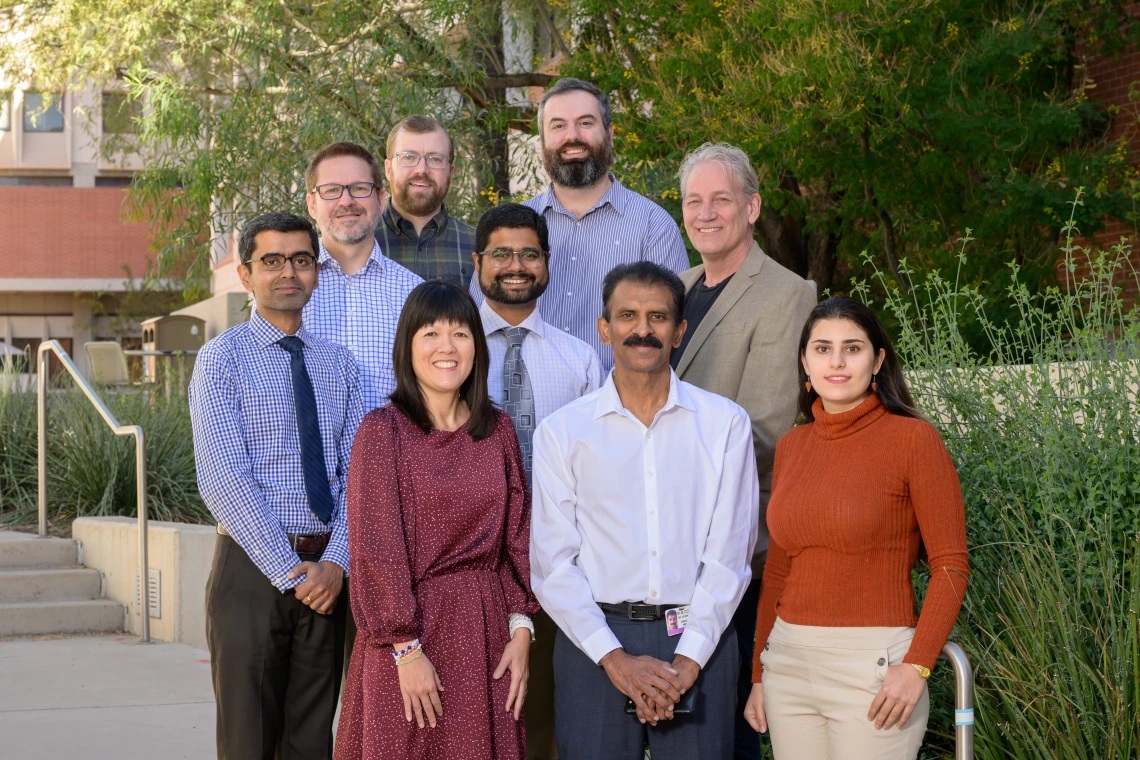
The project brings together 14 university researchers with expertise ranging from computer science and cybersecurity to improving equity and promoting health. The multidisciplinary team is designing artificial intelligence-powered medical kiosks for rapid deployment in easily accessible locations such as pharmacies and community centers, basing their work on community relationships, culturally tailored approaches, and clinical practice.
“At the University of Arizona, we believe that the most complex challenges of our time, including widening disparities in health equity, cannot be solved alone,” said Professor Tomás Díaz de la Rubia., Senior Vice President, Research and Partnerships. “CoDiRA is a great example of convergence in action, bringing together our world-class expertise in AI, cybersecurity, and healthcare to create a robust care ecosystem rooted in society. By bringing together advanced technology and deep community trust, we are delivering on our land-grant mission to ensure quality health care is a universal right, regardless of a patient’s physical location or social context.”
new care model
CoDiRA is designed to provide an alternative to standard urgent care and emergency visits, which often involve long travel and wait times, as well as a basic video platform. CoDiRA uses cameras, audio, and other sensing technologies to capture and analyze subtle clinical signs that may be missed through conversation alone. The system is specifically designed to address common but serious conditions such as urinary tract infections and elevated blood pressure, providing personalized advice and detailed assessments to prevent potentially unnecessary emergency room visits.
The system operates within existing medical and regulatory frameworks and includes built-in escalation and human oversight for situations that require clinical judgment. Trained partners, such as healthcare professionals, help patients navigate the system.
Expanding the concept
With an initial two-year seed funding period starting in 2025, the project will also focus on establishing community collaborations to drive adoption and investment. Adhikari said Mariposa Community Health Center leaders met with the researchers to discuss how CoDiRA could support residents of Nogales, Arizona, and endorsed the grant proposal. The team also works to partner with tribes, clinics, and other trusted organizations to help guide CoDiRA’s development and deployment strategy.
This community-centered approach also extends to training the AI itself. The team is refining the model using two streams of data: feedback from focus groups and surveys of potential end users, and the research team’s direct clinical intuition. Adhikari, who has 25 years of clinical experience, works closely with data scientists to encode the specific ways providers collect information and narrow down diagnoses, essentially teaching the software to think with the nuances of a seasoned clinician.
Safety and privacy remain at the forefront of the project’s mission. The CoDiRA ecosystem includes dedicated experts in ethics AI infrastructure, regulatory compliance, and cybersecurity to address patient concerns about the handling of sensitive health information. By building a technologically advanced and socially grounded model, researchers hope to create a global standard for care in resource-poor, rural settings.
As the team moves toward a tested and vetted model, researchers will need both a prototype and preliminary data to secure partners and test CoDiRA in patients. Adhikari believes the system has a clear role for corporate and government sponsors, offering greater integration, monitoring and responsiveness than standalone products offer.
“Right now, most technologies, even those approved by the FDA, are not readily accepted or implemented,” Adhikari said. “We need to build trust and educate patients about why and how they can interact with these models. We believe that is what separates us from existing technologies.”
Version of this article Originally published on the Office of Research Partnerships website.