
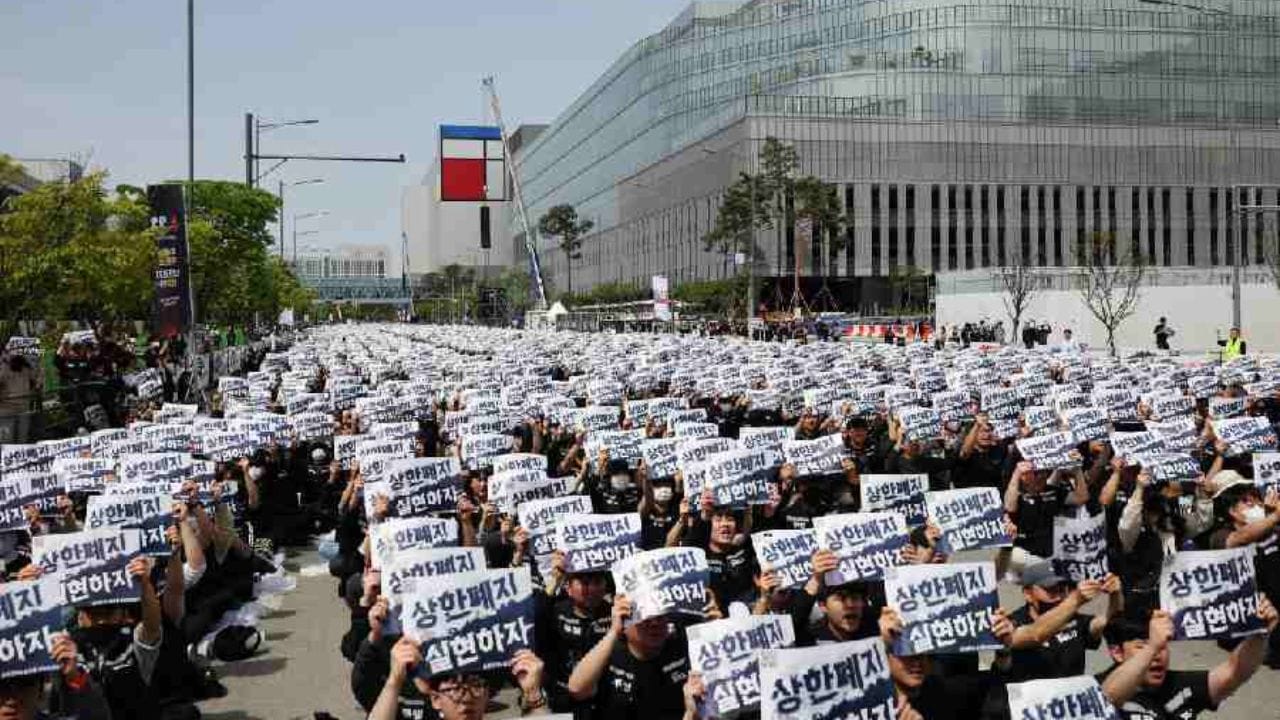
around it 40,000 Samsung Electronics employees People rallied at a semiconductor complex in Pyeongtaek, South Korea, to demand higher bonuses and threaten a strike, as rising demand for artificial intelligence continues to boost memory chip profits.
The protests took place amid heavy police presence, with workers chanting slogans and calling for demands such as: Improving compensation transparency and removing bonus capsReuters reported. Police have not released an official estimate of the crowd.
Despite strong profits, wage disputes intensify
The rise comes as Samsung’s semiconductor business benefits from a surge in global demand for AI infrastructure.
The company’s advance forecast First quarter operating profit reached record high of 57.2 trillion wonAccording to Reuters, rising demand for memory chips is partly to blame. Samsung, along with SK Hynix, accounts for about two-thirds of the world’s memory chip production.
On the same day, SK Hynix reported record high quarterly sales and operating profit for the January-March period, due to increased investment in data centers and AI systems.
Labor union rejects bonus system
It will be represented by Samsung’s labor union. 74,000 workersstated that the company failed to provide adequate remuneration despite its strong financial performance.
The union rejected management’s proposal, which included bonuses in the form of restricted stock, and instead demanded: Increase in cash bonus and removal of bonus cap.
“We will not stop this fight until our fair demands are met,” labor union leader Choi Seung-ho said from a building attached to a crane during the protest.
Threat of strike increases risk
Labor union officials are 18-day strike from May 21st If negotiations with management fail.
They estimate that such a strike could result in the following losses for Samsung: 1 trillion won per dayhighlighting the potential operational and financial implications of prolonged industrial action.
Industry tailwinds and risks
The controversy comes amid a broad rally in the semiconductor sector, driven by demand for AI-driven advanced computing infrastructure.
However, uncertainty remains. Reuters reported that geopolitical tensions, including the Middle East conflict, are disrupting the supply of key raw materials such as helium, raising energy costs and putting pressure on the industry’s outlook.
The conflict with Samsung highlights growing tensions between labor and management in sectors that stand to benefit from AI-driven growth.
As profits rise, workers are demanding a bigger share of the profits, setting an important test for how big tech companies strike a balance. Sustained investment in cost management, employee expectations, and AI-driven expansion.


