
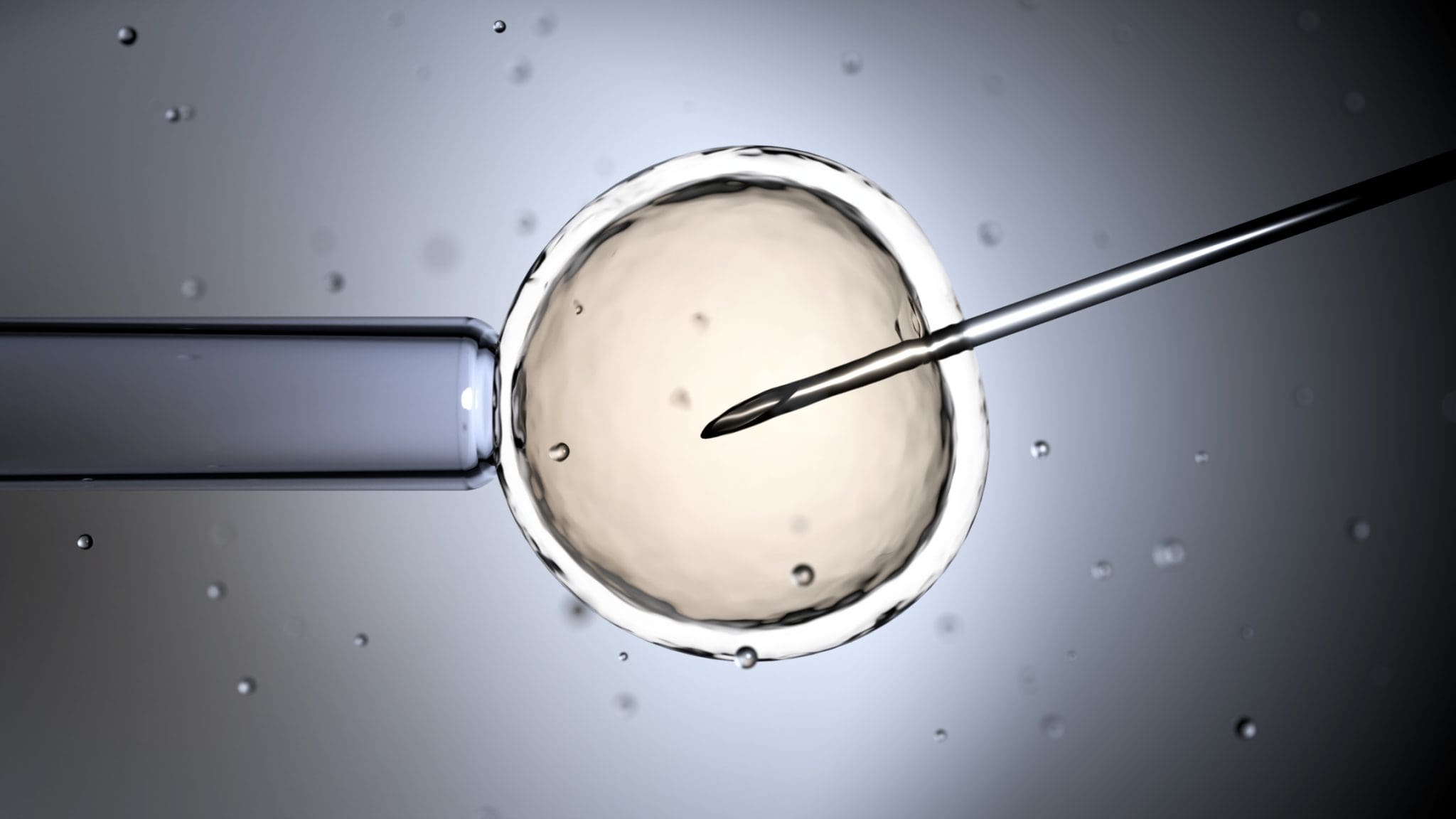

Dr. Gitanjaly Chhabra and Dr. Kathleen (Kaye) Hare from the University of Western Canada explore the transformative potential of artificial intelligence (AI) in in vitro fertilization (IVF)
Infertility affects approximately 17.5% of adults worldwide, but advances in assisted reproductive technology are increasingly changing reproductive possibilities. One of the most promising frontiers lies at the intersection of in vitro fertilization (IVF) and artificial intelligence (AI), where human biology, clinical expertise, and algorithmic analysis merge in unprecedented ways.
Recent studies, including Professor Dhillo’s, have demonstrated that AI can analyze large datasets to determine the size of follicles most likely to produce mature eggs, outperforming traditional clinical methods. Beyond ovarian stimulation, AI supports gamete evaluation and embryo annotation, standardizing evaluation while reducing human subjectivity.
These algorithmic interventions challenge traditional notions of agency, autonomy, and embodiment, raising important ethical and philosophical questions. How does human-machine collaboration shape reproductive decisions? And what biases and assumptions are embedded in predictive models? Although clinical results require further validation in large-scale trials, the integration of AI into IVF shows that reproduction is increasingly becoming symbiotic between humans and intelligent systems. As AI enters IVF clinics, reproduction will increasingly become a shared process between humans and machines. The female reproductive system unfolds at this intersection, emphasizing hope and the potential to nurture life.
AI in IVF labs: From data to decision-making
Washington Post article from October 1, 2025, “Robots are learning to make human babies.” “20 Already Born” by Elizabeth Dwoskin and Zoan Murphy details the rise of AI-powered robotics in IVF. It reports that at least 20 babies have been born around the world with minimal human intervention through automated in vitro fertilization systems, marking a new chapter in reproductive technology.
AURA is the world’s first fully AI-powered automated IVF lab. Performing the more than 200 steps involved in fertilizing an egg and sperm to produce an embryo, embryologists can focus their expertise on the most delicate and complex part of the IVF process. While AI offers a means to motherhood, it may also come with certain ethical challenges.
Ethics, bias, and autonomy in algorithmic reproduction
Research on the ethics of AI in embryo evaluation shows that the integration of AI in IVF raises complex ethical concerns beyond clinical efficacy. Automating the evaluation of embryos may reduce recognition of the human and symbolic importance of reproduction, while relying on datasets that do not adequately represent diverse populations risks embedding algorithmic biases that may favor embryos based on traits unrelated to health. Responsibility and accountability are also unclear when AI-driven decisions lead to adverse outcomes, creating accountability gaps between clinicians, developers, and facilities. The opacity of most machine learning embryo assessment tools complicates informed consent and patient understanding, and over-reliance on automation can compromise embryologist expertise. Finally, the uneven development and cost of AI-assisted IVF technologies threatens to exacerbate global inequalities in reproductive health care, favoring clinics and patient populations with the resources and access to participate over others. Taken together, these concerns highlight the need for ethical oversight, transparency, and fair access as AI increasingly mediates reproductive decision-making.
Posthuman assemblages: A future where humans and machines coexist
But in a posthuman present and future that includes humans and machines, coevolution offers visionary considerations for technology. AI in IVF positions the process as a posthuman assemblage where humans and intelligent systems collaborate to create reproductive possibilities and reshape embodiment, selection, and conception experiences. As AI enters fertility clinics, a posthuman perspective—how humans and machines collaborate to produce results—offers fresh theoretical, ethical, and health policy insights that are rarely featured in mainstream coverage. IVF is not just a medical procedure, but a network of human gametes, laboratory equipment, hormonal stimulation, culture media, and selection algorithms. As machines become partners in our work and personal lives, they also permeate historical developments from manual embryologist selection to AI-assisted/machine learning systems. However, consideration of ethical concerns can lead to additional dilemmas, such as: What criteria are used when algorithms reject embryos? Are values embedded in the code? How much agency do women retain when decisions are mediated by AI? Posthuman subjectivity forces us to reconsider: Are mothers, AIs, fetuses, and clinics new reproductive subjects?
Maternal surrogacy in AI-assisted reproduction
One feminist perspective suggests that AI-assisted IVF has the potential to reshape, rather than replace, maternal agency by situating reproduction within a shared human-machine process. Based on Donna Haraway’s idea of the “cyborg,” reproduction can be seen as the collection of bodies, clinicians, hormones, laboratory equipment, and algorithmic systems that make reproduction possible. Within this framework, women are not passive recipients of care, nor are their contributions replaced by automation. Instead, feminist attention to feminist power, values, and accountability will be essential as AI is integrated into reproductive health, and its capabilities will be expanded and mediated by technological collaboration.
The future of collaboration between AI and IVF
Although AI in IVF is in its infancy, this partnership between machines and humans in the reproductive process holds immense potential and future potential for maternal agency through posthuman and feminist perspectives. AI models further improve the accuracy of predicting ovarian response and assessing sperm DNA quality. This improves pregnancy outcomes. Multiple rounds of IVF can have side effects such as emotional stress and disappointment, social isolation and anxiety due to hormonal changes. The future intertwining of AI, mother and machine in IVF could lead to shorter cycles due to improved treatment efficiency. Ultimately, human-machine entanglement has the potential to transform IVF from a cycle of uncertainty and emotional exhaustion to a gentler, more hopeful journey in which maternal agency, care, and potential are established.


