AI video generation has reached a new level in 2026. Most of the major models can produce impressive short clips. The real difference shows up when you test in production.
Rather than asking which AI video model is best overall, this benchmark compares Seedance 2.0, Kling 3.0, and Veo 3.1 based on measurable creator needs.
Each model was evaluated from the following points.
- rendering speed
- Operational stability
- consistency of character
- quick accuracy
- long form stability
- photorealism
- Streamline your workflow
- Cost to output ratio
This is not a marketing comparison. An AI video benchmark focused on creators.
Test method
Each model was tested using the same structured prompts.
- 20 second cinematic storytelling scene
- 60 second narrative sequence
- Product advertising simulation
- Conversation scene with multiple characters
- Fast iteration short form testing
All videos were rated for:
- visual consistency
- temporal continuity
- camera realism
- lighting consistency
- Audio sync (if supported)
- Regeneration frequency
Now let’s analyze the results.
1. Rendering speed test
Speed is key when it comes to content iteration. Virus content depends on rapid testing.
veo 3.1
Fastest generation in standard mode.
Fast mode allows for rapid concept testing.
Perfect for creators who prioritize speed over deep cinematic complexity.
Kling 3.0
Moderate rendering speed.
Multi-shot control increases processing time.
Suitable for intentional storyboard style builds.
Seadance 2.0
Much slower than Veo or Kling for single-shot tests.
Maintains stability even in long sequences and reduces playback time.
Speed score (out of 10)
| model | speed score |
| veo 3.1 | 9/10 |
| Kling 3.0 | 8/10 |
| Seadance 2.0 | 7/10 |
Speed winner: veo 3.1
2. Movement stability and physical realism
Motion realism separates cinematic AI from basic animation.
Seadance 2.0
The strongest motion grounding.
The camera tracking feels intentional.
Character movements maintain weight and spatial logic.
Kling 3.0
Transitions in multi-shot sequences are very smooth.
Occasional microdrifts occur during long action scenes.
veo 3.1
Strong physical realism in photorealistic scenes.
It’s less cinematically intentional than Seedance.
motion score
| model | motion score |
| Seadance 2.0 | 9/10 |
| veo 3.1 | 8/10 |
| Kling 3.0 | 7/10 |
Motion winner: Seadance 2.0
3. Character consistency benchmark
Character drift is one of the biggest weaknesses of AI video models.
Test criteria:
- facial stability
- consistency in clothing
- Continuity of ratios
- Identity recognition beyond scenes
Seadance 2.0
Strongest story continuity.
Maintain character identity over long sequences.
The best performance of continuous storytelling.
Kling 3.0
Great multi-image reference support.
It performs well in a storyboard environment.
veo 3.1
Stable even for short sequences.
Slight deviation on the Enhanced Storytelling test.
Character stability score
| model | Character stability score |
| Seadance 2.0 | 9/10 |
| Kling 3.0 | 8/10 |
| veo 3.1 | 7/10 |
winner: Seadance 2.0
4. Rapid precision and control
Advanced creators rely on accurate prompt execution.
veo 3.1
Immediate compliance with strong structure.
Excellent at following lighting, lens, and environmental cues.
Kling 3.0
Advanced creative control with storyboard logic.
It lends itself better to cinematic composition than strict realism.
Seadance 2.0
A less strict immediate literal expression.
He is good at the completeness of stories and the logical flow of scenes.
Instant accuracy score
| model | prompt score |
| Seadance 2.0 | 9/10 |
| veo 3.1 | 8/10 |
| Kling 3.0 | 7/10 |
winner: Seadance 2.0
5. Long-term stability test
This is where weak AI models typically fail.
Seadance 2.0
Best performance on narrative tests longer than 60 seconds.
Maintain the mood and pace of lighting.
Less visual deterioration over time.
Kling 3.0
Multi-shot design provides excellent performance.
There is a slight visual change in the extended sequence.
veo 3.1
Intense photorealism.
Longer storytelling formats may require scene stitching.
long format score
| model | long format score |
| Seadance 2.0 | 9/10 |
| Kling 3.0 | 8/10 |
| veo 3.1 | 7/10 |
winner: Seadance 2.0
6. Photorealistic quality benchmark
In marketing and product videos, realism increases trust.
veo 3.1
Best photorealistic output.
Natural light and environmental details.
The strongest in lifestyle simulation and commercial reality.
Kling 3.0
Cinematic depth, slightly stylized tone.
Seadance 2.0
An aesthetic that emphasizes narrative rather than strict realism.
realism score
| model | realism score |
| Seadance 2.0 | 9/10 |
| veo 3.1 | 8/10 |
| Kling 3.0 | 7/10 |
winner: Seadance 2.0
7. Benchmarking Workflow Efficiency
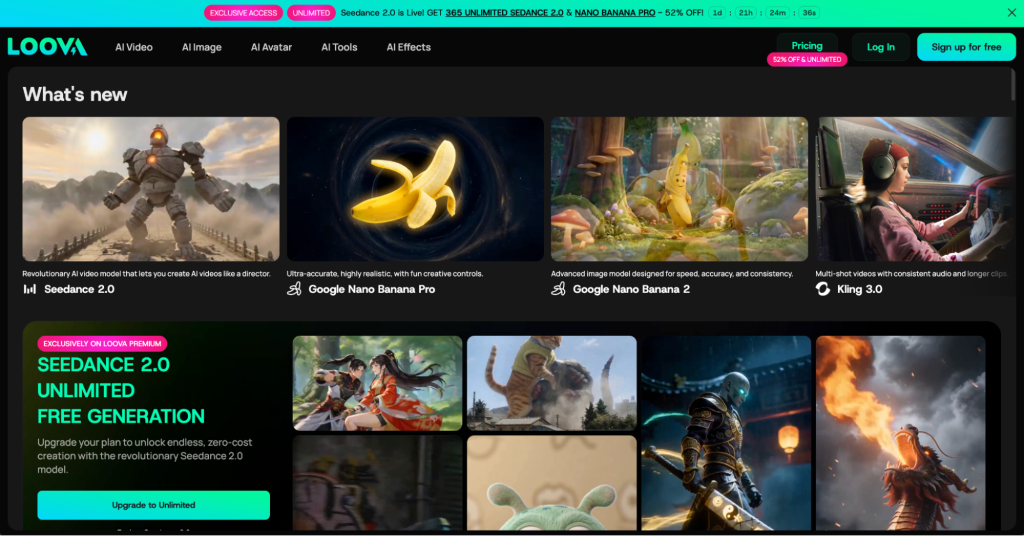
The raw model is not powerful enough. Workflow is important.
Stacking subscriptions increases cost and effort when switching between models.
platform like Louva We allow creators to:
- Access Seadance 2.0
- Test Kling-style output
- Use photorealistic generation
- Generating image assets
- Edit within the same workspace
This reduces:
- Switching tools
- import-export friction
- Duplicate subscriptions
- creative interruption
For creators running high-output pipelines, access to multiple models within one system increases production speed.
Workflow score (model + ecosystem)
| setting | workflow score |
| single separation model | 6/10 |
| Multi-model in Loova | 9/10 |
Workflow winner: Integrated ecosystem
| category | winner |
| speed | veo 3.1 |
| Operational stability | Seadance 2.0 |
| character consistency | Seadance 2.0 |
| immediate control | Seadance 2.0 |
| feature length production | Seadance 2.0 |
| photorealism | Seadance 2.0 |
| Streamline your workflow | Multi-model ecosystem |
Which AI video model is best for 2026?
There are no universal winners.
The best AI video model will depend on your production goals.
choose Seadance 2.0 if:
- Build narrative storytelling content
- Requires strong character stability
- Creating long YouTube or branded sequences?
choose Kling 3.0 if:
- When you need storyboard-style creative control
- Design cinematic multi-shot advertisements
choose veo 3.1 if:
- Prioritizes photorealistic marketing visuals
- Need rapid content testing
For creators running high-volume pipelines, combining models in an integrated system like Loova often provides the highest overall efficiency.
future of AI video One model does not replace all others.
Model orchestration.
And in 2026, creators who understand how to benchmark and combine models will outperform creators who rely on a single engine.