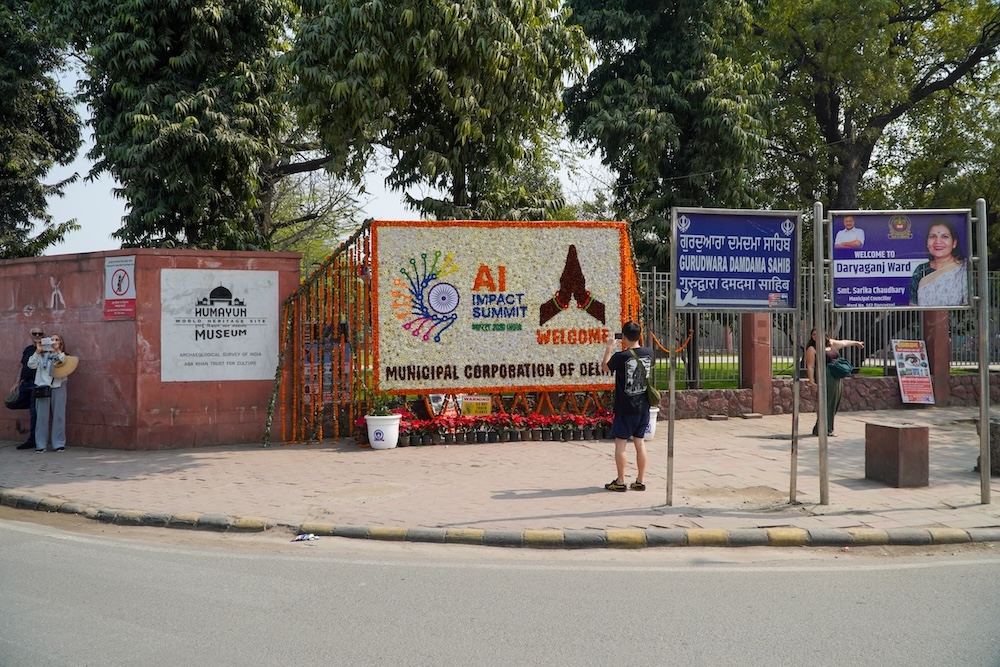
Few countries have as much influence and opportunity to influence the market as India does. India’s rapidly growing consumer base and large population of poor people in rural and urban areas make it a good testing ground for companies designing AI applications and infrastructure.
“Unless AI benefits the bottom half of India’s population, it won’t have a significant impact,” he said. Vinod Khoslaan Indian-American billionaire and venture capitalist, spoke at the recent India AI Impact Summit in Delhi, which was attended by over 70,000 people last month. “If we don’t, we’re missing out on a huge opportunity.”
Mr. Khosla highlighted three urgent applications. One is an AI-based personal tutor for children in rural India where teachers are in short supply. AI-based primary care and chronic disease management. and an AI agronomist supporting Indian farmers.
A key challenge is how to build effective tools at scale for use by vast populations that speak multiple languages.
In the health sector, for example, “there is limited evidence about what interventions can be integrated into health systems and primary care to strengthen service delivery and improve health in low- and middle-income countries,” he said. charlotte watts British Charity Foundation Wellcome.
Wellcome has partnered with the Gates Foundation and Novo Nordisk Foundation for a $60 million collaboration to evaluate AI-enabled decision support tools in Africa, South Asia, and Southeast Asia. The Evidence for AI in Health (EVAH) initiative funds the evaluation of AI tools aimed at helping healthcare professionals perform clinical tasks such as triage, diagnosis, and referrals.
Government agencies in India are also partnering with startups, businesses, and nonprofits to support high-impact AI applications.
The Indian Council of Medical Research, a government-funded biomedical research agency, has a repository of images from more than 10,000 tuberculosis patients that a non-profit organization in Gujarat is using to develop a diagnostic tool for tuberculosis.
Scientists at ICMR are also using AI to map genes and prepare for the development of new vaccines, and said that in the event of another pandemic, “a vaccine will be available within months.” tarna madanICMR Scientist.
data center
The summit was a way to place India at the center of the global AI race. Experts at the India AI Impact Summit shared research, pilot projects, and new applications from India, Africa, and other markets in dozens of sessions over five days. A number of large investments in data centers and AI infrastructure by Indian conglomerates such as Reliance and Tata Group were also announced.
OpenAI announced that it will be the first customer of Tata Consultancy Services’ HyperVault data center business, enabling OpenAI to run advanced models in India. Larsen & Toubro Group is working with Nvidia to build AI infrastructure, advanced computing platforms, and other support for enterprises running AI workloads in India.
Google, Microsoft and Amazon have also pledged billions of dollars to build data centers and other AI infrastructure in the country.
Blackstone, Ontario Teachers’ Pension Plan and other investors have pledged $600 million to Mumbai-based startup Neysa to expand India’s AI computing capabilities.
Missing from the conversation is the environmental impact of operating these centers. In an interview, Open AI Sam Altman He denied that the excessive water use to run ChatGPT and other applications was “totally fake,” but acknowledged that the high energy use was real.
AI for farmers
One sector that has received attention as a potential big impact for AI is agriculture.
The Indian Institute of Technology in Ropar, Punjab, is building a large-scale language model to answer farmers’ questions and provide them with accurate weather data.
The United Nations World Food Program introduced an initiative to optimize the transportation of grain from farmers in India to warehouses at more than 600,000 fair price outlets, from where it will be distributed to the poor. At the event, UNWFP announced the launch of a mobile robot that patrols warehouses to detect spoilage and pests.
There was also a presentation by French non-profit organization Current AI of a prototype handheld device that can listen, process and respond to agricultural questions in 22 Indian languages. In one example, a farmer displays a bottle of crop treatment that he has sprayed on his field and asks the device in Hindi when it needs to be sprayed again.
“Please repeat this medication in 3 to 5 days,” the device responds in Hindi.
The prototype was developed using funding pledged by the French government, the MacArthur & Ford Foundation, Salesforce and others at last year’s AI Action Summit in France. Current AI is collaborating with the Indian government’s Basini initiative, which leverages speech recognition and language translation technology. The intention was to say Aya Buder The current feature of AI is to “get as close to individuals and communities as possible.”
AI applications to language were a broader theme at the summit. India has 22 officially recognized languages and hundreds of regional languages and dialects. However, most AI applications are in English.
Startups like Bangalore-based Gnani.ai are now offering AI-driven virtual assistants for customer engagement. Its speech-to-text model works in 11 Indian languages.
Usage restrictions
For every promising AI application on display, shortcomings and risks were equally evident.
Arun Pratihasta senior researcher at Wageningen University focused on agriculture in the Netherlands, pointed out that many promising AI and digital tools for agriculture fail because they are designed to address global issues rather than the needs of local farmers. Emerging countries also lack data.
“That hinders AI models,” Pratihast said.
A recent study, funded by the UK Foreign Office, into the effectiveness of AI solutions in agriculture in low- and middle-income countries showed that most models are in their infancy and have not taken root, partly due to a lack of trust from farmers.
One reason for this is that solutions are designed to solve specific problems, such as pest control or crop productivity, rather than more holistic issues such as income security or improved livelihoods. Zeba Siddiqui Athena Infonomics helped conduct the review.
Farmers also pointed to skepticism due to the lack of feedback and accountability mechanisms. Kavya Dashola from the Indian Institute of Technology, Delhi. “Who will take responsibility if something goes wrong?”