Editor’s note: This article is published in Governing magazine. 2026 Q1 Magazine. You can subscribe here.
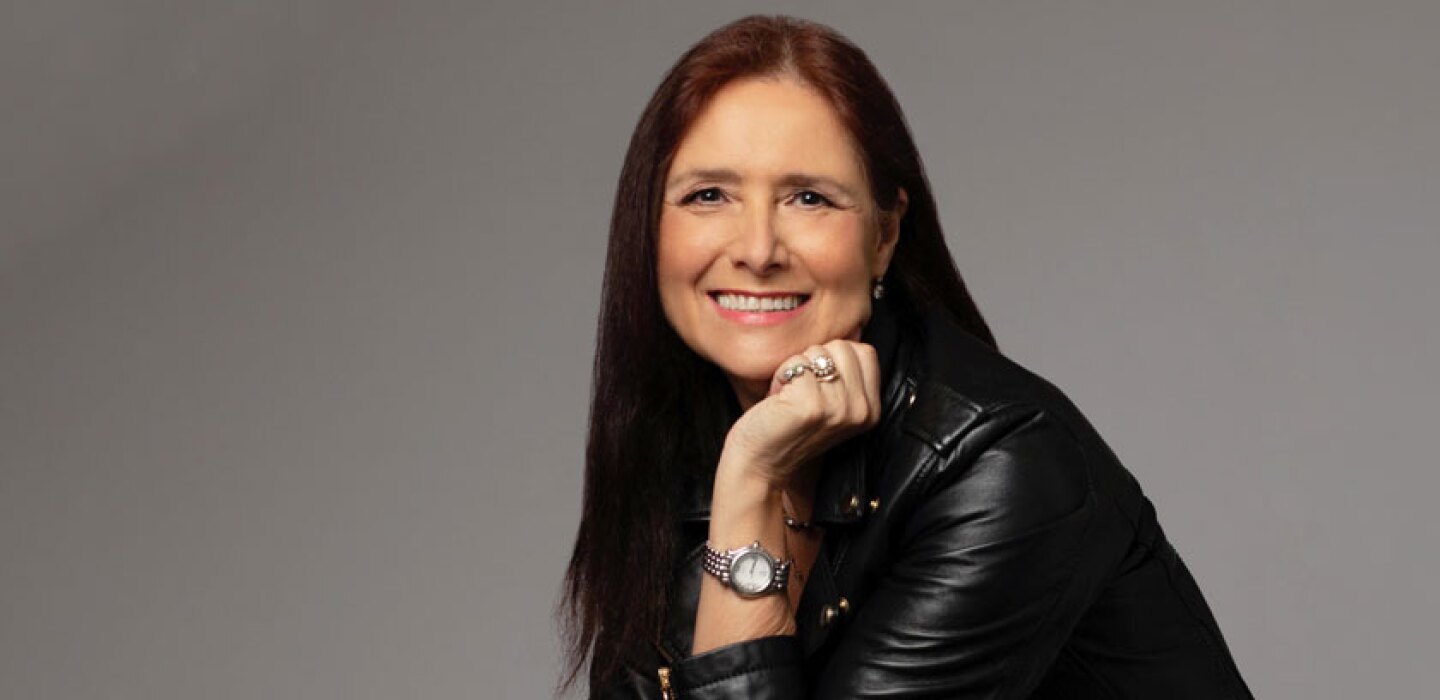
Kay Firth-Butterfield was a leader in the responsible use of artificial intelligence before many of us had heard of it. In 2014, she became the world’s first Chief AI Ethics Officer, establishing her role at an AI startup in Austin, Texas. Three years later, the World Economic Forum hired her as its first head of AI and machine learning. In 2024, she received one of the four Impact Awards given by TIME magazine for her work on AI governance.
Firth-Butterfield currently leads Good Tech Advisory, which advises governments and businesses on properly implementing and mitigating the risks of AI and other emerging technologies. Her new book, Coexisting With AI: Work, Love and Play in a Changing World, offers practical advice for people and organizations navigating the possibilities and complexities of AI.
We spoke to Firth Butterfield as he was wrapping up several speaking sessions at the 2026 World Economic Forum in Davos, Switzerland.
Below are edited excerpts from the interview.
Artificial intelligence is developing very rapidly and there is a lot of hype about what these technologies can do. What ethical principles should government leaders prioritize?
Let’s not talk about ethics. It may mean different things to different people. We’re talking about doing the right thing and acting responsibly. I like the concept of using AI wisely. It’s a tool like no other. It’s not like a hammer. He is an imitator with a good memory. It can imitate compassion. It can imitate understanding life and death. When it just comes up with the next best word or picture, it can imitate the ability to think, which can manipulate us poor humans. Let’s use AI wisely and don’t let developers and owners manipulate us.
According to a recent survey, more than 25 percent of Americans [adults] Having a sexual relationship with an AI. I think this is because they don’t understand that this is a machine that can’t think, feel, or do anything other than predict the next word. One of the most important things we can do is increase the AI literacy of the general public. I feel that the government has an obligation to do that as part of the social contract.
I would like to touch on one more common misconception among politicians. That is, regulation stifles innovation. I drive a sports car, and I purchased this model, which has a reputation for safety. Due to regulations, manufacturers must produce their products according to accepted standards so that their performance can be verified and compared with other models. With AI, we have tools that can fundamentally harm humans. No amount of regulation will stop people from building AI. It just provides the safety net that we humans need. I’m on the advisory board of a nonprofit organization called Fathom, and one of the things they’re trying to do is create a checkmark to indicate that an AI tool has been verified by outside experts as unlikely to cause harm.
What does smart use of AI in city halls and state agencies look like? Are there practical ways to frame it for policymakers?
First of all, you need proper sourcing. It’s a process that helps you make the right decisions from the beginning. There are many people selling snake oil. At Davos, everyone on the promenade was selling AI for something. If you don’t know how to evaluate an AI tool, seek help from an independent expert. For example, if you’re considering recruiting tools, you’ll want to avoid bad tools that could potentially get you sued.
And don’t leave AI to the chief technology officer or chief AI officer. Their job is to build technology across the organization. Your job as a policy maker is to think about how to bring this technology to humans. That’s completely different. The entire C-suite needs to be involved. Otherwise, the CTO will be responsible for one thing, and maybe the chief people officer will be responsible for another, and the conversation won’t happen. Everyone is siloed. The best AI implementations are guided by good internal committees that meet frequently. Risk, compliance, and legal advisors are also not ignored. Their job is to deliver services together.
Employee AI literacy is also required. I see corporate disasters where everyone is told to use AI tools, but no one gives them basic training. That’s when work slows down. That is, when people use AI to create low-quality work and someone else has to clean up. It is also where hallucinations appear in reports and other proprietary data.
Could AI fundamentally change the way government operates, including how services are delivered, decisions are made, and policies are designed?
The AI we have today is not suitable for running government services. Government exists to serve the elected people. This is different from a business where you can bet on things that are more likely to be profitable. If we start using AI across our citizen services and make mistakes, we will fundamentally violate the requirement to protect our citizens. We tried it in Australia and saw that it left many people without benefits.
I think the government has an obligation to think carefully and prepare small use cases. I say this to both governments and businesses. Find something that doesn’t hurt anyone, try it, and build on that success. Don’t try to go from zero to 100. Don’t give in to the pressure you’re feeling due to the AI hype.
What new skills and mindsets do civil servants and agency managers need now to lead effectively?
One question is how do we train managers today? They control individuals. They control individuals using AI. They manage AI bots or AI agents. How do we make sure that AI delivers benefits in that ecosystem? If we’re not careful, AI won’t take us to the next level and we’ll be burdened with constantly checking its behavior.
Another question is: What do we look for in our leaders? It is said that if used well, AI can be raised from D grade to B grade, and if used poorly, it can be lowered from A grade to B grade. Are you looking for people who can use AI really well? Or are we still looking for something that distinguishes CEOs from other CEOs? Is leadership uniquely human or something that can be added to by AI?
What changes will AI bring to broader society, and what do those changes mean for policymakers?
There are some things we all need to think about. That’s why I wrote the book. For example, governments should require AI-enabled toys to be labeled. Parents may think it’s a good idea, but they don’t know what the toy will teach them. Most of them are made in China. Will my data be sent to China? Many of these toys have voice and facial recognition, which parents are blind to.
I also hear that everyone needs to learn how to use AI, but less often that everyone needs to learn how to use AI wisely so it doesn’t cause harm. Research shows that undergraduates who graduated last year may not have learned enough about their degree subjects because they outsourced their work to ChatGPT. For students, this is a problem because they are paying money but not getting an education. This is a problem for employers because they cannot assume that a degree means whether a person is suitable for employment, and it is also a problem for society because people have not learned how to think critically.
Another issue is elderly care. We are in an aging society. Should we use AI-enabled robots and AI to care for the elderly? Do seniors need to consent to receiving care from robots?
So are you saying it’s up to state and local governments to decide how to use AI wisely in all these different situations?
absolutely. AI will be present in every part of our lives. Since AI tools can teach children at their own pace and may require only a few hours of instruction, educational curricula may need to be rethought. The rest of your day could be spent learning social skills that you can’t learn just by interacting with an AI. It will also transform issues such as healthcare and elderly care, as well as our intimate lives. There seems to be no place where AI isn’t showing up.
So we now have an opportunity to shape how AI impacts us. When future leaders look back on this moment, what will separate governments that have succeeded in leveraging AI wisely from those that have not?
The governments that got it right are the ones that carefully considered what they bought, made sure they bought the right tools for the right jobs, trained their workers to use those tools, and kept the needs of their people firmly at the forefront. He also urged companies to test whether their AI models work and to enact regulations that require them.
And more than that, the governments that will be seen as successful will be those that truly look to the future and consider what reforms are needed in health care, service delivery, and education to enable humanity to take full advantage of this technology.