February 19, 2026
The ongoing feud between Anthropic and the Department of Defense is shaping up to be a defining test of whether responsible AI deployment is truly possible or just an aspiration in the era of military AI competition.
On February 13th, wall street journal Anthropic’s Large-Scale Language Model (LLM) Claude reported that it was used to help the US military capture Venezuelan leader Nicolás Maduro during a raid on Caracas in January.
According to AxiosAnthropic then contacted Palantir, the third party that provided Claude to the Department of Defense through a partnership agreement, to raise concerns about how the model was used to plan and execute covert operations. However, Anthropic denied that characterization in a public statement, saying its discussions with Palantir merely focused on “specific usage policy questions,” specifically the company’s “strict restrictions on fully autonomous weapons and large-scale domestic surveillance.”
While the exact nature of the reported conversations between Anthropic and Palantir has not been confirmed, it comes shortly after news broke that the Department of Defense is considering severing its business relationship with Anthropic and designating the AI company as a supply chain risk (a designation typically reserved for foreign adversaries). The stakes are pretty high. Claude is currently the only LLM available for classified use by the Department of Defense.
This ongoing feud also has financial implications. During Anthropic’s $30 billion funding round in early 2026, conservative-aligned venture capital firm 1789 Capital (whose partners include the president’s son, Donald Trump Jr.) declined to invest, explicitly citing the tech company’s support for AI regulation.
It remains to be seen whether the Pentagon will actually freeze Claude from current and future contracts. However, this debate highlights both the dangers of AI regulation and the significant temptation governments face to avoid AI regulation altogether for strategic and/or tactical advantage.
Anthropic has worked hard to establish itself in the public eye as one of the most ethically minded AI companies. In the January 2026 essay adolescence of technology, Anthropic CEO Dario Amodei warned that without countermeasures, “AI will likely continue to lower the barriers to destructive activities,” and argued that “humanity needs to take a serious response to this threat.”
Amodei made similar comments in a recent interview. Anthropic also pioneered the Constitutional AI training framework, providing Claude with a central repository of ethical principles on which to base its work. This shows that the company’s belief in the importance of guardrails is based on more than just a media soundbite.
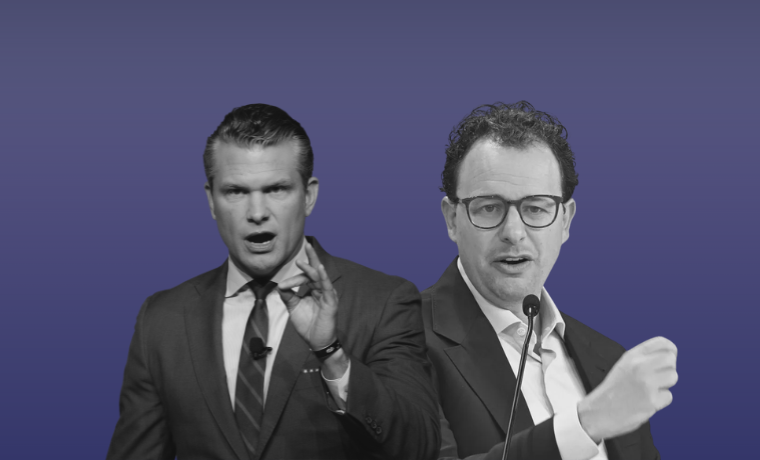
This vision stands in contrast to the Trump administration, which is working to accelerate AI in earnest, treating safety concerns as a byproduct rather than a guardrail. The administration’s stance is evident in the president’s attempt to rein in national AI regulation efforts in December 2025, Vice President J.D. Vance’s criticism of European technology regulation efforts, and Secretary of Defense Pete Hegseth’s comments about “dominance of military AI.”
“When it comes to AI, the Trump administration has not taken it lightly,” Brian J. Chen, policy director at the nonprofit Data & Society, wrote in the paper. AI powerhouse. “The federal government uses its regulatory, diplomatic, and financial powers to conduct massive policy interventions to organize the U.S. AI industry and maintain the capital accumulation model.”
The Trump administration’s acceleration-at-all-costs approach has put other AI companies in an enviable position. They are free to talk about the need for regulation without feeling threatened by regulation in any meaningful sense at the federal level. In contrast to the Department of Defense, Anthropic’s insistence on guardrails puts the central dilemma of AI governance in microcosm. Who sets the rules, and what happens to companies that try to enforce self-imposed guardrails? If the U.S. government complies with principled restrictions and threatens to cut off companies that impose them, it sends a clear message to the entire industry that responsibility is responsibility.
But the rules will be written somewhere. Other states (even within the United States) are filling the regulatory void. The EU’s AI law imposes risk management and documentation requirements, while California’s Frontier AI Transparency Act requires companies to disclose safety practices in their cutting-edge systems. Meanwhile, in Delhi, India’s AI Impact Summit is pushing to embed AI safety into development pathways across the Global South. These efforts suggest that if the US refuses to take the lead on AI safety, the rules will be written in other capitals.