
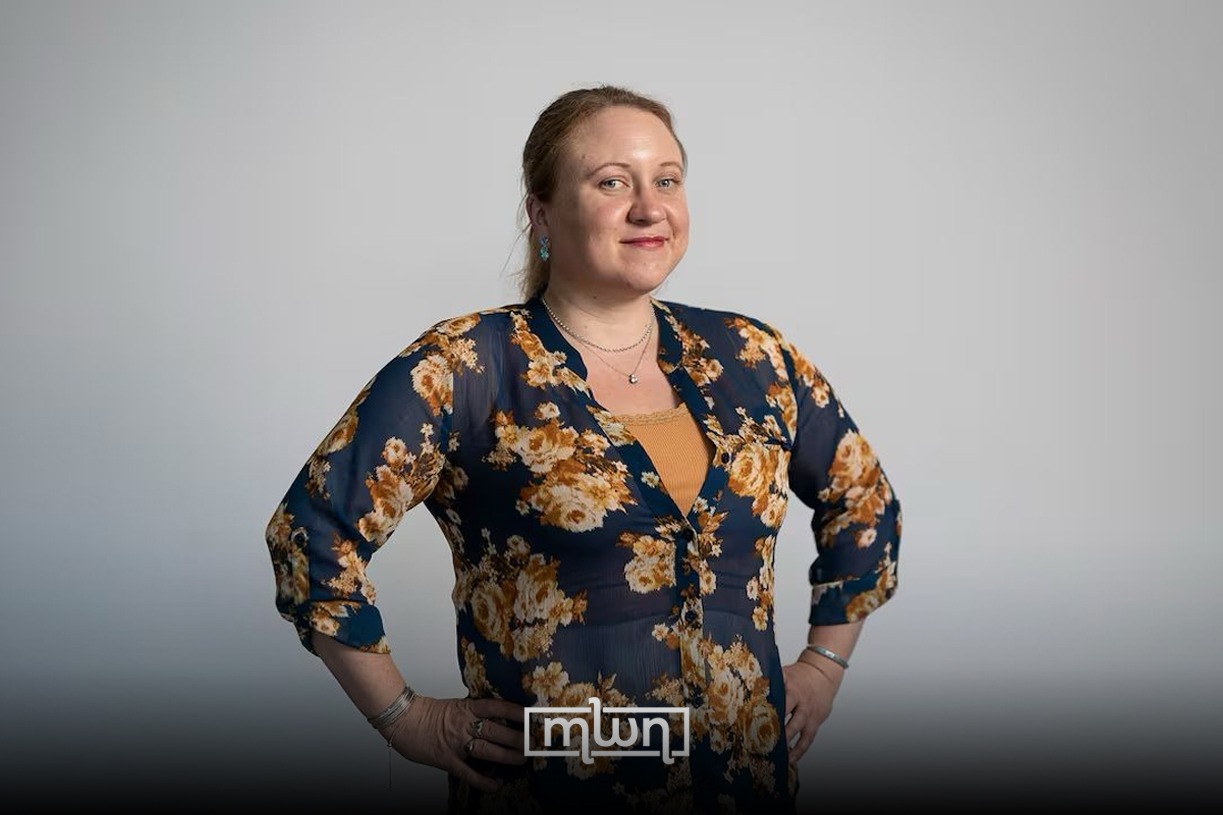
Cairo – said Margaret Mitchell from AI company Hugging Face at the AI Everything MEA Egypt 2026 in Cairo today. with steps Coming off stage from a panel titled “Human-Centered AI: Power, Responsibility, and the Global South,” we continued a conversation that felt more urgent than theoretical.
Hugging Face is a US-based open source AI company that builds and hosts machine learning models, making them accessible to developers, researchers, and startups around the world. It has become a central hub for sharing and testing AI systems.
The committee considered what responsibilities AI builders will have as systems advance faster than regulations, whether open and closed AI models can coexist, and how emerging economies can avoid digital dependence.
After the panel discussion, he was asked whether the big AI companies really take privacy seriously, and he gave a non-committal answer. “It’s up to the company,” she told reporters.
From her experience, she cited Microsoft and Google as places where privacy is taken seriously, noting that lawsuits and fines can sometimes be counted as a cost of doing business. “Privacy has to be well managed,” she said, adding that long-term trust, not short-term shortcuts, supports businesses.
Mitchell, whose research focuses on fairness and algorithmic bias, emphasized that ethics often comes before regulation. “Regulation tends to lag behind the development of AI,” she says.
Also read: Ai Everything MEA Egypt 2026 opens in Cairo
This gap, she argued, is where AI ethicists are helping companies and governments consider trade-offs before harm occurs, rather than after public backlash.
She made it clear that prejudice harms people who are already marginalized. AI systems reflect data based on their training, and that data disproportionately represents certain demographics.
As a result, health systems, language models, and decision-making tools can fail women, Black communities, and other underrepresented populations more often. “Many marginalized people end up being further misrepresented,” she said, adding that the problem is structural, not incidental.
Regarding open source AI, a recurring theme of the panel discussion, Mitchell admitted to being nervous. Open systems promote transparency and accountability, but they also have the potential for abuse. “There’s no such thing as a technology that’s good and doesn’t have negative effects on others,” she says.
In her view, the challenge is to examine long-term impacts and align development with core human values. She noted that openness could play a role in curbing exaggerated claims. She said transparency helps distinguish technical reality from marketing.
Perhaps her strongest position was on privacy. She argued that if developers want to protect users, encryption, rather than partial encryption, should be the norm. “If you really want to protect your privacy, you need to have encryption that even companies can’t access,” she says.
Mr Mitchell also warned of increased psychological and social risks. Reliance on AI systems can impair human judgment and critical skills, she said.
As people begin to develop emotional attachments to chatbots and Rely on me By relying too heavily on automated tools, societies risk undermining their own capabilities. “It is important to always have experts working without the assistance of AI systems,” she said, warning of what she described as a significant skills decline.
Mitchell emphasized that power without accountability is unstable, and that trust once lost is difficult to rebuild, as was the theme of the panel discussion he just left.


